
Why IT peripheral spend fragments — and what it costs
The high-value IT — servers, primary devices and licences — usually sits under tight IT governance. The peripheral layer around it does not: monitors, keyboards, headsets, docking stations, cables, adapters and consumables get bought across resellers, marketplaces and personal expense claims. It is low unit value, high frequency and rarely on contract, so the true spend is invisible and the admin cost is real.
Consolidating that layer onto one managed marketplace of 10,000+ suppliers gives corporates one catalogue, one set of agreed prices and one consolidated invoice — without pulling primary-device or licensing decisions out of IT's hands. This page is about evaluation: how to structure that consolidation. To actually browse and buy, teams use the marketplace at mall.lapasar.com.
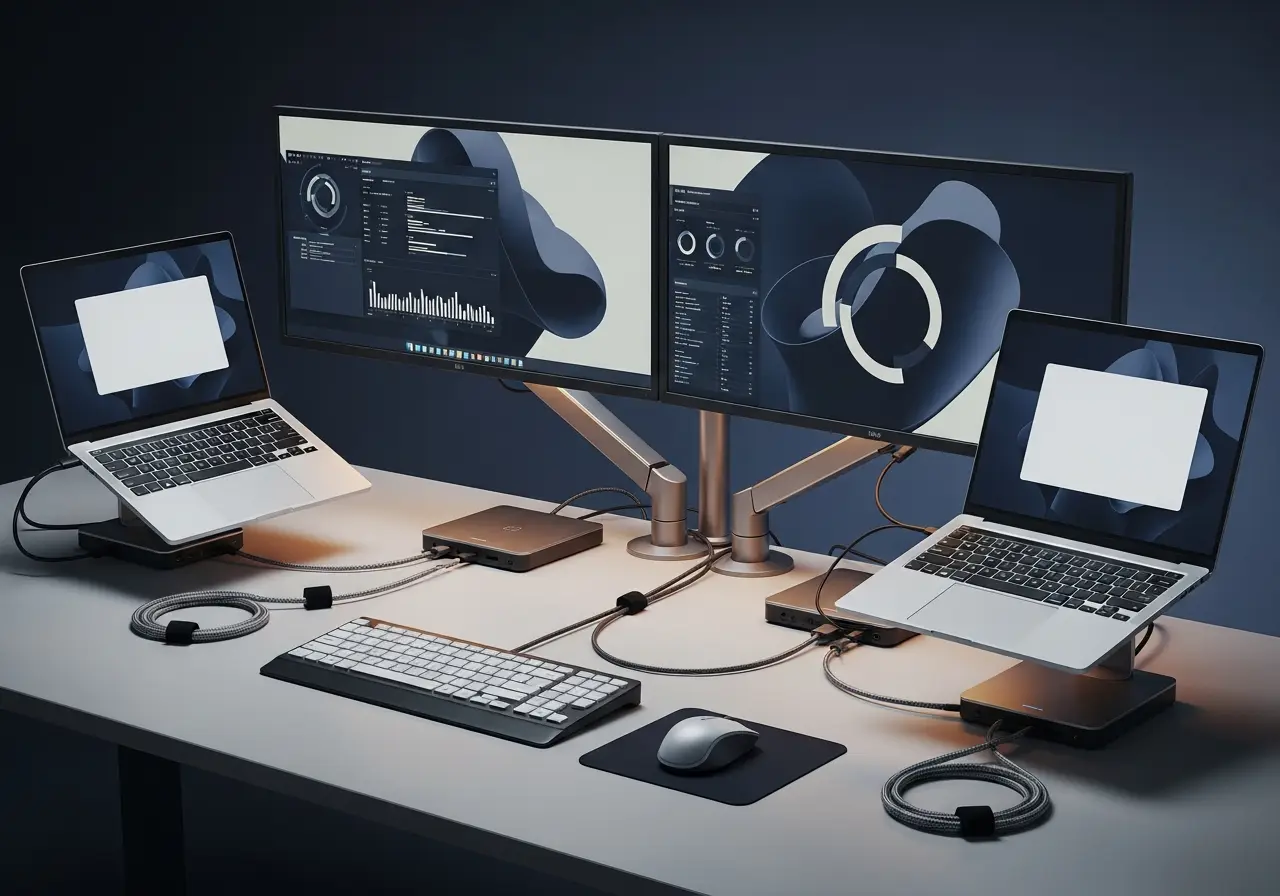
- Monitors, docking stations and display accessories
- Keyboards, mice, headsets and webcams
- Cables, adapters and networking accessories
- External storage, media and IT consumables
Governance that finance and IT both trust
Consolidation only works if it comes with control. Approval workflows route peripheral requests to the right cost-centre owner, budget controls keep spend within plan, and analytics show IT-peripheral spend by department, site and category. That turns an invisible expense-claim category into a governed, reportable one — the same workflow, budget and reporting capabilities Lapasar ships on /product-features.
Backed by real infrastructure and registrations
Lapasar is a Ministry of Finance (MOF)-registered supplier — Lapasar Sdn Bhd (1198228-D) — with RM600m+ in annual GMV. Orders ship from Lapasar's own warehouses on its own fleet across Peninsular Malaysia, and approved businesses buy on company credit terms with one consolidated invoice rather than reimbursing personal cards.