
Sourcing Guide · Bearings & Seals
Bearings, Seals & Power Transmission: A Sourcing Guide for Malaysia
Bearings and seals are small parts with outsized consequences: a wrong clearance class, a counterfeit bearing or a mismatched seal can take down a line that costs far more per hour than the part itself. This guide is written for maintenance and reliability buyers who need genuine parts to the correct designation, held and sourced in a way that keeps critical machinery running.
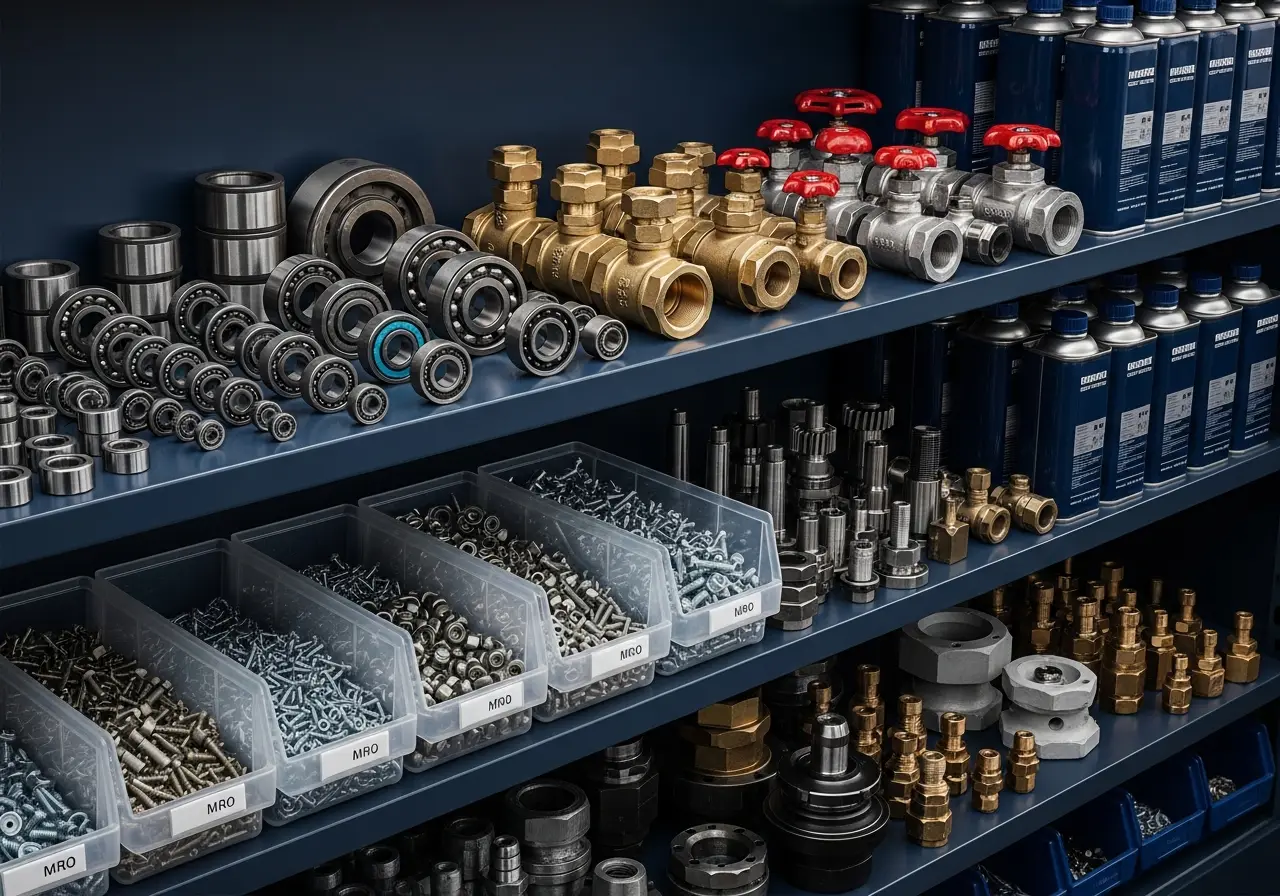 Sourcing guide
Sourcing bearings, seals and power-transmission parts for a Malaysian operation begins with the designation, not the price: read the full bearing code (bore, series, clearance class, cage and seal type) and match seals to shaft diameter, medium and temperature. Genuine parts matter more here than in most categories because counterfeits fail early and cause collateral damage. Evaluate suppliers on authorised-distribution assurance, breadth across bearings and sealing materials, and correct storage. Consolidating spares through a managed marketplace such as Lapasar gives maintenance teams access to 10,000+ suppliers on one account, with credit terms for approved buyers and delivery across Peninsular Malaysia.
Key takeaways
- The full bearing designation — bore, series, clearance class (e.g. C3), cage and seal suffix — is the spec; substituting on a partial code invites premature failure or an interference fit that seizes.
- Counterfeit bearings are a real market risk; a fake to a genuine designation fails early and can damage the shaft and housing around it, so authorised sourcing pays for itself.
- Seals and packings degrade in storage; buy to consumption, rotate first-in-first-out, and keep elastomers away from heat and sunlight.
- Hold spares by criticality, not habit — the bearing on a bottleneck machine justifies a shelf stock the same part on a redundant asset does not.
What counts as bearings, seals & power transmission
Rotating-machinery consumables — ball and roller bearings, sealing materials and packings — that keep shafts, motors and pumps running, where correct specification and genuine parts decide equipment uptime.
Who typically sources this category
- Manufacturing & processing
- Maintenance & reliability teams
- Pump & rotating-equipment operators
- Food & beverage processing
- Energy & Utilities
Reading the designation: why the code is the spec
Bearings are specified by a compact designation that encodes everything the fit depends on — bore diameter, external series (which sets the outside diameter and width), clearance class such as C3 for higher internal clearance, and suffixes for the cage material and seal or shield type. A buyer who orders on a partial code, or lets a substitution slide on the clearance suffix, risks an interference fit that runs hot and seizes, or a loose fit that lets the raceway creep. The designation is not a preference; it is the engineering that keeps the shaft turning true.
Sealing materials follow the same discipline. Oil seals are chosen by shaft diameter, housing bore and width, plus a lip material matched to the medium and temperature; gland and rope packings are sized to the stuffing box and the fluid they retain; O-rings are specified by cross-section, inside diameter and compound. Getting these right up front lets a supplier quote the whole rotating-assembly refresh — bearings, seals and packings — as a matched set rather than a series of near-misses discovered on the bench.
- Bearings: bore, series, clearance class (C2/C3/C4), cage type, seal/shield suffix
- Oil seals: shaft OD, housing bore, width, lip material and profile
- Packings: stuffing-box size, cross-section, material for the medium and temperature
- O-rings: cross-section, inside diameter and compound (NBR, EPDM, FKM)
Genuine parts and the counterfeit risk
No indirect category rewards authenticity like bearings. A counterfeit bearing stamped to a genuine designation can look identical yet be made from inferior steel with poor heat treatment, and it fails early — often taking the shaft and housing with it, so the true cost dwarfs the part. The defence is authorised distribution: buy through channels that can confirm the source, and be sceptical of pricing that sits well below the market for a premium brand.
For corporate and government-linked buyers the procurement channel is part of governance. Lapasar is a Ministry of Finance (MOF)-registered supplier — its only certification — operating a published governance framework covering anti-bribery and supplier conduct, which supports maintenance teams whose reliability programmes require documented, traceable sourcing for critical spares.
See live stock & pricing for bearings, seals & power transmission on mall.lapasar.com
Storage, shelf life and spares-holding strategy
Bearings and seals are not inert on the shelf. Bearings must stay in their sealed packaging, kept clean and dry, because contamination and moisture start the corrosion that shortens life before the part is even fitted. Elastomer seals, O-rings and packings age — they harden and lose elasticity — and degrade faster near heat and sunlight, so buying deep on slow-moving lines risks paying for stock that is unusable when you reach it.
Spares strategy is therefore a criticality question, not a habit. The bearing and seal set on a bottleneck machine, or one with a long replenishment lead time, justifies a shelf stock; the same part on a redundant or low-consequence asset does not. Mapping spares to machine criticality keeps the store lean while protecting the assets whose downtime actually hurts.
Evaluating bearings and seals suppliers
Authorised-distribution assurance is the first filter, because authenticity is where the risk lives. Ask how the supplier sources the premium lines and be wary of pricing that is too good to be true. After authenticity, weigh breadth: a rotating-assembly refresh mixes bearings, seals, packings and O-rings, so a supplier who can quote the whole set on one order beats several single-line specialists on total transaction cost and lead-time coordination.
Storage and handling quality is the quiet differentiator — a supplier who keeps bearings sealed and elastomers out of the heat delivers parts that perform to their rated life. On the Lapasar marketplace, maintenance teams compare suppliers on the same spares list and weigh price against fulfilment history rather than choosing on unit cost alone.
- Authorised-distribution confirmation for premium bearing brands
- Breadth across bearings, oil seals, packings and O-rings on one account
- Correct storage — sealed bearings, elastomers kept cool and shaded
- Ability to quote a full rotating-assembly refresh as a matched set
- Realistic per-line lead times for indent and less common designations
Sourcing across Peninsular Malaysia
Bearing and seal distribution depth clusters around the manufacturing heartlands — the Klang Valley, Penang and the Johor industrial corridor — leaving plants elsewhere facing longer indent cycles through traditional distributors for anything beyond common designations. A consolidated marketplace flattens that: orders draw on 10,000+ suppliers regardless of plant location, fulfilled through Lapasar's own warehouses and delivery fleet across Peninsular Malaysia, with orders from RM1,000 qualifying for free delivery in the Klang Valley, Penang, Johor, Perak and Negeri Sembilan.
For the transactional step — live stock and pricing on specific bearing designations, seals and packings — the bearings catalogue on mall.lapasar.com carries the full assortment and links through to supplier quotations for volume requirements.
Explore the range on mall.lapasar.com
The transactional catalogue — live stock, business pricing and volume quotations — lives on mall.lapasar.com. Start from these bearings, seals & power transmission ranges:
Keep planning with these guides
Common questions
- Why does the full bearing code matter so much?
- The designation encodes the bore, series, clearance class, cage and seal type — everything the fit and running behaviour depend on. Ordering on a partial code or letting a clearance-class substitution slide can produce an interference fit that runs hot and seizes, or a loose fit that lets the raceway creep. Always order to the complete code and confirm any proposed substitution against the machine drawing.
- How do we avoid counterfeit bearings?
- Buy through authorised distribution and be sceptical of pricing well below the market for a premium brand. Counterfeits stamped to a genuine designation can be made from inferior steel and fail early, often damaging the shaft and housing around them, so the true cost is far higher than the part. Ask the supplier how the premium lines are sourced.
- Do seals and bearings expire in storage?
- Bearings must stay sealed, clean and dry or contamination and corrosion start before they are fitted, and elastomer seals, O-rings and packings harden and lose elasticity with age — faster near heat and sunlight. Buy to consumption, rotate first-in-first-out, and store elastomers cool and shaded rather than stockpiling slow-moving lines.
- How many spares should we hold?
- Hold by criticality, not habit. A bearing or seal set on a bottleneck machine, or one with a long replenishment lead time, justifies a shelf stock; the same part on a redundant or low-consequence asset does not. Mapping spares to machine criticality keeps the store lean while protecting the assets whose downtime is expensive.
- Where can we see live pricing and stock for bearings and seals?
- The transactional catalogue lives on mall.lapasar.com — the bearings category there carries the full assortment with live stock and business pricing, and links through to supplier quotations for volume or indent requirements.
Didn't find your answer?
Ask us directly — WhatsApp or email, whichever suits you.
Explore related across the knowledge graph
Ready to act on this guide?
The bearings, seals & power transmission catalogue on mall.lapasar.com carries live stock and business pricing from 10,000+ suppliers — with credit terms for approved buyers and delivery across Peninsular Malaysia.
Prefer to talk to a real person?
Our team replies fast on WhatsApp and email — no forms, no waiting.