
Sourcing Guide · Safety & PPE
Safety & Personal Protective Equipment: A Sourcing Guide for Malaysian Businesses
PPE is the last line of defence in the hierarchy of control, and it is also the category where the wrong specification carries the highest human cost. A hard hat that is out of date, a respirator with the wrong cartridge, or a glove rated for cuts but not chemicals defeats the entire purpose of the spend. This guide covers how to specify, source and govern safety and PPE for a Malaysian operation.
 Sourcing guide
Sourcing PPE for a Malaysian business begins with the hazard assessment, not the catalogue: identify the risks at each task, then match protection by type and rating — respirator class to the contaminant, glove to the mechanical or chemical hazard, hearing protection to the noise exposure. Confirm relevant standards and certification, and size for a genuine fit so the equipment is actually worn. Evaluate suppliers on standards evidence, breadth across head-to-toe protection, and reliable resupply of consumable items. Consolidating safety stores through a managed marketplace such as Lapasar gives procurement teams access to 10,000+ suppliers on one account, with credit terms for approved buyers and delivery across Peninsular Malaysia.
Key takeaways
- PPE is specified from the hazard assessment, not the price list — the protection type and rating are set by the risk at each task, and under-rated gear is a false economy that fails when it is needed.
- Fit determines effectiveness: a respirator that does not seal or a glove that impairs dexterity gets removed, so sizing, comfort and fit-testing belong in the specification.
- Consumable PPE (gloves, respirator cartridges, earplugs) turns over continuously — put it on a predictable reorder pattern so a site never runs a task unprotected.
- Malaysian workplace PPE sits within the DOSH regulatory framework; document the equipment provided and the standards it meets as part of the safety-management system.
What counts as safety & personal protective equipment (ppe)
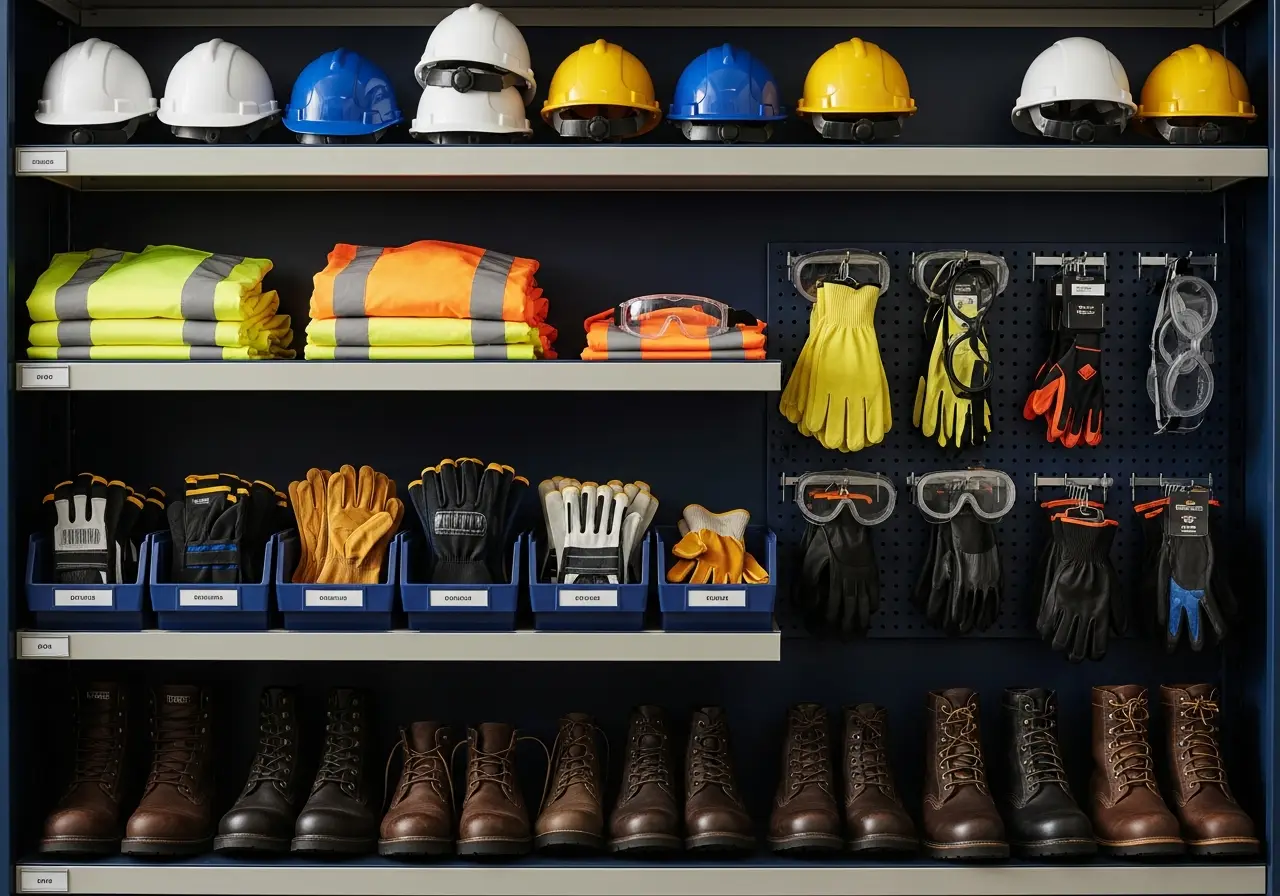
Personal protective equipment and site safety gear — head, eye, hearing, respiratory, hand and body protection, plus workwear, fire-safety items and lockout/tagout hardware — governed by DOSH regulation and the hierarchy of control.
Who typically sources this category
- Manufacturing & heavy industry
- Construction & M&E contractors
- Oil, gas & petrochemical
- Facilities & maintenance
- Warehousing & logistics
Start from the hazard: matching PPE to the risk
Safety procurement is unusual because the shopping list is an output of a risk assessment, not a preference. Under the hierarchy of control, PPE is the last resort after elimination, substitution and engineering controls — which means the equipment must be matched precisely to the residual hazard it is protecting against. Respiratory protection is the clearest example: a nuisance dust mask, a particulate respirator (rated by filtration class) and a chemical-cartridge respirator are not interchangeable, and choosing the wrong one leaves the wearer exposed while feeling protected.
The same discipline runs through every protection type. Gloves are rated separately for mechanical (cut, abrasion, puncture) and chemical hazards, and a chemical-splash task needs the correct material and breakthrough time, not a general-purpose glove. Hearing protection is chosen against the measured noise exposure; eye protection against impact, splash or optical hazard; and body protection against the specific risk, from high-visibility clothing to arc-flash or chemical suits.
- Respiratory: nuisance mask vs particulate respirator (filtration class) vs chemical cartridge matched to the contaminant
- Hand: mechanical rating (cut, abrasion, puncture) vs chemical resistance and breakthrough time
- Head, eye and hearing: impact rating, splash protection, and attenuation against measured noise
- Body: high-visibility, chemical, welding or arc-rated clothing matched to the task hazard
Fit, comfort and the equipment actually being worn
The most common failure in PPE is not specification — it is that the equipment is uncomfortable or ill-fitting and gets taken off. A respirator that does not seal against the face provides a fraction of its rated protection, which is why respiratory programmes rely on fit-testing rather than assuming a mask works. Gloves that are too bulky get removed for fiddly work; safety glasses that fog or pinch get pushed onto the forehead.
Sourcing for fit means buying in a range of sizes, considering the workforce, and treating comfort as a functional requirement rather than a luxury. It is worth sampling a shortlisted item with the people who will wear it before committing to volume, because compliance on the floor is what turns a PPE budget into actual protection.
See live stock & pricing for safety & personal protective equipment (ppe) on mall.lapasar.com
Compliance and governance for safety stores
Workplace safety in Malaysia is governed through the Department of Occupational Safety and Health (DOSH) under the OSHA framework, which places a duty on employers to provide and maintain appropriate protective equipment. That makes documentation part of the buy: recording what PPE is issued, the standards it meets and its replacement cycle supports both the safety-management system and any audit or incident investigation.
On the procurement-channel side, corporate and government-linked buyers often need a documented, compliant sourcing route for safety-critical goods. Lapasar is a Ministry of Finance (MOF)-registered supplier — its only certification — operating a published governance framework covering anti-bribery and supplier conduct, which helps buyers keep their safety-stores channel auditable.
Evaluating PPE suppliers
Standards evidence is the first gate. Ask for the certification and standards markings on the protection-critical lines and confirm the supplier sources genuine stock — counterfeit or misrepresented PPE is a known market risk, and a respirator or harness that fails to its claimed rating is dangerous rather than merely disappointing.
After authenticity, weigh breadth and resupply reliability. Safety stores are inherently mixed — head, eye, hand, respiratory and body protection plus consumables — so a supplier who can cover head-to-toe on one purchase order beats several single-line specialists on transaction cost. On the Lapasar marketplace, procurement teams compare suppliers on the same requirement and weigh price against fulfilment history rather than headline unit cost.
- Standards markings and certification evidence on protection-critical lines
- Genuine-stock assurance for respirators, harnesses and other life-safety items
- Breadth across head, eye, hearing, respiratory, hand and body protection
- Reliable resupply of consumables (gloves, cartridges, earplugs) on a reorder pattern
- Range of sizes so equipment can be fitted to the workforce
Pricing, lead times and consumable planning
PPE splits into durable equipment and fast-moving consumables, and each behaves differently on price and lead time. Durable items — helmets, harnesses, ear-defenders, welding gear — are periodic purchases with replacement cycles tied to wear or expiry. Consumables — disposable gloves, respirator cartridges, earplugs, coveralls — turn over continuously and are best kept on a set reorder point so a task is never delayed for want of a basic item.
Standard PPE lines are generally ex-stock from Klang Valley safety distributors, while specialist respiratory cartridges, high-spec chemical suits or branded harnesses may run on indent cycles. Confirm per-line availability at quotation, and plan bulk safety-stores replenishment against known project or shutdown demand rather than reacting when the store runs dry.
Sourcing across Peninsular Malaysia
Safety-supply depth concentrates around the industrial corridors — the Klang Valley, Penang and the Johor and Kerteh–Gebeng belts where heavy industry and construction cluster — leaving sites elsewhere managing several regional safety dealers to cover a full stores list. A consolidated marketplace flattens that: orders draw on 10,000+ suppliers regardless of site location, fulfilled through Lapasar's own warehouses and delivery fleet across Peninsular Malaysia, with orders from RM1,000 qualifying for free delivery in the Klang Valley, Penang, Johor, Perak and Negeri Sembilan.
For the transactional step — live stock and pricing on specific respirators, gloves, helmets and workwear — the personal-protective-equipment catalogue on mall.lapasar.com carries the full assortment and links through to supplier quotations for volume requirements.
Explore the range on mall.lapasar.com
The transactional catalogue — live stock, business pricing and volume quotations — lives on mall.lapasar.com. Start from these safety & personal protective equipment (ppe) ranges:
Keep planning with these guides
Common questions
- How do we decide which PPE a task actually needs?
- Work from the hazard assessment for each task under the hierarchy of control — PPE is the last line of defence after elimination, substitution and engineering controls. Match the protection type and rating to the residual risk: respirator class to the contaminant, glove to the mechanical or chemical hazard, hearing protection to the measured noise exposure. The assessment defines the specification, not the price list.
- Why is fit so important when buying respirators and gloves?
- Because ill-fitting equipment gets removed, and a respirator that does not seal provides a fraction of its rated protection. That is why respiratory programmes rely on fit-testing. Buy in a range of sizes, treat comfort as a functional requirement, and sample shortlisted items with the people who will wear them before committing to volume.
- How do we keep consumable PPE from running out on site?
- Separate fast-moving consumables — disposable gloves, respirator cartridges, earplugs, coveralls — from durable equipment and put them on a predictable reorder point. Consumables turn over continuously, and a task should never be delayed or run unprotected for want of a basic item that could sit on standing replenishment.
- How do we avoid counterfeit or under-rated safety gear?
- Ask for the standards markings and certification evidence on protection-critical lines and confirm the supplier sources genuine stock. Counterfeit or misrepresented PPE is a real market risk, and a respirator or harness that fails to its claimed rating is a safety hazard rather than a quality issue. A consolidated, documented channel makes this easier to govern.
- Where can we see live pricing and stock for specific PPE items?
- The transactional catalogue lives on mall.lapasar.com — the personal-protective-equipment category there carries the full assortment with live stock and business pricing, and links through to supplier quotations for volume requirements.
Didn't find your answer?
Ask us directly — WhatsApp or email, whichever suits you.
Explore related across the knowledge graph
Ready to act on this guide?
The safety & personal protective equipment (ppe) catalogue on mall.lapasar.com carries live stock and business pricing from 10,000+ suppliers — with credit terms for approved buyers and delivery across Peninsular Malaysia.
Prefer to talk to a real person?
Our team replies fast on WhatsApp and email — no forms, no waiting.