
Sourcing Guide · Chemicals
Industrial Chemicals & Supplies: A Sourcing Guide for Malaysian Businesses
Chemicals are the one indirect category where the buying decision carries direct safety, environmental and regulatory weight. Grade, concentration and classification are non-negotiable, safety-data documentation travels with every line, and how a chemical is stored and handled matters as much as where it comes from. This guide is written for the buyer provisioning process, treatment and agricultural chemicals at scale, and covers classification, compliance, handling and supplier selection.
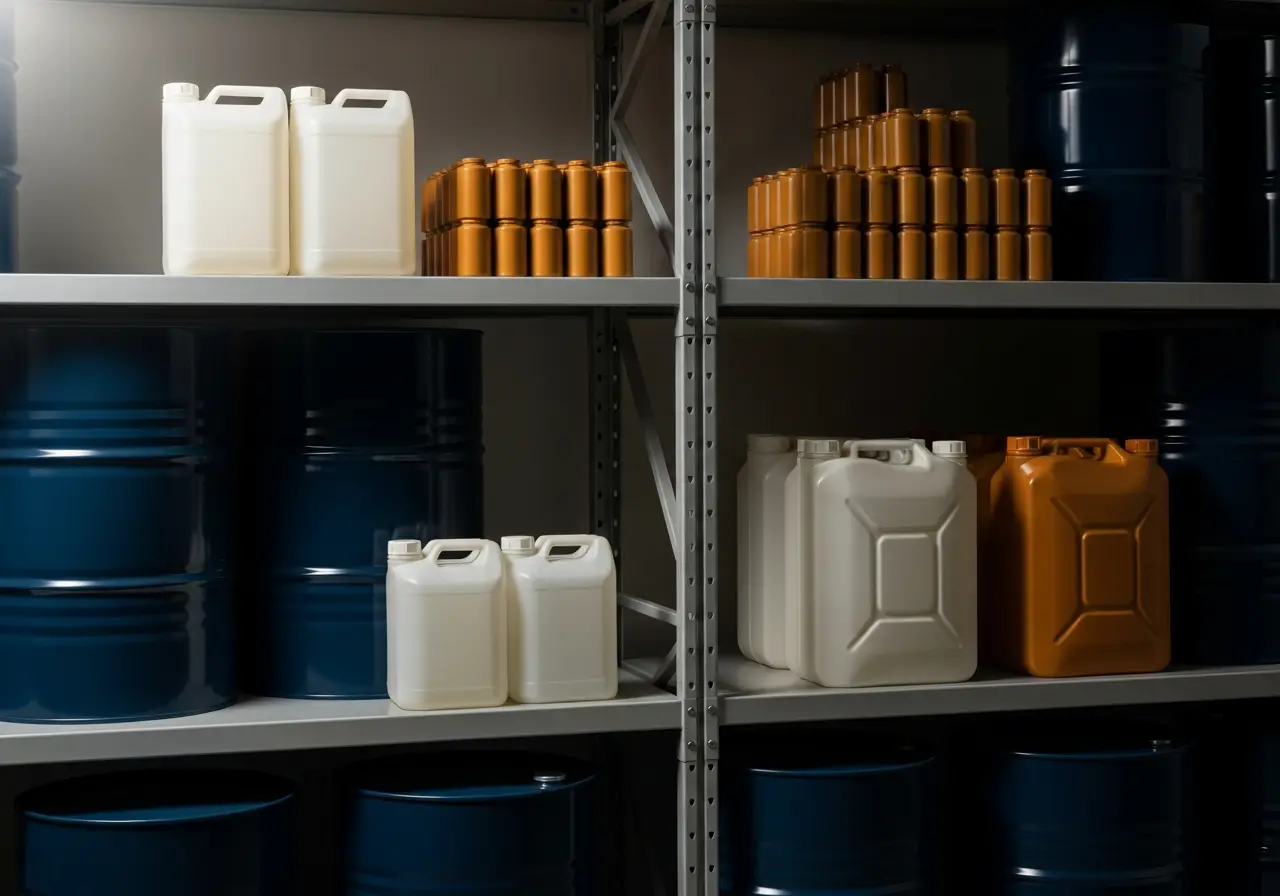 Sourcing guide
Sourcing industrial chemicals for a Malaysian business starts with classification and documentation rather than price: specify the correct grade and concentration, obtain the safety data sheet for every line, and confirm that storage, handling and disposal comply with the applicable regulations for hazardous materials and scheduled waste. Evaluate suppliers on grade consistency, correct classification and documentation, and reliable handling of controlled deliveries. Consolidating the category through a managed marketplace such as Lapasar gives buyers access to 10,000+ suppliers on one account, with credit terms for approved buyers and delivery across Peninsular Malaysia.
Key takeaways
- Grade and concentration are the specification — chlorine, acids and treatment chemicals must match the process, and substituting on concentration changes both performance and hazard.
- A safety data sheet must accompany every chemical line; keep them on file so handling, storage and emergency response can be answered from documentation.
- Storage segregation matters — incompatible chemicals stored together are a genuine hazard, and Malaysian regulations set requirements for hazardous-material storage.
- Waste and spent chemicals may fall under scheduled-waste handling, so the disposal route belongs in the sourcing plan, not as an afterthought.
What counts as industrial chemicals & supplies
Process and treatment chemicals and chemical supplies used in manufacturing, water treatment, agriculture and facilities — from chlorine and acids to fertilizers — a category governed by classification, safety-data documentation and controlled handling.
Who typically sources this category
- Manufacturing & process plants
- Water & wastewater treatment
- Agriculture & plantations
- Facilities & building services
- Laboratories & QA
Specification: grade, concentration and classification
Chemical procurement is defined by properties that cannot be compromised. Grade and concentration set both the performance and the hazard profile — chlorine for water treatment, acids for process or cleaning duty, and fertilizers for agricultural use each have to match the application precisely. A change in concentration is not a minor variation; it alters dosing, effectiveness and the handling regime the product demands.
Every chemical carries a classification and a safety data sheet (SDS) describing its hazards, handling requirements and emergency response. The SDS is not paperwork to file and forget — it drives how the chemical is stored, who can handle it and what protective equipment is needed. Specify by grade and concentration, obtain the SDS at sourcing, and keep it accessible to the people who work with the material.
- Grade and concentration matched precisely to the process or application
- Safety data sheet (SDS) obtained for every line and kept accessible
- Classification confirmed — corrosive, oxidising, toxic or otherwise
- Packaging and format (drummed, bulk, IBC) suited to handling capacity
Compliance: handling, storage and scheduled waste
Chemicals sit under Malaysia's environmental and occupational-safety framework. Hazardous-material storage carries segregation and containment requirements, occupational-safety rules govern handling and exposure, and the disposal of spent or waste chemicals may fall under scheduled-waste handling with defined codes and licensed-disposal obligations. Sourcing a chemical without planning its storage and disposal is only half the decision.
For corporate and government-linked buyers the procurement channel is part of governance. Lapasar is a Ministry of Finance (MOF)-registered supplier — its only certification — operating a published governance framework covering anti-bribery and supplier conduct, which supports buyers whose procurement policies require documented channels for controlled materials. The channel does not replace the buyer's own compliance obligations for handling and disposal.
See live stock & pricing for industrial chemicals & supplies on mall.lapasar.com
Planning a controlled chemical purchase
Chemical buying balances volume economics against storage capacity, shelf life and hazard. Buying deep on a fast-moving treatment chemical can make sense; buying deep on something that degrades or that strains your compliant storage does not. Match order depth to consumption and to the storage you can safely provide, and stage deliveries where storage is the constraint.
Segregation planning runs alongside quantity. Incompatible chemicals — oxidisers near flammables, acids near bases — must be stored apart, so a consolidated order still needs a segregated receiving and storage plan. Building the storage and handling constraints into the purchase decision, rather than discovering them at goods receipt, keeps the site safe and compliant.
Evaluating chemical suppliers
Grade consistency and correct documentation are the first filters — a supplier who cannot produce a current SDS or who is vague about concentration is a compliance risk regardless of price. Batch-to-batch consistency matters in process and treatment applications, where a swing in concentration or purity changes the outcome downstream.
Handling and delivery capability rounds out the evaluation. Controlled chemicals require appropriate packaging, labelling and delivery handling, so a supplier's ability to fulfil a chemical order safely and completely is part of the assessment. On the Lapasar marketplace, buyers compare suppliers on the same order and weigh price against documentation and fulfilment history rather than choosing on unit cost alone.
- Current SDS and correct classification available on request
- Consistent grade, concentration and purity batch to batch
- Appropriate packaging, labelling and delivery handling
- Breadth across treatment, process and agricultural chemicals
- Clear lot and shelf-life information at delivery
Pricing and lead-time factors
Chemical pricing is commodity- and feedstock-linked, so treatment chemicals, acids and fertilizers move with global and local supply conditions and can be volatile. This rewards buyers who track high-volume lines and confirm pricing when markets are stable, while balancing that against storage capacity and shelf life rather than over-buying to chase a price.
Lead times depend on grade, hazard class and format. Common treatment chemicals held by regional distributors replenish predictably; specialist grades, controlled substances and bulk formats may run on longer cycles with additional handling and documentation. Confirm availability, lot freshness and delivery handling at order rather than assuming catalogue presence means immediate stock.
Sourcing across Peninsular Malaysia
Chemical distribution and licensed handling depth cluster around the industrial corridors and port zones, leaving buyers on the fringes managing several regional suppliers to cover a full chemical list. A consolidated marketplace simplifies that: orders draw on 10,000+ suppliers, fulfilled through Lapasar's own warehouses and delivery fleet across Peninsular Malaysia, with orders from RM1,000 qualifying for free delivery in the Klang Valley, Penang, Johor, Perak and Negeri Sembilan — subject to the handling requirements of the specific chemical.
For the transactional step — live pricing and stock on specific treatment chemicals, acids and fertilizers — the chemicals catalogue on mall.lapasar.com carries the full assortment and links through to supplier quotations for volume requirements.
Explore the range on mall.lapasar.com
The transactional catalogue — live stock, business pricing and volume quotations — lives on mall.lapasar.com. Start from these industrial chemicals & supplies ranges:
Keep planning with these guides
Common questions
- Why does chemical concentration matter so much when ordering?
- Grade and concentration set both performance and hazard. A change in concentration alters dosing, effectiveness and the handling regime a chemical demands, so it is not a minor variation to trade off against price. Specify the exact grade and concentration your process requires and confirm it against the supplier's documentation before committing volume.
- What documentation should come with every chemical?
- A safety data sheet (SDS) should accompany every chemical line, describing its hazards, handling requirements and emergency response. Obtain it at sourcing and keep it accessible to the people who work with the material — it drives how the chemical is stored, who can handle it and what protective equipment is needed.
- How should incompatible chemicals be handled in one order?
- A consolidated order still needs a segregated receiving and storage plan. Incompatible chemicals — oxidisers near flammables, or acids near bases — must be stored apart, and Malaysian regulations set requirements for hazardous-material storage. Build the segregation and storage constraints into the purchase decision rather than discovering them at goods receipt.
- Do spent or waste chemicals need special disposal?
- Spent and waste chemicals may fall under scheduled-waste handling, with defined codes and licensed-disposal obligations. Plan the disposal route as part of the sourcing decision rather than as an afterthought, and keep the handling and disposal records with your environmental documentation.
- Where can we see live pricing and stock for chemicals?
- The transactional catalogue lives on mall.lapasar.com — the chemicals category there carries the full assortment with live stock and business pricing, and links through to supplier quotations for volume requirements, subject to the handling requirements of the specific chemical.
Didn't find your answer?
Ask us directly — WhatsApp or email, whichever suits you.
Explore related across the knowledge graph
Ready to act on this guide?
The industrial chemicals & supplies catalogue on mall.lapasar.com carries live stock and business pricing from 10,000+ suppliers — with credit terms for approved buyers and delivery across Peninsular Malaysia.
Prefer to talk to a real person?
Our team replies fast on WhatsApp and email — no forms, no waiting.