
Sourcing Guide · Tools & Equipment
Power Tools & Hand Tools: A Sourcing Guide for Malaysian Businesses
Tools are one of the deepest and most fragmented indirect categories a Malaysian business buys — hundreds of line items, competing battery platforms, genuine-versus-grey stock risk, and a long tail of one-off purchases. This guide covers how to plan the purchase, evaluate suppliers and control the spend.
 Sourcing guide
Sourcing power tools and hand tools for a Malaysian business starts with standardising: pick one or two cordless battery platforms and voltage classes, define a core list of maintenance and project tools, and separate recurring consumables (bits, blades, discs) from one-off capital tools. Evaluate suppliers on genuine-stock assurance and local warranty support, breadth across brands, and the ability to quote mixed baskets on one purchase order. Consolidating the category through a managed marketplace such as Lapasar gives procurement teams access to 10,000+ suppliers on one account, with credit terms for approved buyers and delivery across Peninsular Malaysia.
Key takeaways
- Standardise on one or two cordless battery platforms before any volume purchase — mixed platforms multiply battery and charger spend and complicate replacement cycles.
- Split the category into recurring consumables (bits, blades, abrasives) and one-off capital tools; they follow different approval and reorder patterns.
- Genuine stock with a valid Malaysian warranty is the single biggest supplier-evaluation criterion for powered tools — grey imports often void local service coverage.
- A consolidated tooling basket on one purchase order and one invoice cuts the per-order administrative cost that dominates low-value tool purchases.
What counts as power tools & hand tools
Corded, cordless and pneumatic power tools plus manual hand tools used in maintenance, construction, fabrication and facilities work.
Who typically sources this category
- Manufacturing
- Construction
- Oil & Gas
- Energy & Utilities
- Facilities management
What the category covers — and the specs that matter
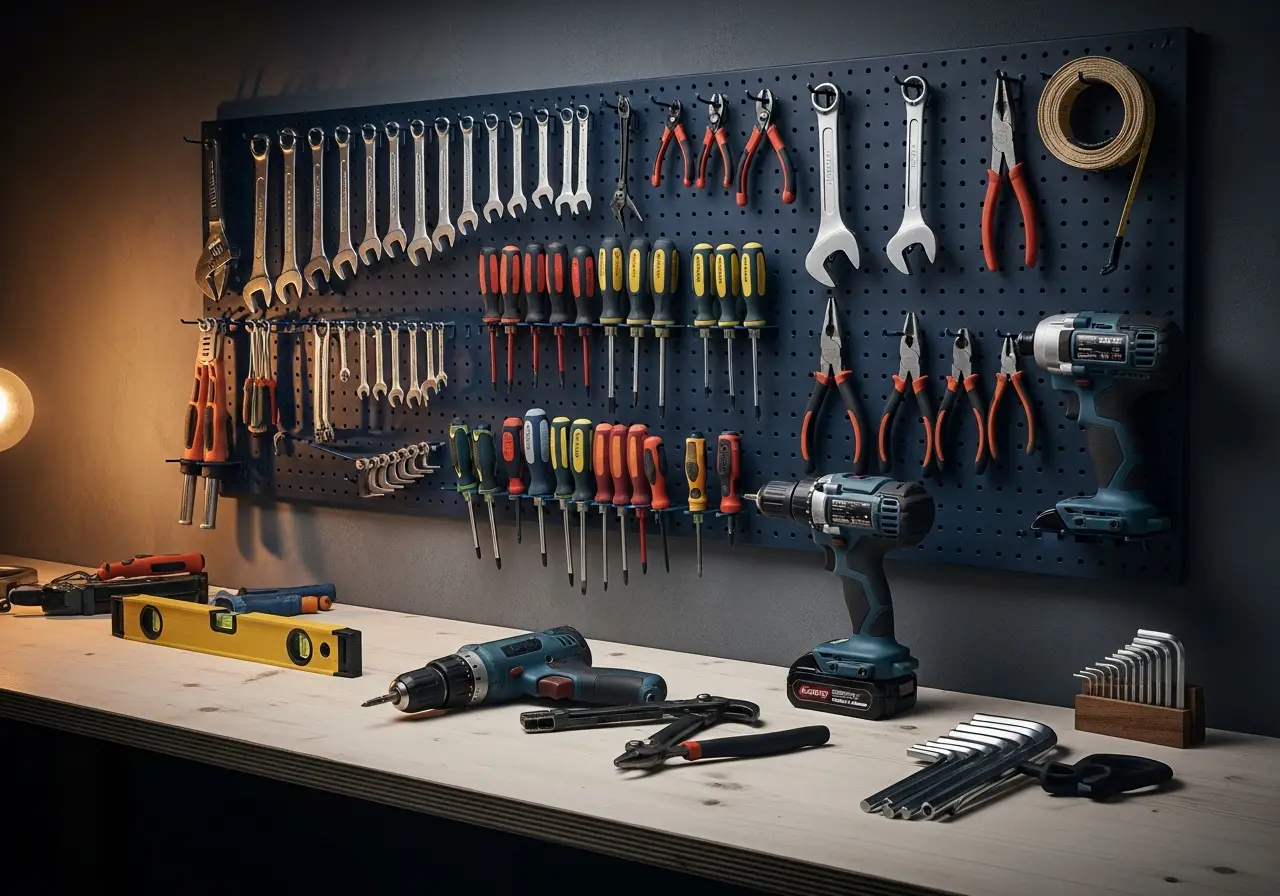
The tools category spans three families. Power tools include corded, cordless and pneumatic drilling, cutting, grinding and fastening tools — from drill drivers and impact wrenches to angle grinders, circular saws and rotary hammers. Hand tools cover the manual counterparts: socket sets, spanners, torque wrenches, pliers, screwdrivers, hammers and measuring hand tools. Around both sits a heavy consumables tail — drill bits, saw blades, cutting discs, sanding abrasives — that usually outspends the tools themselves over a year.
The specifications that drive corporate purchases are voltage class and battery platform for cordless tools (12V for light service work, 18/20V as the workhorse class, higher-voltage packs for outdoor and heavy cutting), input power and duty rating for corded tools, and drive size and torque range for fastening tools. For hand tools used in electrical work, insulation-rated (1,000V) certification matters; for plant environments, spark-resistant or non-marring materials can be specified.
- Cordless: battery platform, voltage class, brushless vs brushed motors, batteries-and-charger kits vs bare units
- Corded and pneumatic: input power, duty cycle, air-consumption requirements against existing compressors
- Fastening: drive size (1/4", 3/8", 1/2"), torque range, calibration certificates for torque tools
- Consumables: material compatibility (HSS, carbide, diamond), arbor sizes matched to the tool fleet
Planning a bulk tooling purchase in Malaysia
The most expensive mistake in tooling procurement is platform sprawl: each cordless brand locks batteries and chargers to its own system, so a site running three platforms carries three sets of spare batteries, chargers and replacement cycles. Before any volume purchase, standardise on one or two platforms per site and buy bare-tool units against a shared battery pool where the platform allows it.
Structure the requirement in three tiers. Tier one is the standard kit — the defined set every technician or team receives, which should be specified once and reordered identically. Tier two is shared capital equipment — larger saws, rotary hammers, pressure washers — bought against a project or maintenance budget with asset tagging. Tier three is the consumables tail, best put on a scheduled replenishment cadence with usage tracked by site so blade and disc consumption becomes a maintenance-planning signal rather than petty-cash noise.
See live stock & pricing for power tools & hand tools on mall.lapasar.com
How to evaluate tool suppliers
Genuine stock is the first gate. Powered tools carry meaningful safety and warranty risk, and grey-imported units frequently arrive without valid Malaysian warranty registration — which surfaces only when a tool fails on site. Ask suppliers to confirm authorised-distribution sourcing and local warranty support in writing, and check that serial numbers register with the brand's Malaysian service network.
Beyond authenticity, evaluate breadth and basket capability. Tooling requirements are mixed by nature — one maintenance order can span four brands and thirty line items — so a supplier that can quote the full basket on one purchase order beats four specialist dealers on total transaction cost, even when a single line is marginally cheaper elsewhere. On the Lapasar marketplace, procurement teams run this comparison directly: multiple suppliers quote against the same request, and vendor-comparison tooling scores price alongside fulfilment history.
- Authorised-distribution confirmation and Malaysian warranty registration for every powered line
- Catalogue breadth across brands and the consumables tail — not just headline tools
- Ability to quote a mixed basket on one PO with one invoice
- Stock transparency and realistic lead-time commitments per line
- After-sales path: service-centre access, spare parts, calibration for torque tools
Pricing and lead-time factors
Tool pricing in Malaysia moves with brand tier, import logistics and battery content. Premium industrial brands command 30–60% over mid-tier trade brands for comparable specifications — justified where duty cycles are heavy, harder to justify for occasional-use tools. Cordless kits carry significant battery cost: a two-battery kit can price 40–70% above the bare tool, which is why platform standardisation and shared battery pools directly cut spend.
Lead times split by stock class. Fast-moving trade tools and consumables are generally available ex-stock from Klang Valley distributors, while specialist or higher-voltage lines may be indent items shipped on regional replenishment cycles. Confirm per-line availability at quotation rather than assuming catalogue presence equals stock, and sequence project tooling orders ahead of mobilisation dates accordingly.
Compliance and governance notes
For corporate and government-linked buyers, the procurement channel matters as much as the tools. Lapasar is a Ministry of Finance (MOF)-registered supplier — its only certification — operating a published governance framework including anti-bribery and supplier-conduct policies, which supports buyers whose own procurement policies require documented channels for tooling and MRO spend.
Within the category itself, governance concerns concentrate on electrical safety (insulated tools for live-work environments, SIRIM-marked corded equipment where applicable), calibration traceability for torque tools used in bolted-joint work, and asset control for capital tools — serial-number capture at goods receipt makes later warranty claims and loss tracking workable.
Sourcing across Malaysia's regions
Tooling demand concentrates around the industrial corridors: the Klang Valley's manufacturing and construction base, Penang and Kulim's electronics and precision-engineering cluster, the Johor Bahru–Pasir Gudang corridor, and heavy-industry zones in Perak and Negeri Sembilan. Distributor depth follows the same map, which is why remote sites and East Coast operations often face longer indent times through traditional dealer networks.
Buying through a consolidated marketplace flattens this geography: orders draw on 10,000+ suppliers regardless of where the site sits, with fulfilment through Lapasar's own warehouses and delivery fleet across Peninsular Malaysia. Orders from RM1,000 qualify for free delivery in the Klang Valley, Penang, Johor, Perak and Negeri Sembilan. For the transactional step — live stock and pricing on specific tools — the mall.lapasar.com tools catalogue carries the full assortment.
Explore the range on mall.lapasar.com
The transactional catalogue — live stock, business pricing and volume quotations — lives on mall.lapasar.com. Start from these power tools & hand tools ranges:
Keep planning with these guides
Common questions
- Should we standardise on one cordless tool platform?
- For most businesses, yes — one primary platform per site, sometimes two where light-duty (12V) and heavy-duty (18V+) needs diverge. Batteries and chargers are platform-locked, so every additional brand multiplies battery inventory, charger points and replacement cycles. Standardising also lets you order bare-tool units against a shared battery pool, which is materially cheaper than buying kits every time.
- How do we avoid grey-import power tools?
- Require written confirmation that stock comes through authorised Malaysian distribution, and verify that serial numbers register with the brand's local service network. Grey imports often look identical and price 10–20% lower, but typically carry no valid Malaysian warranty — a false saving the first time a tool fails on site.
- What belongs on scheduled replenishment versus one-off purchase?
- Consumables — drill bits, saw blades, cutting and grinding discs, abrasives — plus high-wear accessories suit scheduled replenishment with usage tracked by site. Capital tools (the machines themselves) are better handled as approved one-off purchases with asset tagging. Splitting the two keeps approval workflows proportionate to value.
- Can tools, consumables and other MRO items go on one purchase order?
- Through a consolidated marketplace, yes. Lapasar lets procurement teams combine power tools, hand tools, consumables and adjacent MRO categories on one purchase order with one invoice, with credit terms available to every approved business buyer — replacing the multi-dealer, multi-invoice pattern that makes tooling spend expensive to administer.
- Where can we see live pricing and stock for specific tools?
- The transactional catalogue lives on mall.lapasar.com — the tools category there carries the full assortment with live stock and business pricing, and links through to supplier quotations for volume requirements.
Didn't find your answer?
Ask us directly — WhatsApp or email, whichever suits you.
Explore related across the knowledge graph
Ready to act on this guide?
The power tools & hand tools catalogue on mall.lapasar.com carries live stock and business pricing from 10,000+ suppliers — with credit terms for approved buyers and delivery across Peninsular Malaysia.
Prefer to talk to a real person?
Our team replies fast on WhatsApp and email — no forms, no waiting.