
Sourcing Guide · Pumps & Valves
Pumps, Valves & Flow Control: A Sourcing Guide for Malaysian Businesses
Flow control is an engineering purchase before it is a procurement one. A pump specified without a duty point, or a valve chosen without regard to the fluid it isolates, becomes a maintenance liability the moment it is installed. This guide covers how to specify to duty, select the right materials of construction, meet the pressure-safety obligations, and consolidate a fragmented fluid-handling spend.
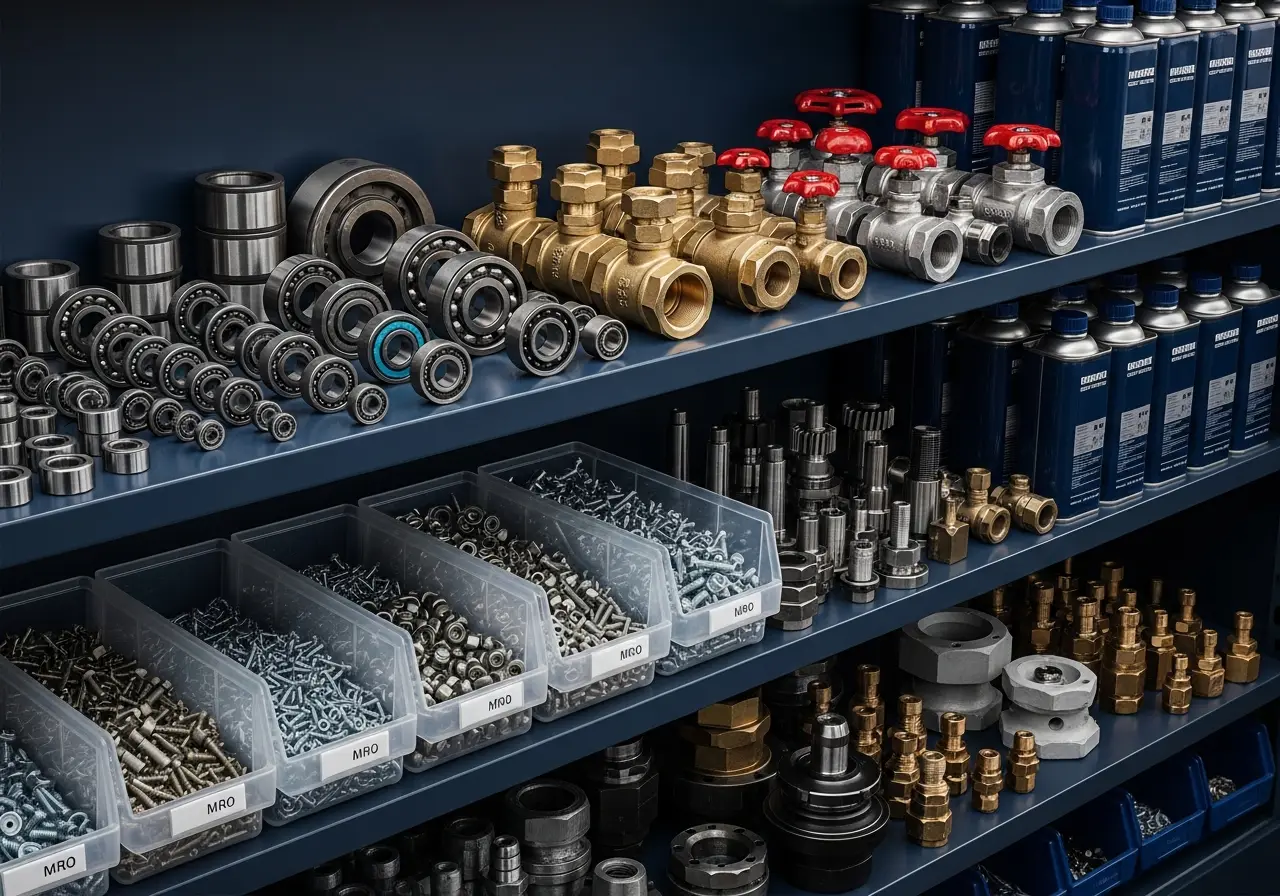 Sourcing guide
Sourcing pumps and valves for a Malaysian plant starts with the duty, not the catalogue: define flow rate, head and fluid properties so a pump is matched to its curve and a valve to the pressure, temperature and media it handles. Confirm materials of construction suit the fluid, size pressure-relief devices to protect the system, and evaluate suppliers on engineering support, genuine spares availability and breadth across pumps, valves and regulators. Consolidating flow-control spend through a managed marketplace such as Lapasar gives procurement teams access to 10,000+ suppliers on one account, with credit terms for approved buyers and delivery across Peninsular Malaysia.
Key takeaways
- Specify a pump to its duty point — flow rate and head — so it runs near its best-efficiency point; an oversized pump wastes energy and cavitates, an undersized one never meets demand.
- Match materials of construction and seal type to the fluid: aggressive, abrasive or hot media dictate the body, trim and elastomer choices well ahead of price.
- Pressure-relief and non-return devices are safety items, not accessories — size relief valves to protect the vessel or line and confirm set pressures against the system design.
- Standardise on common pump frames, valve sizes and seal kits so spares are interchangeable and unplanned downtime is covered from shelf stock.
What counts as pumps, valves & flow control
Fluid-handling equipment used to move, isolate, throttle and protect liquid and gas systems — centrifugal and positive-displacement pumps, isolation and control valves, non-return devices, pressure-relief valves and regulators.
Who typically sources this category
- Manufacturing & process plants
- Water & wastewater
- Building services & facilities
- Oil, gas & petrochemical
- Food & beverage processing
Specify to duty: the pump curve governs everything
Unlike most indirect purchases, a pump cannot be chosen from a picture — it is selected against a duty point defined by the required flow rate and the total head it must overcome. Read against the manufacturer's performance curve, the goal is to run near the best-efficiency point: too far left and the pump recirculates and overheats, too far right and it cavitates and wears its impeller. Net positive suction head available (NPSHa) must exceed the pump's requirement, or the pump will cavitate regardless of how well the rest of the system is sized.
Pump type follows the service. Centrifugal pumps suit clean, high-flow water and thin-liquid duties; positive-displacement types such as gear and lobe pumps handle viscous oils, chemicals and dosing where a steady volume per revolution matters more than head. Get the fluid properties — viscosity, temperature, solids content and chemistry — onto the enquiry, because they change both the pump type and the materials of construction.
- Duty point: flow rate (m³/h or l/min) and total head (m), read against the pump curve
- Suction condition: NPSH available vs required, to avoid cavitation
- Pump type: centrifugal for clean high-flow, positive-displacement for viscous or dosing duties
- Fluid data: viscosity, temperature, solids and chemistry — these drive material selection
Valves, materials and seal selection
Valve selection is a function of what the valve must do — isolate, throttle, prevent reverse flow or relieve pressure — and the media it sees. Isolation duties favour ball and gate valves; throttling favours globe or control valves; reverse-flow protection uses check and non-return valves; and overpressure protection uses relief valves set to the system's design pressure. Foot valves keep suction lines primed, and mixing valves blend flows to a controlled temperature.
Materials of construction and trim decide service life. Body materials range from cast iron and bronze for general water service to stainless and exotic alloys for corrosive or hygienic duty, while elastomer seals and seats must be compatible with the fluid and its temperature. Getting body, trim and seal specified together avoids the common failure of a correct valve size with an incompatible seat that fails within weeks.
See live stock & pricing for pumps, valves & flow control on mall.lapasar.com
Pressure safety and compliance
Pressure systems carry real safety obligations. Pressure-relief valves and the vessels they protect fall under Malaysia's occupational-safety regime overseen by the Department of Occupational Safety and Health (DOSH), and relief devices must be sized and set to protect the equipment rather than fitted as an afterthought. Confirm set pressures against the system design and keep the certification and test records with your asset documentation.
On the procurement-channel side, corporate and government-linked buyers often need a documented supply route for engineered equipment. Lapasar is a Ministry of Finance (MOF)-registered supplier — its only certification — operating a published governance framework covering anti-bribery and supplier conduct, which supports buyers whose procurement policies require documented channels for regulated plant equipment.
Evaluating pump and valve suppliers
Engineering support is the first differentiator. A supplier who can take a duty point and return a correctly selected pump — with the curve, NPSH check and materials reasoning — is worth more than one who simply quotes a model number. For valves, the equivalent is confirming body, trim and seal compatibility with the stated fluid rather than shipping a nominal size.
After engineering, weigh spares and breadth. Flow-control equipment is maintained on seal kits, impellers and gaskets, so a supplier who stocks genuine spares for the ranges they sell keeps unplanned downtime short. On the Lapasar marketplace, procurement teams compare suppliers against the same specification and weigh price against fulfilment history and spares availability rather than choosing on headline unit cost alone.
- Ability to select against a duty point and confirm NPSH and materials
- Genuine spares — seal kits, impellers, gaskets — for the ranges supplied
- Breadth across pumps, valves, regulators and pressure-relief devices
- Evidence of pressure-safety compliance on relief and vessel-related items
- Realistic lead times on indent pumps and specialist valve trims
Pricing, lead times and standardisation
Pump and valve pricing splits between stock trade items and engineered indent. Common water pumps, general ball and gate valves and standard check valves are usually available from Klang Valley and regional distributors; specific duty pumps, exotic-alloy valves and larger relief devices are frequently indent with longer replenishment cycles. Confirm per-line availability at quotation and sequence project orders against installation dates.
Standardisation is the biggest long-run saving in this category. Settling on a small number of pump frames, valve sizes and seal-kit part numbers means spares are interchangeable across the plant, buffer stock covers more failure modes, and maintenance teams are not learning a new unit on every breakdown. Building that standard list once turns a reactive, single-line spend into a predictable reorder pattern.
Sourcing across Peninsular Malaysia
Flow-control distribution depth concentrates around the industrial corridors — the Klang Valley, the Penang manufacturing base and the Johor and east-coast petrochemical clusters — leaving plants on the fringes of these networks juggling several specialist suppliers to cover pumps, valves and regulators. A consolidated marketplace flattens that: orders draw on 10,000+ suppliers regardless of site location, fulfilled through Lapasar's own warehouses and delivery fleet across Peninsular Malaysia, with orders from RM1,000 qualifying for free delivery in the Klang Valley, Penang, Johor, Perak and Negeri Sembilan.
For the transactional step — live stock and pricing on specific pumps, valves, regulators and spares — the pumps catalogue on mall.lapasar.com carries the full assortment and links through to supplier quotations for engineered requirements.
Explore the range on mall.lapasar.com
The transactional catalogue — live stock, business pricing and volume quotations — lives on mall.lapasar.com. Start from these pumps, valves & flow control ranges:
Keep planning with these guides
Common questions
- What information does a supplier need to select the right pump?
- Provide the duty point — the required flow rate and total head — plus the fluid properties: viscosity, temperature, solids content and chemistry, and the suction condition so NPSH available can be checked against the pump's requirement. With that a supplier can select a pump that runs near its best-efficiency point rather than one that cavitates or wastes energy.
- How do we choose valve materials and seals?
- Match body, trim and seal to the media, not just the pipe size. General water service may use cast iron or bronze, while corrosive or hygienic duty needs stainless or an alloy, and the elastomer seat must be compatible with the fluid and its temperature. A correctly sized valve with an incompatible seat can fail within weeks, so specify all three together.
- Are pressure-relief valves subject to compliance requirements?
- Pressure systems and the vessels relief valves protect fall under Malaysia's occupational-safety regime overseen by DOSH. Relief devices must be sized and set to protect the equipment against its design pressure, and the certification and test records should be kept with your asset documentation.
- How does standardising pumps and valves reduce cost?
- Settling on a small number of pump frames, valve sizes and seal-kit part numbers makes spares interchangeable across the plant, lets buffer stock cover more failure modes and keeps maintenance teams familiar with the units. Through a consolidated marketplace those standard lines can sit on one account with credit terms for approved buyers.
- Where can we see live pricing and stock for pumps and valves?
- The transactional catalogue lives on mall.lapasar.com — the pumps category there carries the full assortment with live stock and business pricing, and links through to supplier quotations for engineered or volume requirements.
Didn't find your answer?
Ask us directly — WhatsApp or email, whichever suits you.
Explore related across the knowledge graph
Ready to act on this guide?
The pumps, valves & flow control catalogue on mall.lapasar.com carries live stock and business pricing from 10,000+ suppliers — with credit terms for approved buyers and delivery across Peninsular Malaysia.
Prefer to talk to a real person?
Our team replies fast on WhatsApp and email — no forms, no waiting.