
How Hotels and Resorts in Malaysia Handle Procurement Automation
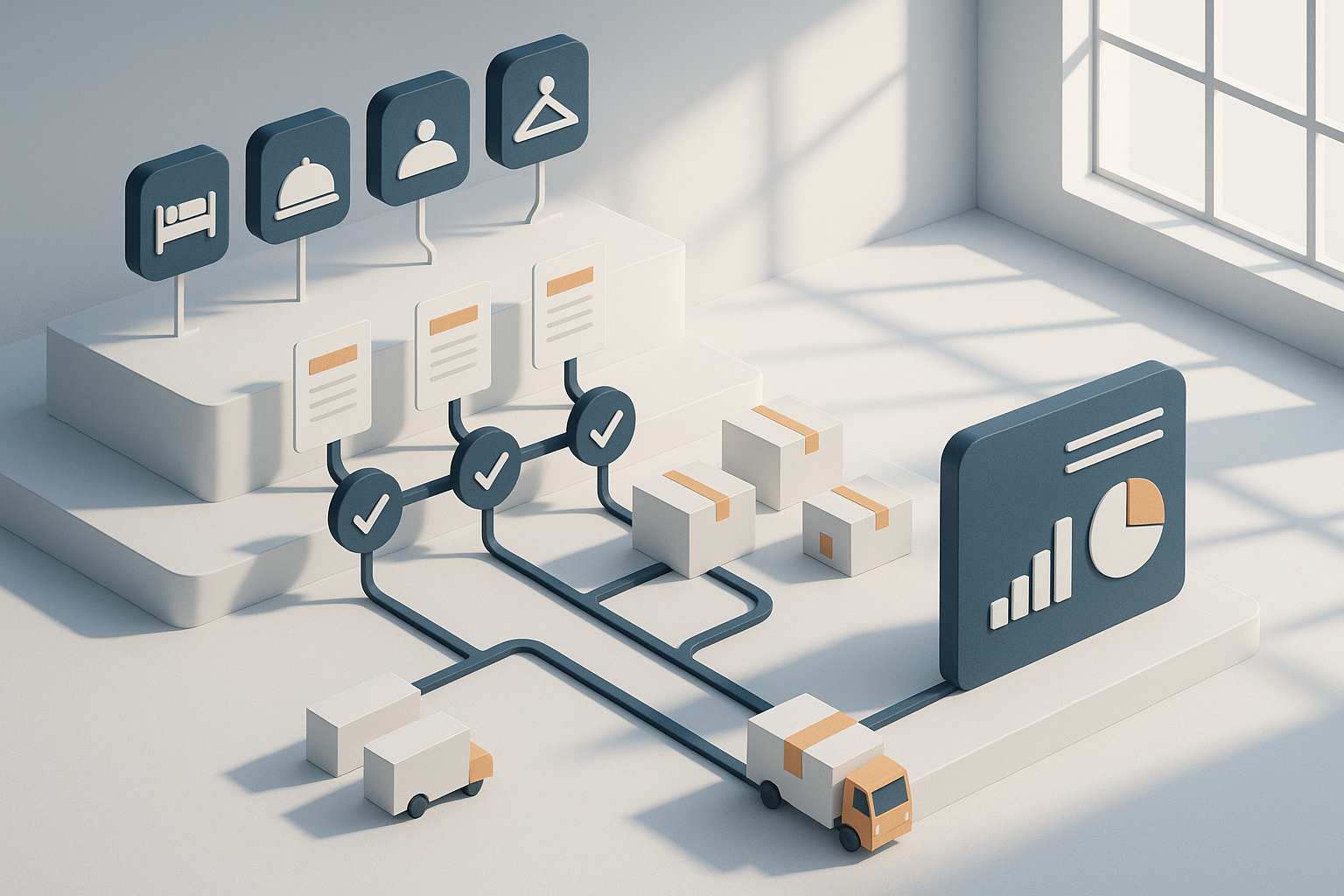
Hotels and resorts run on constant replenishment. Housekeeping items, F&B ingredients, engineering supplies, guest amenities, office consumables and emergency purchases all move through different teams, cost centres and approval paths. That makes procurement automation especially relevant in hospitality, where service levels depend on speed but finance and operations still need control.
Quick answer
Hotels and resorts in Malaysia handle procurement automation by standardising routine purchasing tasks while keeping human oversight on approvals, budgets, supplier selection and exceptions. In practice, that usually means digitising purchase requests, approval workflows, catalog buying, goods receipt, invoice matching and spend tracking across properties or departments. The goal is not to remove procurement teams, but to reduce manual work, improve visibility and make day-to-day buying more consistent.
Why procurement automation matters in hospitality
Hotels are not buying one category from one supplier on one schedule. They manage a wide indirect spend environment with many requesters and frequent low-value orders.
Common hospitality purchasing realities include:
- Housekeeping teams needing recurring replenishment
- Kitchens requiring time-sensitive ingredient orders
- Maintenance teams sourcing urgent replacement items
- Banquet and events teams placing seasonal or project-based purchases
- Front office and guest experience teams ordering ad hoc items
- Finance teams checking invoices from multiple departments
- Management teams wanting tighter budget visibility by property, outlet or department
When these activities are handled through email, WhatsApp, spreadsheets and paper forms, several problems usually appear:
- Slow approvals during weekends or after office hours
- Duplicate ordering across departments
- Maverick spend outside approved supplier arrangements
- Missing documentation for audit trails
- Difficulty matching PO, goods receipt and invoice
- Limited visibility into who bought what, from whom and under which budget
- Inconsistent item standards across properties
Automation helps by turning these fragmented steps into a structured workflow.
What procurement automation usually means for hotels and resorts
Procurement automation does not mean every purchase is fully automated from start to finish. In hospitality, it usually means routine and repeatable steps are handled digitally, while higher-risk or unusual purchases are escalated to people.
Typical processes that get automated
Most hotels start with a combination of these:
- Digital purchase requisitions
- Role-based approvals
- Pre-approved supplier and item catalogs
- Automatic PO creation after approval
- Goods receipt recording by receiving or requesting teams
- Invoice matching against PO and receipt
- Spend dashboards by department or property
- Budget checks before approval
- Recurring order templates for frequently used items
- Exception alerts for price variances, duplicate invoices or off-contract buying
What usually stays under human judgement
Automation supports control, but hospitality still needs human review for:
- Supplier onboarding and qualification
- Contract negotiation
- F&B category decisions involving quality or menu changes
- Emergency buying during stockouts or equipment failure
- Capex purchases and renovation-related sourcing
- Dispute resolution on deliveries, substitutions or pricing
- Sustainability or brand-standard decisions
A useful rule is simple: automate the process, not the judgement.
How hotels structure procurement automation by department
Different hotel functions buy differently. A workable automation setup respects those differences instead of forcing every team into one rigid path.
Housekeeping and rooms division
These departments often benefit first because demand is recurring and specifications are relatively stable.
Items often suited for automation:
- Tissue and paper products
- Cleaning chemicals
- Guest toiletries
- Liners and disposal items
- Basic room consumables
- Pantry supplies for back-of-house areas
Useful controls include:
- Par-level based reorder workflows
- Approved item lists by room category or brand standard
- Limits by department budget
- Preferred pack sizes to reduce mismatch in ordering
Food and beverage operations
F&B procurement is more complex because freshness, substitutions and delivery timing matter.
Automation usually works best for:
- Dry goods and packaged items
- Beverage supplies
- Cleaning and hygiene materials for kitchen operations
- Disposable service items
- Standardised non-perishable SKUs
Areas that often need more manual oversight:
- Fresh produce
- Seafood and meat with quality variation
- Seasonal sourcing
- Items affected by menu changes or banquet volume swings
In these categories, hotels may automate approvals, recordkeeping and invoice reconciliation even if item selection remains partly manual.
Engineering and maintenance
Maintenance teams often face a mix of planned and urgent purchases.
Automation helps through:
- Approved vendor lists for common MRO items
- Fast-track workflows for emergency repairs
- Spend categorisation for routine versus urgent maintenance
- Better traceability on recurring breakdown-related purchases
This is important because many hotels lose visibility when urgent items are bought outside normal channels.
Administration and corporate functions
Office supplies, IT consumables, uniforms, printed materials and other indirect spend categories are often ideal candidates for catalog-based procurement automation.
These purchases are usually easier to standardise through:
- Central item catalogs
- Department budgets
- Approval thresholds
- Scheduled reporting for finance and procurement teams
A simple before-and-after view
The operational difference becomes clearer when comparing manual and automated workflows.
| Area | Manual approach | Automated approach |
|---|---|---|
| Purchase request | Email, paper form or chat message | Structured digital requisition |
| Approval | Chased manually across managers | Rule-based routing by role, amount or department |
| Supplier choice | Depends on requester habit | Guided to approved suppliers or catalogs |
| PO creation | Re-entered by procurement or finance | Generated automatically after approval |
| Goods receipt | Recorded late or not at all | Captured in system for matching |
| Invoice handling | Manual checking against emails and paper | PO-receipt-invoice matching with exception flags |
| Reporting | Spreadsheet consolidation | Real-time or scheduled dashboards |
| Audit trail | Fragmented and incomplete | Centralised, time-stamped history |
What a practical procurement automation workflow looks like
A Malaysian hotel or resort does not need to automate everything on day one. A sensible workflow often looks like this.
1. Request creation
A department user raises a purchase request in a system rather than sending an informal message. The request includes:
- Department or outlet
- Required delivery date
- Item or SKU selection
- Quantity
- Cost centre
- Supporting notes or attachments where needed
For repeat purchases, the system may offer saved templates or approved catalogs.
2. Budget and policy checks
Before a request moves forward, the system can validate:
- Whether the item is in an approved catalog
- Whether the requester is authorised
- Whether the department budget has room
- Whether a quote or additional approval is required
This step is especially useful for multi-department hotel operations where many employees initiate purchases.
3. Approval routing
Approvals are sent automatically based on policy, such as:
- Department head approval
- Finance review above a threshold
- Procurement review for non-standard items
- General manager approval for high-value or exceptional requests
The key advantage is consistency. The policy is applied the same way whether the request comes from housekeeping, the kitchen or engineering.
4. Purchase order issuance
Once approved, the system creates a PO and sends it to the supplier or routes it through the procurement team for final release.
This reduces re-keying and lowers the chance of ordering errors.
5. Delivery and goods receipt
Receiving staff or the requesting department records what arrived. This can include:
- Quantity received
- Partial deliveries
- Damaged items
- Substitutions
- Delivery date
For hotels, this step matters because service disruption often begins when receiving records are incomplete.
6. Invoice matching and payment readiness
Finance teams then compare:
- The approved PO
- The goods receipt
- The supplier invoice
Where the values match within policy, processing is faster. Where there are differences, the system flags an exception for review.
This is often where finance sees the most immediate benefit, because manual reconciliation takes significant time across many small purchases.
Key controls hotels and resorts usually build into automation
Hospitality businesses need speed, but they also need guardrails.
Approval thresholds and exception rules
Not every purchase should follow the same route. Common approaches include:
- Lower-touch approval for routine catalog items
- Additional review for non-catalog purchases
- Escalation for urgent same-day orders
- Higher approval levels for capex-related requests
Multi-property or multi-outlet visibility
Groups operating more than one property often want to compare spend patterns across locations. Automation helps standardise category mapping and reporting, making it easier to spot:
- Price inconsistencies
- Duplicate suppliers across properties
- Opportunities to consolidate routine categories
- Unusual spending spikes in one department or property
Supplier governance
Automation works best when supplier data is clean and controlled. Hotels typically need a clear process for:
- Supplier onboarding documents
- Banking and tax details
- Contract or pricing validity
- Approved categories by supplier
- Performance tracking on fulfilment and issue resolution
Where relevant, businesses may also maintain proper records for LHDN and SST handling in their internal processes.
Common implementation mistakes in hospitality
Procurement automation can fail when hotels treat it as a pure software project instead of an operating model change.
Trying to automate broken processes first
If approval rules are unclear, supplier lists are outdated, or item descriptions are inconsistent, automation will expose the mess faster rather than solve it.
Start by cleaning:
- Approval matrices
- Cost centre structures
- Supplier master records
- Common item names and units of measure
Forcing every category into one workflow
Fresh food buying does not behave like office stationery. Engineering emergencies do not behave like standard housekeeping replenishment.
Use different workflows where needed.
Ignoring receiving and invoice matching
Some hotels digitise requisitions but leave receiving and invoice processing outside the system. That reduces the value substantially because the full control chain is broken.
Underestimating requester adoption
If requesters find the process slow or confusing, they may bypass it. Good automation should make compliant buying easier than informal buying.
That means:
- Simple request forms
- Mobile-friendly approvals where practical
- Clear catalogs and item images where relevant
- Minimal duplicate data entry
How Malaysian hotels typically phase the rollout
A phased rollout is usually safer than a full big-bang deployment.
Phase 1: Standardise routine indirect spend
Best starting categories often include:
- Housekeeping consumables
- Pantry and office supplies
- Paper products
- Cleaning supplies
- Standard back-of-house items
Why start here:
- High repeatability
- Lower sourcing complexity
- Faster user adoption
- Easier policy enforcement
Phase 2: Expand approvals, receiving and invoice controls
Once users are comfortable raising requests digitally, hotels usually extend automation into:
- Goods receipt capture
- Invoice matching
- Department spend visibility
- Supplier performance review
Phase 3: Tackle more complex categories and group-wide optimisation
This may include:
- Multi-property procurement standardisation
- Contract compliance reporting
- Advanced exception handling
- Better forecasting for recurring non-F&B categories
How finance, procurement and operations each benefit
Procurement automation works best when it is not positioned as a procurement-only initiative.
For finance teams
Benefits often include:
- Better documentation for audit trails
- Faster invoice reconciliation
- Cleaner accrual support
- Improved spend visibility by cost centre
- Better control over off-contract purchasing
For procurement teams
Benefits often include:
- Less manual PO processing
- Better supplier and item standardisation
- Easier enforcement of approved buying channels
- More time for strategic sourcing and supplier management
For hotel operations teams
Benefits often include:
- Faster ordering of routine items
- Fewer back-and-forth approval delays
- Better stock continuity for operational essentials
- Clearer accountability when urgent purchases happen
What to look for in a procurement automation setup for hospitality
When evaluating a process or platform, hotels and resorts should focus on operational fit, not just feature lists.
| Evaluation area | What hotels should look for |
|---|---|
| Catalog control | Approved items, clear pack sizes, easy repeat ordering |
| Workflow flexibility | Different approval paths for housekeeping, F&B, engineering and admin |
| Receiving support | Partial delivery, substitution and discrepancy handling |
| Invoice control | Matching against PO and receipt with exception handling |
| Reporting | Department, outlet and property-level spend visibility |
| Supplier breadth | Ability to support varied indirect categories from trusted suppliers |
| User adoption | Simple requester experience and practical approval flow |
| Compliance support | Documentation and records that support internal policy and tax handling |
The real goal: better service with better control
In hotels and resorts, procurement automation is not mainly about reducing clicks for head office. It is about protecting guest experience while improving financial discipline. A missing housekeeping item, a delayed maintenance part or an untracked emergency purchase can quickly become an operational problem.
The best hospitality procurement setups therefore balance three things:
- Speed for routine operational buying
- Control for approvals, budgets and supplier usage
- Visibility for finance, procurement and property leadership
When those three are aligned, automation becomes more than a digital tool. It becomes part of how a hotel runs reliably across departments.
For Malaysian businesses managing indirect and tail spend, a specialised B2B procurement platform can help centralise catalogs, approvals and supplier access. Lapasar is MOF-registered, purpose-built for indirect and tail spend, and serves 100+ corporate clients — Malaysia's #1 B2B marketplace by number of corporate clients served.