
Supplier Evaluation: Criteria, Methods and Scorecards
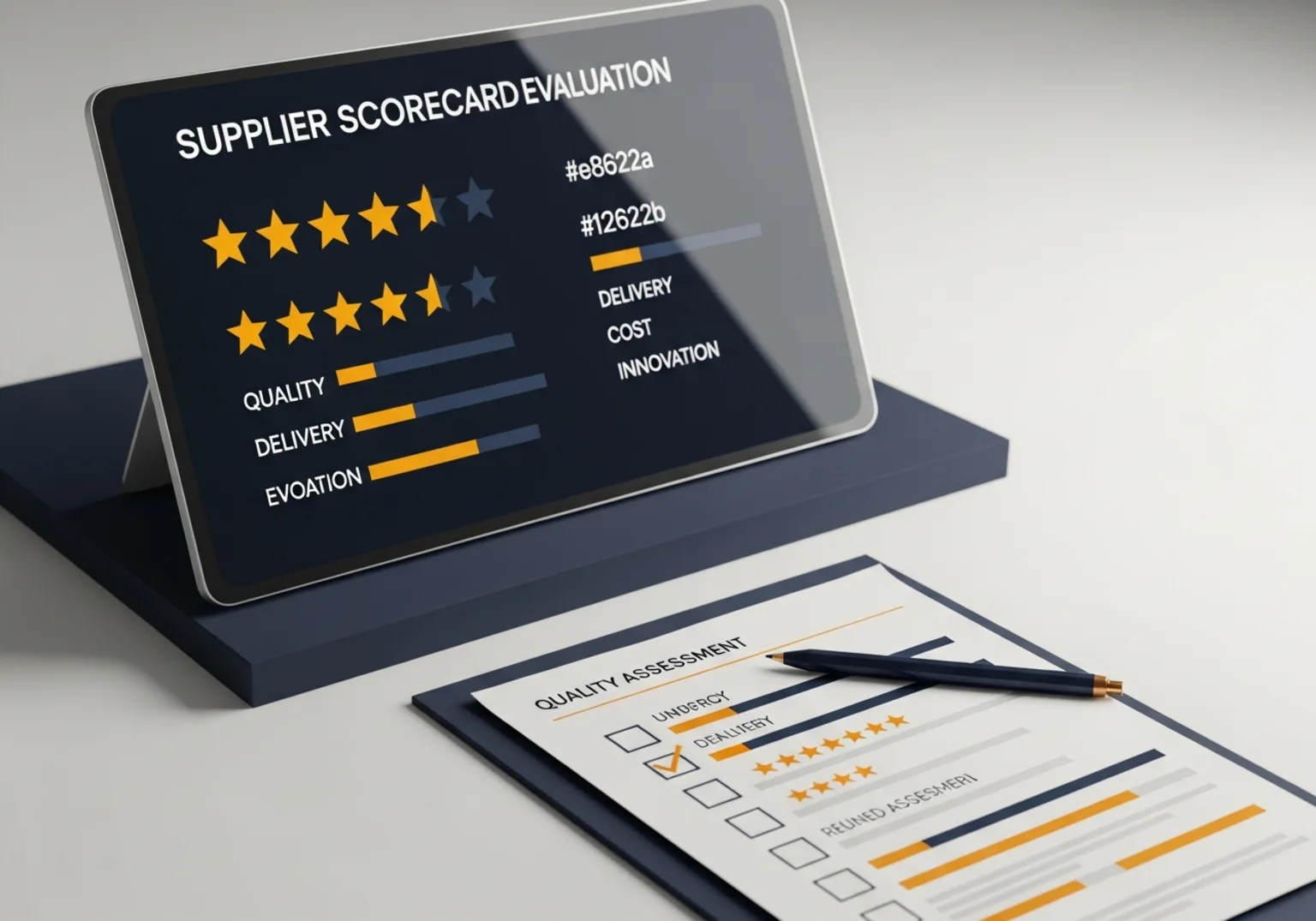
Short answer: Supplier evaluation is the structured assessment of a supplier's ability to meet a buyer's requirements — measured against consistent criteria such as price, quality, delivery reliability, financial stability, and compliance. It is done both before awarding business (to select the right supplier) and during the relationship (to monitor performance), usually with a weighted scorecard. This guide is part of the complete guide to corporate procurement in Malaysia.
What Is Supplier Evaluation?
Supplier evaluation replaces gut feel and relationship history with objective assessment. By scoring suppliers against defined criteria, procurement teams can compare candidates fairly, justify their decisions, and hold existing suppliers accountable for performance over time.
There are two moments where it applies: pre-award evaluation (choosing among bidders after an RFQ) and ongoing evaluation (reviewing how a live supplier is actually performing).
Core Supplier Evaluation Criteria
Most evaluation frameworks assess suppliers across a consistent set of dimensions:
- Price and total cost of ownership — not just unit price, but delivery, payment terms, and hidden costs
- Quality — how well products or services meet specification, defect rates, and returns
- Delivery reliability — on-time, in-full performance and lead-time consistency
- Financial stability — the supplier's ability to remain a going concern
- Capacity and scalability — whether the supplier can meet your volumes
- Compliance and certification — legal, tax, and industry requirements
- Service and responsiveness — communication, issue resolution, and support
How to Build a Supplier Scorecard
A scorecard turns these criteria into a repeatable score:
- Choose criteria relevant to the category being sourced.
- Assign weights so the most important factors carry the most influence — for a critical component, quality and reliability might outweigh price; for commodity items, price may dominate.
- Score each supplier on every criterion, typically on a 1–5 or 1–10 scale.
- Calculate weighted totals to rank suppliers objectively.
- Review and act — award to the strongest candidate, or set improvement targets for underperforming incumbents.
Weighting Example
If quality is weighted 40%, delivery 30%, price 20%, and compliance 10%, a supplier that is cheapest but unreliable will score lower than a slightly pricier supplier that delivers consistently — which usually reflects true business value better than price alone.
Pre-Award vs Ongoing Evaluation
Pre-award evaluation selects the right supplier before a purchase order is issued. Ongoing evaluation, done quarterly or annually, tracks actual performance so problems are caught early and strong suppliers are recognized. Ongoing scores also feed spend analysis, linking supplier performance to where money is being spent.
The Role of Verified Suppliers
Evaluation is far easier when suppliers are already verified. A managed marketplace pre-qualifies its supplier base, checking compliance and reliability before they can transact. On Lapasar, buyers work with more than 10,000 verified suppliers, reducing the assessment burden on procurement teams. Evaluation also connects to supplier onboarding, where the checks that inform your scorecard are first collected. For the full cycle, see the corporate procurement guide.
Frequently asked questions
What is supplier evaluation?
Supplier evaluation is the structured assessment of a supplier's ability to meet a buyer's requirements, measured against consistent criteria such as price, quality, delivery reliability, financial stability, and compliance. It is done both before awarding business and during the relationship to monitor performance.
What are the main supplier evaluation criteria?
Most frameworks assess price and total cost of ownership, quality, delivery reliability, financial stability, capacity and scalability, compliance and certification, and service and responsiveness.
What is a supplier scorecard?
A supplier scorecard turns evaluation criteria into a repeatable weighted score: choose criteria relevant to the category, assign weights so the most important factors carry the most influence, score each supplier on every criterion, calculate weighted totals to rank suppliers objectively, then award or set improvement targets.
How often should supplier performance be reviewed?
Ongoing supplier evaluation is typically done quarterly or annually. Regular reviews track actual performance so problems are caught early, strong suppliers are recognized, and the scores feed spend analysis and future sourcing decisions.