
Digital Transformation Through B2B Marketplaces
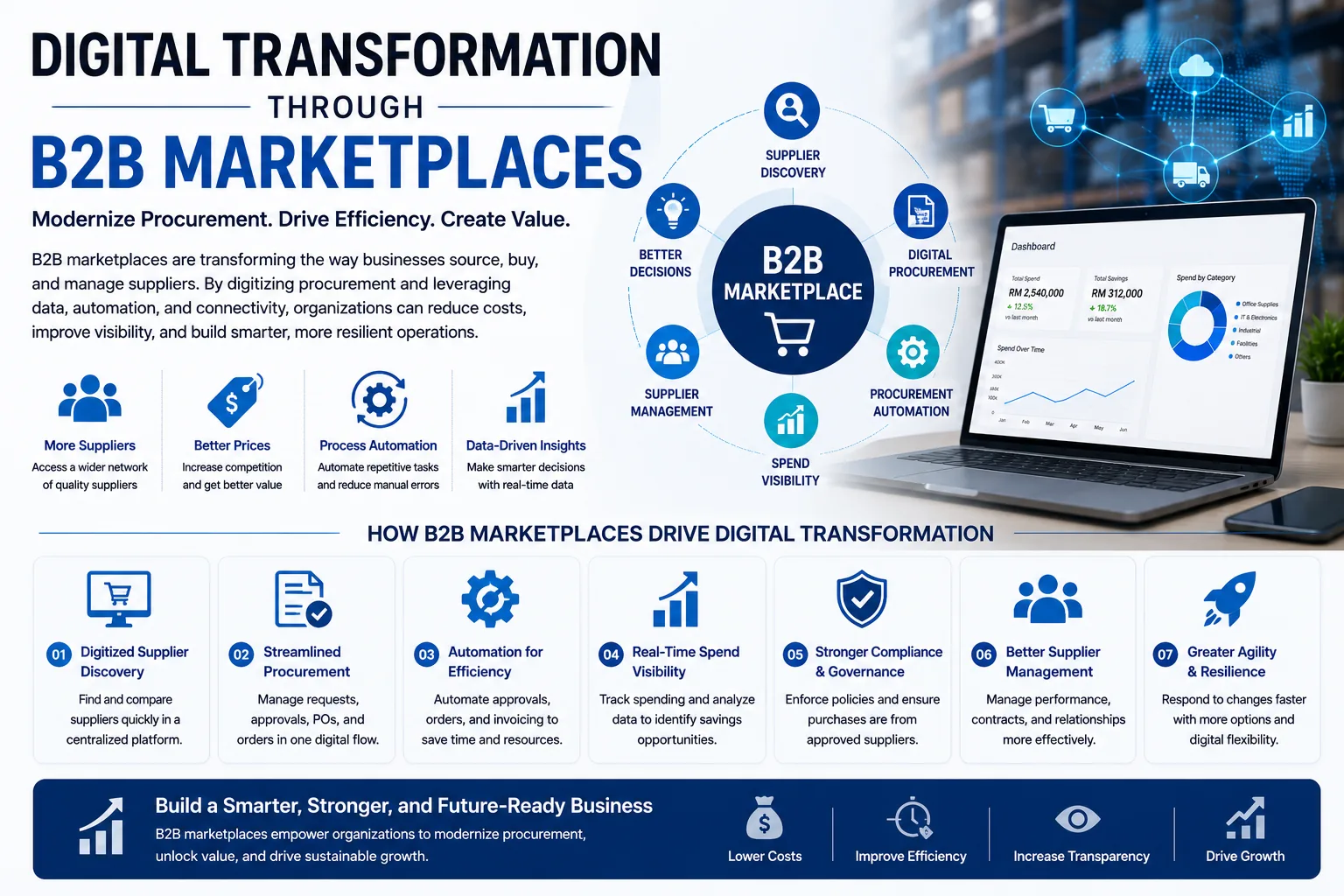
Digital transformation has become one of the most important priorities for businesses across the world. Organizations are investing heavily in technology to improve efficiency, reduce costs, enhance customer experiences, and remain competitive in increasingly complex markets. While digital transformation often focuses on customer-facing technologies, procurement and supply chain operations have become equally important areas for modernization. One of the most effective ways businesses are accelerating digital transformation is through the adoption of B2B marketplaces.
A B2B marketplace is a digital platform that connects businesses with suppliers, manufacturers, distributors, and service providers through a centralized procurement ecosystem. B2B marketplaces digitize sourcing, purchasing, supplier management, and procurement processes. This helps organizations move away from manual workflows and toward data-driven, technology-enabled operations.
Procurement: The Last Frontier of Digital Transformation
For many businesses, procurement remains one of the last functions to undergo full digital transformation. Traditional procurement processes often rely on emails, spreadsheets, phone calls, paper-based approvals, and fragmented supplier relationships. These manual processes create inefficiencies, reduce visibility, increase administrative costs, and limit an organization's ability to make informed decisions. B2B marketplaces address these challenges by creating a centralized digital environment that streamlines procurement activities and improves operational performance.
Digitising Supplier Discovery
One of the most significant contributions of B2B marketplaces to digital transformation is the digitization of supplier discovery. Historically, businesses relied on existing supplier networks, referrals, trade shows, and manual research to identify vendors. This process could take weeks or even months. A B2B marketplace provides instant access to a network of suppliers, allowing businesses to search, compare, evaluate, and engage vendors through a single platform. This dramatically accelerates sourcing activities while increasing supplier visibility and competition.
Automating Procurement Workflows
Digital procurement is another critical component of transformation. Many organizations continue to manage purchase requests, quotations, approvals, and orders through disconnected systems. These fragmented workflows create delays and increase the risk of errors. B2B marketplaces centralize procurement processes into a single platform where purchasing activities can be managed more efficiently. By digitizing procurement workflows, organizations reduce administrative burdens while improving speed, accuracy, and compliance.
Automation plays a major role in modern digital transformation strategies. Businesses are increasingly looking for opportunities to eliminate repetitive manual tasks and redirect resources toward higher-value activities. B2B marketplaces support procurement automation by streamlining purchase approvals, supplier onboarding, order processing, spend reporting, and invoice management. This not only reduces operational costs but also accelerates procurement cycles and reduces the risk of human error.
From Manual to Digital: What Changes
When organizations move procurement onto a B2B marketplace, the shift is felt across multiple functions:
- Purchase requests are raised digitally instead of by email or phone
- Approval workflows are enforced automatically within the system
- Orders are tracked end-to-end with real-time status updates
- Supplier communications are logged within the platform
- Procurement data flows directly into reporting dashboards
These changes free procurement teams from administrative overhead and give leadership better visibility into spending patterns.
Real-Time Spend Visibility and Analytics
One of the most valuable aspects of digital transformation in procurement is access to real-time data. Traditional procurement often suffers from poor visibility — organizations may not know how much they are spending, with whom, or whether spending aligns with approved budgets. B2B marketplaces address this by capturing purchasing data at the transaction level and surfacing it through reporting and analytics tools.
With centralized spend data, organizations can monitor procurement performance, identify savings opportunities, track supplier performance, and make evidence-based decisions. This visibility is particularly valuable for finance teams managing budgets and for procurement managers seeking to demonstrate cost savings and efficiency improvements.
Scaling Supplier Relationships Digitally
As organizations grow, managing an expanding supplier base becomes increasingly complex. B2B marketplaces provide digital tools for supplier management. Businesses can onboard new vendors, track supplier performance, manage contracts, and maintain compliance records at scale. This structured approach to supplier management replaces the fragmented, relationship-dependent processes that characterize traditional procurement.
Digital supplier management also improves resilience. When organizations have visibility across a broader supplier network, they are better positioned to respond to supply disruptions by switching to alternative vendors quickly.
ERP and System Integration
For digital transformation to be fully effective, procurement systems must connect with broader business technology infrastructure. Leading B2B marketplaces support integration with ERP systems, accounting platforms, and expense management tools. This integration ensures procurement data flows automatically into financial systems. It reduces manual data entry, improves accuracy, and gives organizations a complete picture of operational spending.
The Business Case for B2B Marketplace Adoption
The adoption of a B2B marketplace represents one of the most practical and immediate steps an organization can take toward digital procurement transformation. Unlike large-scale ERP implementations that require months of configuration, a B2B marketplace can typically be adopted with minimal technical setup. It begins delivering value quickly through improved supplier access, process efficiency, and spend visibility.
Organizations that have embraced digital procurement through B2B marketplaces report consistent gains. These include shorter procurement cycle times, lower administrative costs, improved supplier relationships, and greater confidence in spending data accuracy. Lapasar's enterprise procurement case studies document these outcomes in detail across Malaysian enterprise deployments. For businesses seeking to accelerate their digital transformation journey, the procurement function offers a high-impact, measurable opportunity.