
How to Run Year-End Supplier Performance Evaluations That Actually Improve Results
Year-end supplier reviews often become a box-ticking exercise: teams gather a few complaints, rate vendors loosely, then move on. Done properly, though, supplier performance evaluations can improve service quality, reduce supply risk, tighten cost control and give both sides a clear plan for the next year.
Quick answer
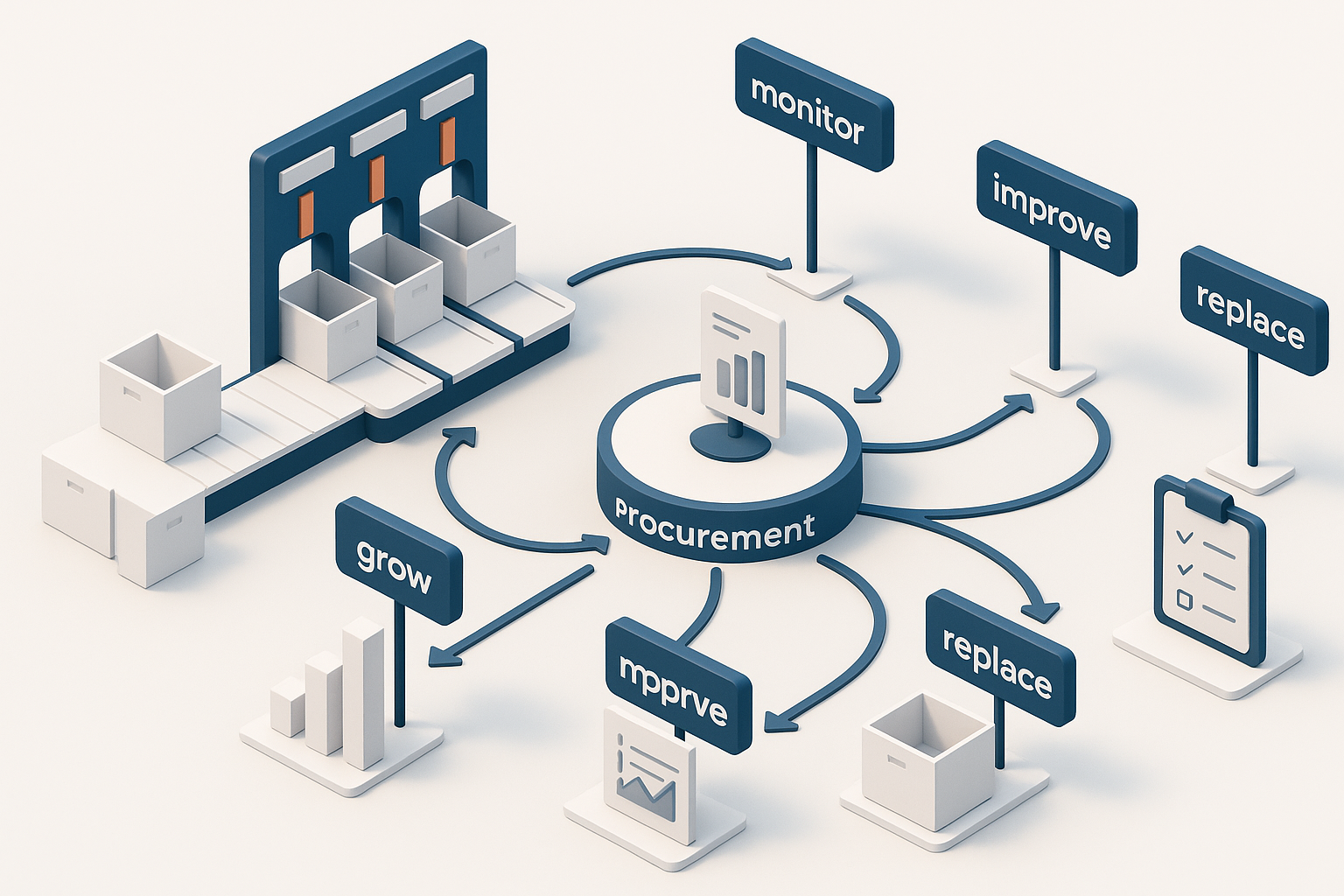
To run year-end supplier performance evaluations that actually improve results, use a simple scorecard tied to business priorities, gather evidence from the full year, review suppliers consistently across the same criteria, and end every evaluation with specific corrective actions, owners and deadlines. The goal is not to "grade" suppliers for records only, but to decide what to improve, what to monitor more closely and which supplier relationships should grow, recover or be replaced.
Why year-end supplier evaluations often fail
Many procurement teams already review suppliers in some form. The problem is that the review process is often too subjective, too late or too vague to drive change.
Common reasons evaluations fail include:
- No agreed criteria across departments
- Too much reliance on memory instead of records
- Reviews focused only on price
- No distinction between critical and non-critical suppliers
- Poor supplier communication after the review
- No follow-up actions or deadlines
- Scores that are not linked to sourcing, contract renewal or risk decisions
If the review ends with a spreadsheet sitting in a shared folder, it is not an evaluation system. It is just documentation.
What a useful supplier performance evaluation should achieve
A strong year-end evaluation should help your team answer a few practical questions:
- Which suppliers consistently met expectations?
- Which suppliers created avoidable cost, delay or compliance risk?
- Which issues were one-off events and which were recurring patterns?
- Which suppliers deserve more business next year?
- Which suppliers need a formal improvement plan?
- Which relationships should be re-tendered, reduced or exited?
For Malaysian businesses, this matters across both direct and indirect spend. Whether you are managing packaging vendors, MRO suppliers, office supplies, cleaning contractors or IT resellers, year-end reviews help create a more defensible basis for renewal and sourcing decisions. They also support internal governance, especially when finance, operations and procurement need a shared view of supplier performance.
Start by segmenting suppliers before you evaluate them
Not every supplier needs the same review depth. A year-end evaluation works better when suppliers are segmented first.
Group suppliers by business impact
Useful segmentation categories include:
- Strategic suppliers: high spend, high operational impact, difficult to replace
- Critical operational suppliers: lower spend perhaps, but disruption would affect service or production
- Routine suppliers: easy-to-source categories with low switching barriers
- Risk-sensitive suppliers: suppliers tied to compliance, safety, regulated goods or sensitive data
This matters because a stationery supplier and a critical packaging supplier should not be reviewed with identical intensity, even if both are valuable.
Adjust review effort to supplier importance
For example:
Supplier typeReview depthReview participantsTypical outcomeStrategicDetailed scorecard and formal discussionProcurement, operations, finance, end-user stakeholdersJoint improvement plan, renewal or business expansion decisionCritical operationalStructured scorecard with issue analysisProcurement and operational ownerPerformance correction or monitored continuationRoutineLightweight scorecardProcurement or category ownerRetain, consolidate or switchRisk-sensitiveScorecard plus compliance checkProcurement, compliance, finance or relevant functionRisk mitigation plan or supplier replacement decisionDefine the right evaluation criteria
The best scorecards are balanced. If you only score price, you encourage short-term buying decisions that may create bigger problems later.
Core criteria to include
Most procurement teams can start with these categories:
#### 1. Quality
Assess whether goods or services consistently met agreed specifications.
Look at:
- Defect rates or rejection incidents
- Returns, replacements or rework
- Service errors
- Packaging quality where relevant
- Fit with agreed standards or samples
#### 2. Delivery and fulfilment reliability
This is often one of the clearest indicators of supplier performance.
Look at:
- On-time delivery performance
- Lead time consistency
- Partial deliveries or short shipments
- Backorders and substitutions
- Responsiveness during urgent orders
#### 3. Cost and commercial performance
Price matters, but so does total cost impact.
Look at:
- Price stability over the year
- Accuracy of quotations and invoices
- Frequency of unexpected charges
- Cost competitiveness against market checks or alternative quotes
- Value delivered relative to service level
#### 4. Responsiveness and communication
A supplier that communicates clearly can often help prevent small issues from becoming major disruptions.
Look at:
- Speed of response
- Clarity in communication
- Escalation handling
- Proactive updates on delays or supply issues
- Willingness to solve problems collaboratively
#### 5. Compliance and documentation
This is especially important when supplier paperwork affects payment, audit readiness or regulatory obligations.
Look at:
- Accuracy of invoices and supporting documents
- Required registrations, licences or declarations where relevant
- Adherence to contract terms
- Documentation completeness for finance and audit purposes
- Consistency in tax-related information where applicable
Depending on the category, your finance team may also want to monitor whether documentation quality supports smooth internal processing, including invoice matching and records needed for LHDN and audit purposes.
#### 6. Service and relationship management
This measures how easy the supplier is to work with over time.
Look at:
- Issue resolution quality
- Account management support
- Ability to support changes in demand
- Training or technical support where relevant
- Commitment to continuous improvement
Optional criteria for certain categories
Some suppliers need extra lenses, such as:
- Sustainability or environmental practices
- Safety performance
- Innovation and process improvement ideas
- Inventory support or consignment performance
- Digital capability, such as PO, invoice and catalogue accuracy
- Business continuity readiness
Build a scorecard that people will actually use
The scorecard should be simple enough to complete consistently but structured enough to support decisions.
Keep the scoring model practical
A common approach is to use a straightforward rating scale for each criterion, with written definitions for each score. What matters most is consistency.
For example, each criterion should have:
- A clear definition
- Evidence sources
- A weighting if some areas matter more than others
- Space for comments and examples
- A final overall recommendation
Weight criteria based on category risk
Different categories need different emphasis.
CriteriaOffice and indirect suppliesOperationally critical goodsRegulated or risk-sensitive suppliersPrice and cost controlMedium to highMediumMediumQualityMediumHighHighDelivery reliabilityMediumHighHighResponsivenessMediumHighHighCompliance and documentationMediumMediumHighContinuous improvementLow to mediumMediumMediumA useful rule: do not make every criterion equal by default. If late delivery causes major downtime, then delivery should carry more weight than minor commercial differences.
Gather evidence from the full year, not just recent memory
Year-end evaluations become unfair when the loudest or latest issue dominates the review.
Pull data from multiple sources
Use records such as:
- Purchase orders
- Goods received records
- Delivery logs
- Non-conformance or complaint records
- Credit note and return records
- Invoice discrepancy logs
- Contract or SLA reports
- Emails documenting escalations or service recovery
- Feedback from warehouse, operations, admin, finance or end users
Balance hard data with stakeholder feedback
Not everything important appears in a report. Internal stakeholders often know whether a supplier is proactive, difficult, careless or dependable under pressure.
To keep feedback useful:
- Ask the same questions to each stakeholder group
- Focus on examples, not opinions alone
- Separate one-off incidents from repeated patterns
- Avoid letting one department dominate the overall score unless the supplier mainly serves that department
Run the evaluation meeting in a structured way
A year-end supplier evaluation should be treated as a decision review, not an informal complaint session.
Step 1: Prepare the pre-read
Before the meeting, circulate:
- Supplier spend summary
- Supplier category and criticality
- Draft scorecard
- Key incidents from the year
- Contract or renewal timing
- Current issues requiring attention
Step 2: Review evidence criterion by criterion
During the meeting:
- Confirm the supplier's scope and what they supplied during the year.
- Review each score against documented evidence.
- Discuss whether incidents were supplier-caused, internally caused or shared.
- Identify recurring patterns rather than isolated events.
- Agree the final rating and overall supplier status.
Step 3: Classify the supplier outcome
Useful outcome categories include:
- Preferred / grow: strong performer suitable for more volume or longer renewal discussions
- Maintain: acceptable performance with normal monitoring
- Improve under watch: supplier remains active but must address defined gaps
- At risk: serious concerns requiring management attention or contingency planning
- Exit / re-source: performance or risk level no longer acceptable
Turn the evaluation into an improvement plan
This is the step many teams skip, and it is the reason reviews fail to improve results.
A score without action changes nothing.
Every weak score should trigger a specific next step
For each material issue, define:
- The problem
- Evidence of the problem
- Required corrective action
- Supplier owner on both sides
- Deadline for improvement
- How success will be measured
- What happens if improvement does not occur
Make the action plan concrete
Weak action:
- Improve delivery performance
Better action:
- Supplier to provide weekly order status visibility for critical SKUs, reduce short shipments, and submit root-cause analysis for repeated delays; procurement and operations to review progress monthly through Q1
The more specific the action, the more likely it is to happen.
Involve suppliers in the review the right way
A supplier performance evaluation should not become a one-sided lecture. Good suppliers often have useful context, and sometimes internal buying behaviour contributes to poor outcomes.
Share the review findings clearly
When discussing results with the supplier:
- Lead with facts and examples
- Separate major issues from minor observations
- Be transparent about expectations for next year
- Ask for root causes, not excuses
- Invite the supplier to propose improvements
Look for internal causes too
Sometimes supplier underperformance is partly driven by the buyer's own process, such as:
- Frequent last-minute orders
- Poor forecasting
- Incomplete specifications
- Delayed approvals
- Goods receiving delays
- Payment disputes caused by internal mismatch issues
A fair review improves trust and makes corrective action more realistic.
Link evaluation outcomes to procurement decisions
Supplier evaluations only matter if they affect what happens next.
Use results in practical decisions
Tie the year-end review to:
- Contract renewal decisions
- Supplier rationalisation
- Allocation of spend between suppliers
- Contingency planning
- Review frequency for the coming year
- Tender or re-sourcing plans
- Approval status for high-risk suppliers
This creates accountability. A supplier labelled "under watch" should not quietly continue with no extra monitoring.
Avoid the most common mistakes
Even well-intentioned teams can undermine the process.
Mistake 1: Using vague scoring language
If ratings like "good" or "average" have no definition, different reviewers will score inconsistently.
Mistake 2: Reviewing too many suppliers in the same depth
Focus more effort on suppliers that matter most to operational continuity, cost exposure or compliance.
Mistake 3: Letting one incident drive the whole rating
A serious incident may deserve heavy weighting, but it should still be assessed in context.
Mistake 4: Ignoring cross-functional input
Procurement sees commercial issues; operations sees delivery and usability; finance sees invoice quality and document discipline. You need all three views where relevant.
Mistake 5: Not documenting agreed actions
If there is no named owner, due date and follow-up mechanism, the evaluation will fade out after the meeting.
A simple year-end supplier evaluation workflow
If your team wants a practical model, use this sequence:
- Segment suppliers by criticality and review priority.
- Set scorecard criteria and weightings by category.
- Collect yearly evidence from systems and stakeholders.
- Run internal review meetings with the right functions present.
- Assign final supplier status based on evidence.
- Meet suppliers to discuss findings and validate root causes.
- Issue corrective action plans for weak performers.
- Link outcomes to renewal, sourcing and monitoring decisions.
- Track improvement in the next quarter, not just next year.
How to make next year's evaluations easier
The best year-end review starts long before year-end.
Monitor throughout the year
Rather than waiting until December, track key supplier indicators quarterly or monthly for critical vendors. That way:
- Issues are addressed earlier
- The year-end review becomes easier to prepare
- Suppliers are not surprised by feedback
- Business stakeholders trust the scoring more
Standardise records now
If data quality is weak, improve the basics first:
- Consistent PO use
- Better receipt and discrepancy logging
- Centralised complaint records
- Shared scorecard template
- Clear contract and SLA storage
These process improvements make evaluations more objective and defensible.
Final takeaway
Year-end supplier performance evaluations work when they are evidence-based, prioritised, cross-functional and action-oriented. The purpose is not to produce a ranking for its own sake. It is to improve supplier outcomes, reduce risk and help the business make better sourcing and renewal decisions for the year ahead.
If your current process feels subjective or repetitive, simplify it: review the right suppliers, score against clear criteria, involve the right stakeholders and always finish with an improvement plan. That is what turns a year-end review into a procurement management tool.
For teams looking to strengthen supplier oversight and purchasing discipline, working through a structured procurement platform can also make supplier performance data easier to organise over time. In Malaysia, platforms such as Lapasar can support more controlled purchasing workflows while giving businesses access to a broad supplier base through an MOF-registered marketplace model.