
Procurement documents 101: requisitions, purchase orders, GRNs and invoices explained
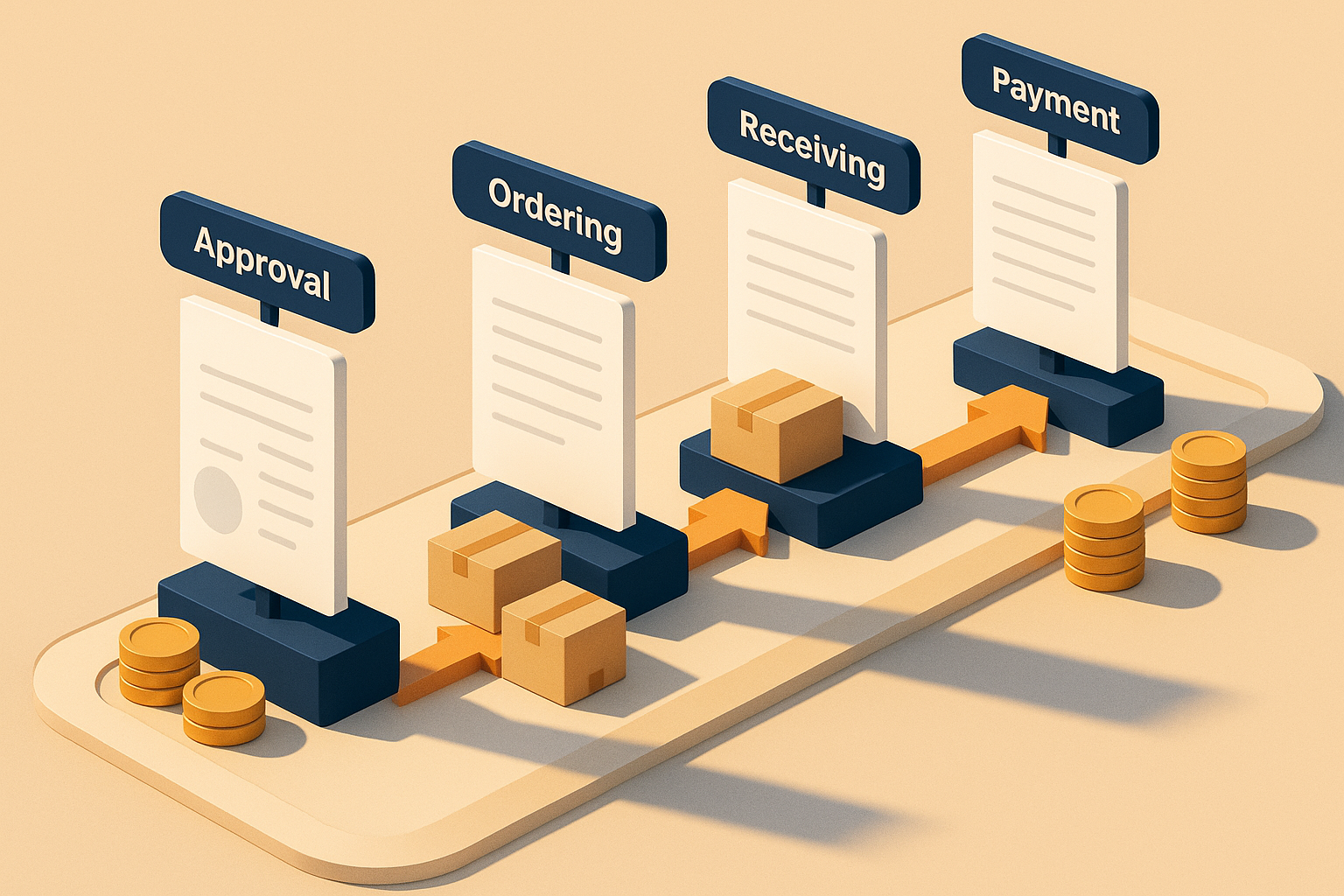
Procurement runs more smoothly when everyone understands which document comes first, who owns it, and what it is meant to prove. In many Malaysian companies, delays, duplicate purchases and payment disputes happen not because people are careless, but because requisitions, purchase orders, goods received notes and invoices are used inconsistently.
Quick answer A requisition is an internal request to buy something. A purchase order is the buyer's formal order to the supplier, a goods received note (GRN) confirms what was actually received, and an invoice is the supplier's bill for payment. Together, these documents create a clear trail from request to approval, delivery and payment.
Why these four procurement documents matter These documents are the backbone of basic purchasing control. Even in smaller businesses, they help teams answer simple but important questions:
- Who asked for the purchase?
- Was it approved?
- What exactly was ordered?
- What actually arrived?
- What should finance pay, and for what amount?
When these records are properly linked, procurement and finance teams can:
- reduce maverick spending
- prevent duplicate orders
- check deliveries against what was ordered
- support internal audit readiness
- improve budget visibility
- resolve supplier disputes faster
- maintain cleaner records for accounting and tax documentation
For Malaysian businesses, this also supports better documentation discipline when handling SST-related records, payment approvals and accounting files that may later be reviewed internally or by external auditors.
The four core procurement documents at a glance
DocumentCreated byMain purposeUsed before or after delivery?Internal or external?RequisitionRequesting departmentAsk for approval to buyBefore deliveryInternalPurchase orderBuyer or procurement teamFormally place an order with supplierBefore deliveryExternal to supplierGRNReceiving store, warehouse or end userConfirm goods or services receivedAfter deliveryInternalInvoiceSupplierRequest paymentAfter deliveryExternal from supplier1) Requisition: the internal request to buy A requisition, sometimes called a purchase requisition, is the starting point of a controlled procurement process. It is not an order to the supplier. It is an internal document used to request approval for a purchase.
What a requisition usually includes A good requisition normally records:
- requestor name and department
- date of request
- item or service description
- required quantity
- estimated cost
- preferred supplier, if applicable
- cost centre or budget code
- required delivery date
- business justification
- approver details
What the requisition is for The requisition helps the business decide whether the purchase should happen at all. It gives managers, finance and procurement enough information to review:
- necessity
- budget availability
- specification accuracy
- sourcing approach
- urgency
- policy compliance
Common mistakes with requisitions Many companies struggle when requisitions are treated casually. Typical problems include:
- vague item descriptions such as "office supplies"
- missing budget codes
- no business justification
- request submitted after the item was already bought
- using a requisition as if it were supplier confirmation
A requisition should answer the question: "Should we buy this?"
2) Purchase order: the formal instruction to the supplier Once a requisition is approved, the next step is usually a purchase order, or PO. This is the buyer's official document to the supplier confirming what is being ordered under agreed terms.
A PO is important because it creates a clear commercial record. It tells the supplier what to supply and gives the buyer a reference point for delivery and billing.
What a purchase order usually includes A purchase order often contains:
- PO number
- buyer company details
- supplier details
- delivery address
- item descriptions and specifications
- ordered quantities
- unit prices
- total amount
- SST treatment where applicable
- payment terms
- delivery date or lead time
- authorised signature or approval record
Why the PO matters The purchase order helps both sides avoid misunderstandings. It provides a common reference for:
- price confirmation
- quantity confirmation
- agreed items or services
- delivery location
- billing accuracy
- approval control
Without a PO, finance teams often face avoidable issues, such as invoices arriving with no approved order behind them.
Common mistakes with purchase orders Watch out for these issues:
- issuing a PO after the supplier has already delivered
- wrong quantities or unit prices
- missing delivery instructions
- unclear terms for partial delivery
- using email chats instead of a formal PO record
A purchase order should answer the question: "What exactly are we formally ordering from the supplier?"
3) GRN: the record of what was actually received A goods received note, or GRN, is created when goods arrive and are checked. It confirms whether the delivery matches the PO in terms of quantity, condition and item details.
For service purchases, businesses may use a service entry confirmation or other internal acknowledgement instead of a traditional GRN, but the principle is the same: there should be a record that the business received what it is being asked to pay for.
What a GRN usually includes A GRN commonly records:
- GRN number
- delivery date
- linked PO number
- supplier name
- items received
- quantities received
- condition of goods
- discrepancies, shortages or damages
- receiver name or department
- delivery note reference if available
Why the GRN matters The GRN is the evidence that separates ordering from receiving. A supplier may deliver less than ordered, substitute an item, or send goods in multiple shipments. Without a receiving record, finance may end up paying based on the order rather than the actual delivery.
The GRN helps teams:
- verify deliveries
- track partial receipts
- identify damaged goods
- support inventory accuracy
- document returns or rejections
- support invoice matching
Common mistakes with GRNs Common receiving issues include:
- signing for delivery before checking items
- recording ordered quantity instead of received quantity
- no note of damaged or short-delivered items
- delayed GRN creation
- failing to link GRN to the correct PO
A GRN should answer the question: "What did we actually receive?"
4) Invoice: the supplier's request for payment An invoice is the supplier's formal bill. It tells the buyer how much is due for goods or services supplied.
An invoice should not be the first document in the process, but in many manual environments it often is. That creates problems because finance then has to work backwards to confirm whether the purchase was requested, approved, ordered and received correctly.
What an invoice usually includes A supplier invoice typically includes:
- invoice number
- invoice date
- supplier details
- buyer details
- description of goods or services
- quantities billed
- unit price and line totals
- tax details where applicable
- total payable amount
- payment terms
- bank details or payment instructions
- reference to PO or delivery documents where available
Why the invoice matters The invoice triggers the payment process. It is the document accounts payable relies on to prepare payment, but it should be checked against earlier records first.
That review helps confirm:
- the supplier billed the correct items
- pricing matches the PO
- quantities match the GRN or service confirmation
- tax details are correctly captured
- payment is supported by an approved purchase trail
Common mistakes with invoices Frequent issues include:
- invoice sent without PO reference
- price different from the PO
- billed quantity higher than received quantity
- duplicate invoices
- tax details entered inconsistently
- paying directly from invoice alone without matching
An invoice should answer the question: "What is the supplier asking us to pay now?"
How the documents fit together in one workflow The easiest way to understand these documents is to see them as stages, not isolated paperwork.
Standard document flow 1. A department raises a requisition. 2. The requisition is reviewed and approved. 3. Procurement or the buyer issues a purchase order. 4. The supplier delivers the goods or completes the service. 5. The receiving team creates a GRN or receipt confirmation. 6. The supplier submits an invoice. 7. Finance checks the documents and processes payment.
The logic behind three-way matching Three-way matching is a core accounts payable control. It means comparing three key records before payment:
- the purchase order
- the GRN or receipt confirmation
- the invoice
Some businesses also treat the approved requisition as an earlier approval checkpoint, making the broader process effectively a four-document trail.
What finance checks during matching Finance or accounts payable may check:
- supplier name matches the approved supplier record
- invoice refers to the correct PO
- billed quantity does not exceed received quantity
- unit prices match the PO
- totals and tax treatment are reasonable
- no duplicate payment is being processed
Why matching reduces risk Matching helps catch:
- overbilling
- duplicate billing
- unauthorised purchases
- payment for undelivered items
- receiving errors
- pricing discrepancies
Requisition vs PO vs GRN vs invoice: what is the difference? The names can sound straightforward, but the differences matter in day-to-day operations.
DocumentKey question answeredWho relies on it mostMain risk if missingRequisitionShould we buy this?Requestor, approver, budget ownerUncontrolled or unapproved spendingPurchase orderWhat did we order?Procurement, supplier, financePrice and order disputesGRNWhat did we receive?Receiving team, stores, financePaying for goods not receivedInvoiceWhat are we being billed for?Supplier, accounts payableWrong or duplicate paymentA practical example of the document trail Imagine an operations team needs cleaning supplies for a facility.
Step 1: Requisition The admin executive submits a requisition for cleaning chemicals, gloves and tissue rolls, with the department cost centre and a short justification.
Step 2: Approval The department head reviews the request and confirms it is needed and within budget.
Step 3: Purchase order Procurement selects the supplier and issues a PO with item descriptions, quantities, unit prices and delivery address.
Step 4: Delivery and GRN The goods arrive at the facility store. The receiving staff checks cartons against the PO, notes one missing item, and records the actual quantity received in the GRN.
Step 5: Invoice The supplier sends an invoice for the delivered goods.
Step 6: Matching and payment Finance compares the invoice to the PO and GRN. Because one item was short-delivered, payment is based on what was actually received, unless the supplier sends the balance later.
This is exactly why the documents exist. Each one captures a different truth at a different stage.
When the process changes slightly Not every purchase follows the exact same pattern.
For services For services such as maintenance, training or consulting, there may not be a physical GRN. Instead, the business may use:
- service completion confirmation
- timesheet approval
- work order sign-off
- project manager acceptance
The principle remains the same: there should be evidence that the service was delivered before the invoice is paid.
For urgent or low-value purchases Some businesses simplify approvals for urgent or lower-value buys. Even then, they should still maintain a basic record of:
- request
- approval
- order confirmation
- receipt
- invoice
For recurring purchases Routine items such as pantry supplies, PPE or packaging may be purchased repeatedly. In these cases, standardised templates, catalogues or approved supplier lists can make the document flow faster and cleaner.
Best practices for managing procurement documents Good document control is not just about having forms. It is about making the records usable.
Standardise your templates Use consistent formats for requisitions, POs, GRNs and invoice checks. This makes training easier and reduces missing information.
Assign ownership clearly Make sure each stage has an owner:
- requestor raises requisition
- approver signs off purchase need
- procurement issues PO
- receiver records GRN
- finance matches invoice and pays
Use unique reference numbers Every requisition, PO, GRN and invoice should be easy to trace. Unique document numbers make audits, dispute resolution and record retrieval much easier.
Record discrepancies immediately If goods are damaged, incomplete or incorrect, note this at receiving stage. Do not wait until the invoice arrives.
Keep supporting records together Store related files so teams can see the full trail in one place:
- requisition
- approval record
- PO
- delivery note if available
- GRN
- invoice
- credit note if relevant
Train non-procurement users too Many document errors start outside procurement. Admin, operations, warehouse, facilities and finance teams all need to understand what each document is for.
Signs your document process needs improvement Your current process may need tightening if any of these sound familiar:
- suppliers send invoices with no PO reference
- departments buy first and seek approval later
- receiving staff do not record shortages or damages
- finance spends too much time chasing supporting documents
- duplicate payments are hard to detect
- purchase histories are difficult to reconstruct
- budget owners cannot easily see committed spend
These issues often point less to staff performance and more to unclear process design.
Manual vs digital document workflows Many businesses begin with spreadsheets, email approvals and paper files. That can work at low volume, but complexity grows quickly as orders, suppliers and approvers increase.
ApproachStrengthsLimitationsManual paperwork and emailFamiliar, low upfront changeHard to track, easy to lose records, slower approvalsSpreadsheet-based controlBetter visibility than paper aloneVersion control problems, limited audit trailDigital procurement workflowStronger traceability, easier matching, clearer approvalsRequires process discipline and user adoptionThe goal is not paperwork for its own sake. The goal is a reliable record from request to payment.
Final takeaway Requisitions, purchase orders, GRNs and invoices are not interchangeable. Each document plays a different role in controlling spend and proving what happened at each stage of a purchase.
If you remember just one thing, remember this sequence: request, order, receive, bill. That simple flow helps procurement, operations and finance stay aligned, reduces avoidable disputes, and creates a much cleaner audit trail.
For companies looking to streamline purchasing, digital procurement platforms can help connect these records more consistently. In Malaysia, platforms such as Lapasar, a MOF-registered procurement platform with 10,000+ suppliers and 2M+ SKUs, are part of the broader shift away from fragmented manual buying toward more structured procurement workflows.