
Procurement KPIs Every Company Should Track
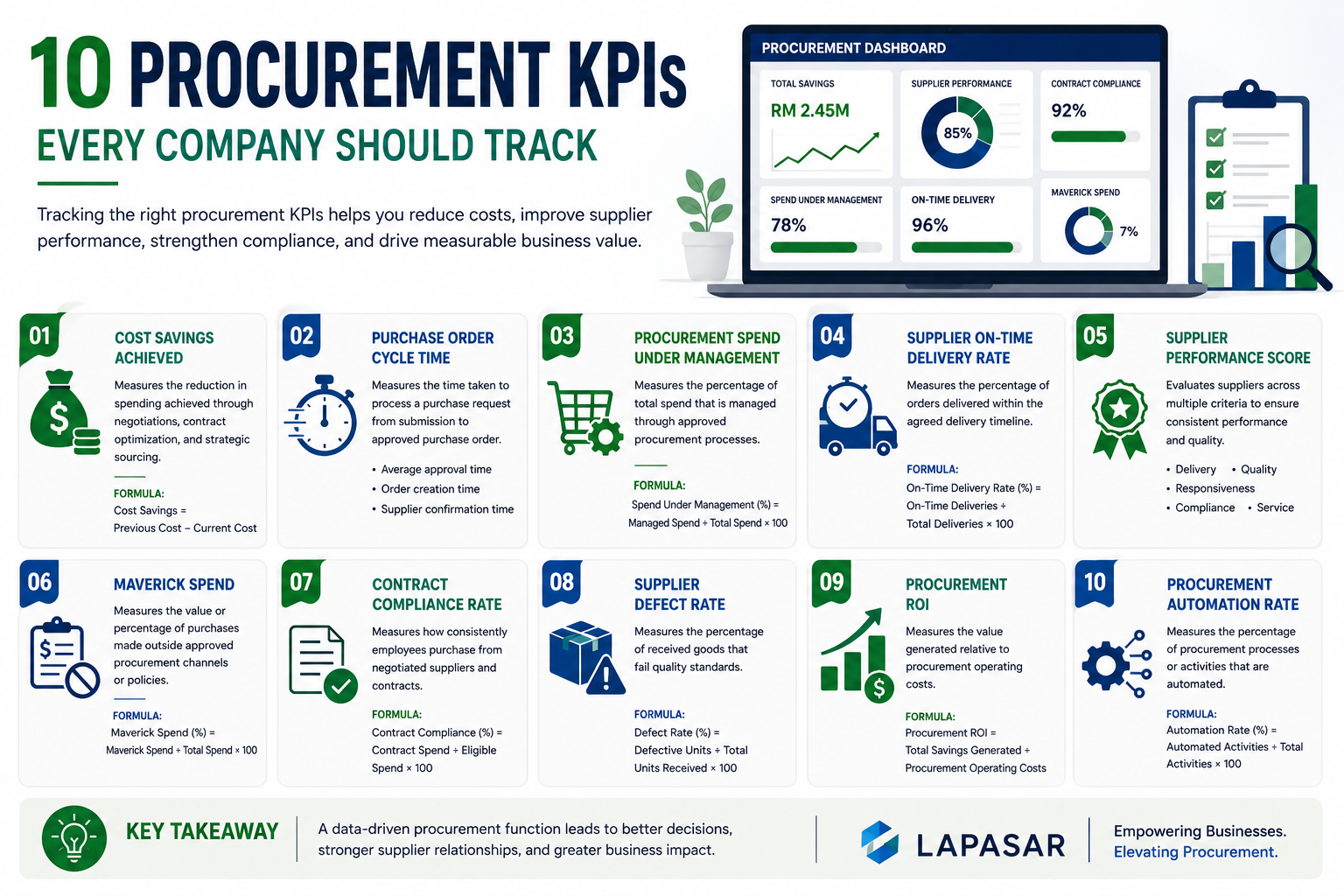
Procurement is no longer viewed as a back-office function focused solely on purchasing goods and services. Today, procurement teams are expected to deliver measurable business value through cost optimization, supplier management, risk mitigation, and operational efficiency.
To achieve these objectives, organizations need clear performance metrics. Procurement Key Performance Indicators (KPIs) provide visibility into how effectively procurement processes are performing and where improvements can be made.
Here are the most important procurement KPIs every company should track.
- Cost Savings Achieved
Cost savings remains one of the most important procurement metrics.
This KPI measures the reduction in spending achieved through:
Supplier negotiations Contract optimization Spend consolidation Strategic sourcing initiatives
Tracking cost savings helps procurement teams demonstrate direct financial value to the organization.
Formula:
Cost Savings = Previous Cost – Current Cost
- Purchase Order Cycle Time
Purchase Order (PO) Cycle Time measures how long it takes to process a purchase request from submission to approved purchase order.
A shorter cycle time indicates a more efficient procurement process.
Organizations should monitor:
Average approval time Order creation time * Supplier confirmation time
Reducing procurement cycle times improves business agility and user satisfaction.
- Procurement Spend Under Management
This KPI measures the percentage of company spend that is managed through approved procurement processes.
Formula:
Spend Under Management (%) = Managed Spend ÷ Total Spend × 100
A higher percentage indicates stronger procurement governance and better spend visibility.
- Supplier On-Time Delivery Rate
Late deliveries can disrupt operations and create unnecessary costs.
This KPI measures the percentage of orders delivered within the agreed delivery timeline.
Formula:
On-Time Delivery Rate (%) = On-Time Deliveries ÷ Total Deliveries × 100
Monitoring supplier delivery performance helps identify reliable suppliers and areas for improvement.
- Supplier Performance Score
Organizations should evaluate suppliers beyond price alone.
Supplier scorecards may include:
Delivery performance Product quality Responsiveness Compliance levels * Service quality
Regular supplier evaluations encourage accountability and strengthen supplier relationships.
- Maverick Spend
Maverick spend refers to purchases made outside approved procurement channels or policies.
Examples include:
Purchasing from non-approved suppliers Bypassing procurement approval processes * Unauthorized purchases
High levels of maverick spend often indicate weak procurement controls and poor compliance.
- Contract Compliance Rate
Contract compliance measures how consistently employees purchase from negotiated suppliers and contracts.
Formula:
Contract Compliance (%) = Contract Spend ÷ Eligible Spend × 100
Higher compliance rates ensure organizations fully capture negotiated savings and contractual benefits.
- Supplier Defect Rate
Product quality directly impacts operational performance.
This KPI measures the percentage of received goods that fail quality standards.
Tracking defect rates helps procurement teams identify quality issues and improve supplier accountability.
- Procurement ROI
Procurement Return on Investment (ROI) measures the value generated relative to procurement operating costs.
Formula:
Procurement ROI = Total Savings Generated ÷ Procurement Operating Costs
This KPI demonstrates procurement’s contribution to overall business performance.
- Procurement Automation Rate
As digital procurement adoption increases, organizations should track how many procurement activities are automated.
Examples include:
Automated approvals Electronic purchase orders Digital supplier onboarding Automated invoice matching
Higher automation rates typically lead to lower administrative costs and faster procurement cycles.
Building a Procurement Dashboard
Rather than tracking KPIs separately, organizations should create a centralized procurement dashboard that provides real-time visibility into:
Spend analysis Budget utilization Supplier performance Compliance metrics * Procurement savings
Modern procurement platforms make it possible to monitor these KPIs continuously and take corrective action before issues become significant problems.
Conclusion
Successful procurement teams rely on data, not assumptions. By tracking procurement KPIs such as cost savings, supplier performance, contract compliance, cycle times, and procurement ROI, organizations gain the visibility needed to optimize operations and improve decision-making.
The companies that consistently measure procurement performance are often the ones that achieve the greatest savings, strongest supplier relationships, and highest levels of operational efficiency.