
How B2B Marketplaces Reduce Procurement Costs
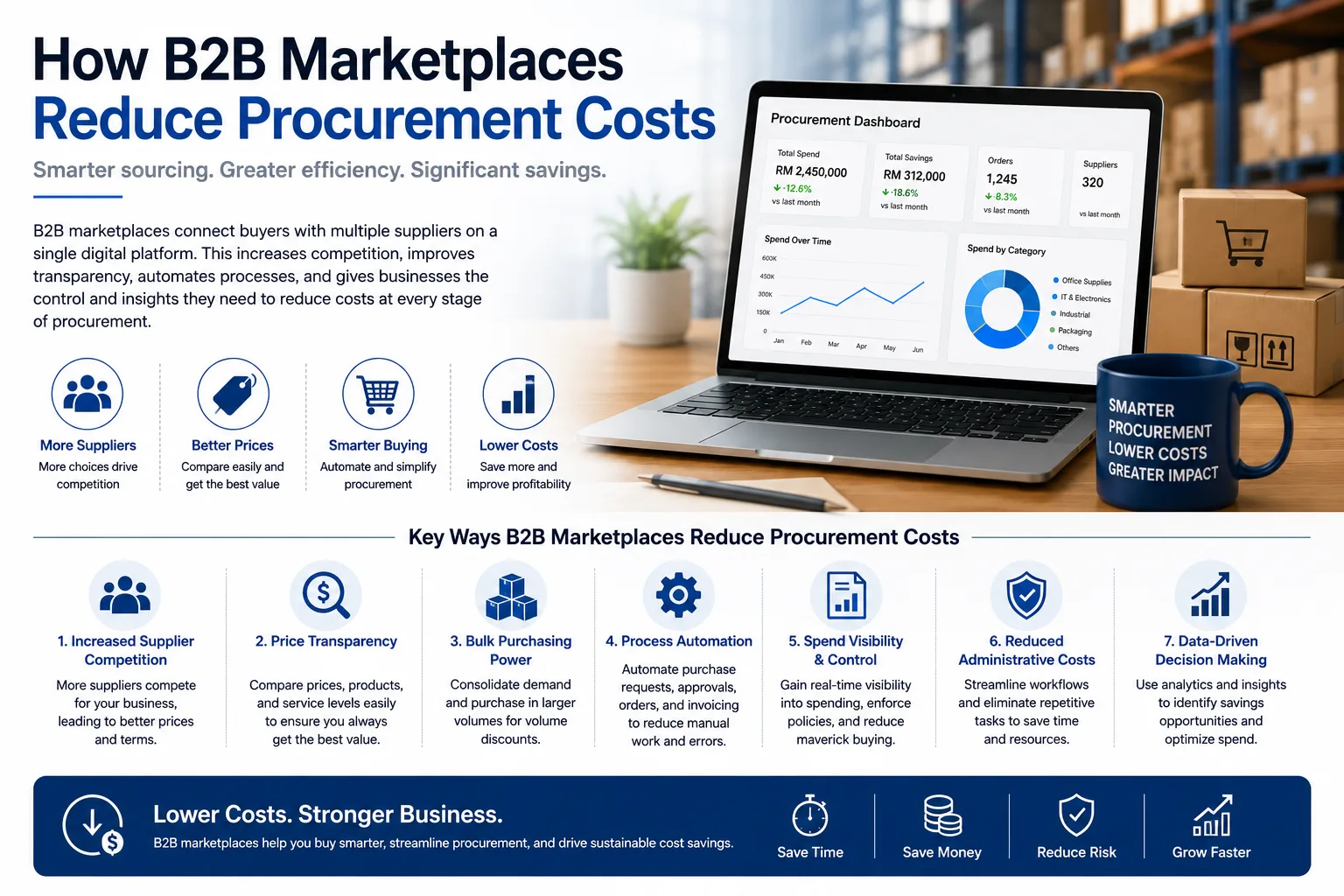
Procurement is one of the largest controllable expenses within most organizations. A business may purchase office supplies, industrial equipment, pantry products, IT hardware, packaging materials, or business services. In each case, the efficiency of its procurement processes directly affects profitability. As businesses seek new ways to optimize spending and improve operational efficiency, B2B marketplaces have emerged as a powerful tool for reducing procurement costs.
A B2B marketplace is a digital platform that connects businesses with multiple suppliers through a centralized procurement environment. Rather than relying on a few vendors or manual sourcing, businesses can use a marketplace to discover suppliers and compare pricing. They can also automate purchasing and gain greater visibility into procurement spending.
Many organizations initially adopt B2B marketplaces for convenience. The long-term value, however, often comes from significant cost savings across the procurement lifecycle.
Supplier Competition Drives Better Pricing
One of the most important ways B2B marketplaces reduce procurement costs is through increased supplier competition. Traditional procurement models often limit businesses to a small group of suppliers. Over time, this can lead to pricing complacency and reduced negotiating leverage. A B2B marketplace introduces a larger network of suppliers that compete for business, creating a more competitive purchasing environment. When buyers can easily compare suppliers and pricing options, vendors are incentivized to offer better pricing and stronger value propositions.
Price Transparency Eliminates Overpaying
Price transparency also plays a critical role in cost reduction. In many organizations, procurement teams spend considerable time requesting quotations, negotiating prices, and comparing supplier offers manually. This process is not only time-consuming but may also result in missed savings opportunities. B2B marketplaces centralize product information and supplier pricing, enabling businesses to compare options more efficiently. Better visibility into market pricing helps organizations avoid overpaying and make more informed purchasing decisions.
Faster Supplier Discovery Reduces Sourcing Costs
Supplier discovery is another major contributor to procurement savings. Many businesses continue purchasing from the same vendors simply because they are unaware of alternative suppliers. A B2B marketplace provides access to a broader supplier ecosystem. This makes it easier to identify suppliers with better pricing, higher service levels, or more suitable products. The ability to quickly discover and evaluate suppliers reduces sourcing costs and improves procurement flexibility.
Automation Cuts Administrative Overhead
Administrative costs associated with procurement can be substantial. Manual procurement processes often involve emails, spreadsheets, phone calls, quotation requests, purchase order creation, invoice matching, and approval workflows. These activities consume valuable employee time and increase the risk of human error. B2B marketplaces reduce these administrative costs by automating procurement workflows, standardizing purchasing processes, and centralizing documentation within a single platform.
What Automation Replaces
When organizations move to a B2B marketplace, routine tasks that previously required manual effort are handled digitally:
- Purchase order creation is automated from approved requisitions
- Approval chains are enforced without email follow-ups
- Delivery tracking eliminates status-check phone calls
- Invoice reconciliation is matched to digital purchase records
- Spend reports generate automatically rather than requiring manual compilation
This reduction in administrative workload translates directly into lower procurement operating costs and allows procurement teams to focus on higher-value strategic activities.
Consolidated Purchasing Strengthens Negotiating Power
Many organizations spread their purchasing across dozens or even hundreds of suppliers. This fragmentation often results in suboptimal pricing because no single supplier sees enough volume to offer significant discounts. B2B marketplaces help organizations consolidate purchases through fewer, preferred suppliers. As purchasing volumes concentrate, businesses gain stronger negotiating leverage and may access volume discounts, preferential pricing, or improved payment terms.
Spend consolidation also reduces administrative complexity. Managing fewer supplier relationships means fewer invoices, fewer payment runs, and lower vendor management overhead. These savings accumulate over time and contribute meaningfully to total procurement cost reduction.
Spend Visibility Uncovers Hidden Savings
Many organizations have limited visibility into their total procurement spending. Without centralized spend data, it is difficult to identify where costs are highest, where spending is off-contract, or where consolidation opportunities exist. B2B marketplaces provide procurement teams with a comprehensive view of purchasing activity, including spend by category, department, supplier, and time period.
This visibility enables organizations to identify maverick spending — purchases made outside approved channels at non-negotiated prices — and bring it back under control. It also supports strategic sourcing decisions by highlighting categories where a larger share of spend could be directed toward preferred suppliers at better rates.
Measuring Procurement Cost Savings Over Time
Organizations that adopt B2B marketplaces consistently report measurable savings across multiple cost categories. These savings typically include lower unit pricing through supplier competition and reduced administrative costs from process automation. They also include less maverick spending through improved spend controls, plus faster procurement cycles that free up resources.
The cumulative effect of these savings makes B2B marketplace adoption one of the highest-ROI procurement investments available to organizations of all sizes. For documented examples of these outcomes, Lapasar's enterprise procurement case studies detail how Malaysian organisations have reduced costs through structured procurement transformation. For businesses seeking to reduce costs while improving operational efficiency, a well-chosen B2B marketplace delivers tangible and sustainable results.