
B2B Marketplace vs Traditional Distributor: Which Procurement Model Is Better for Modern Businesses?
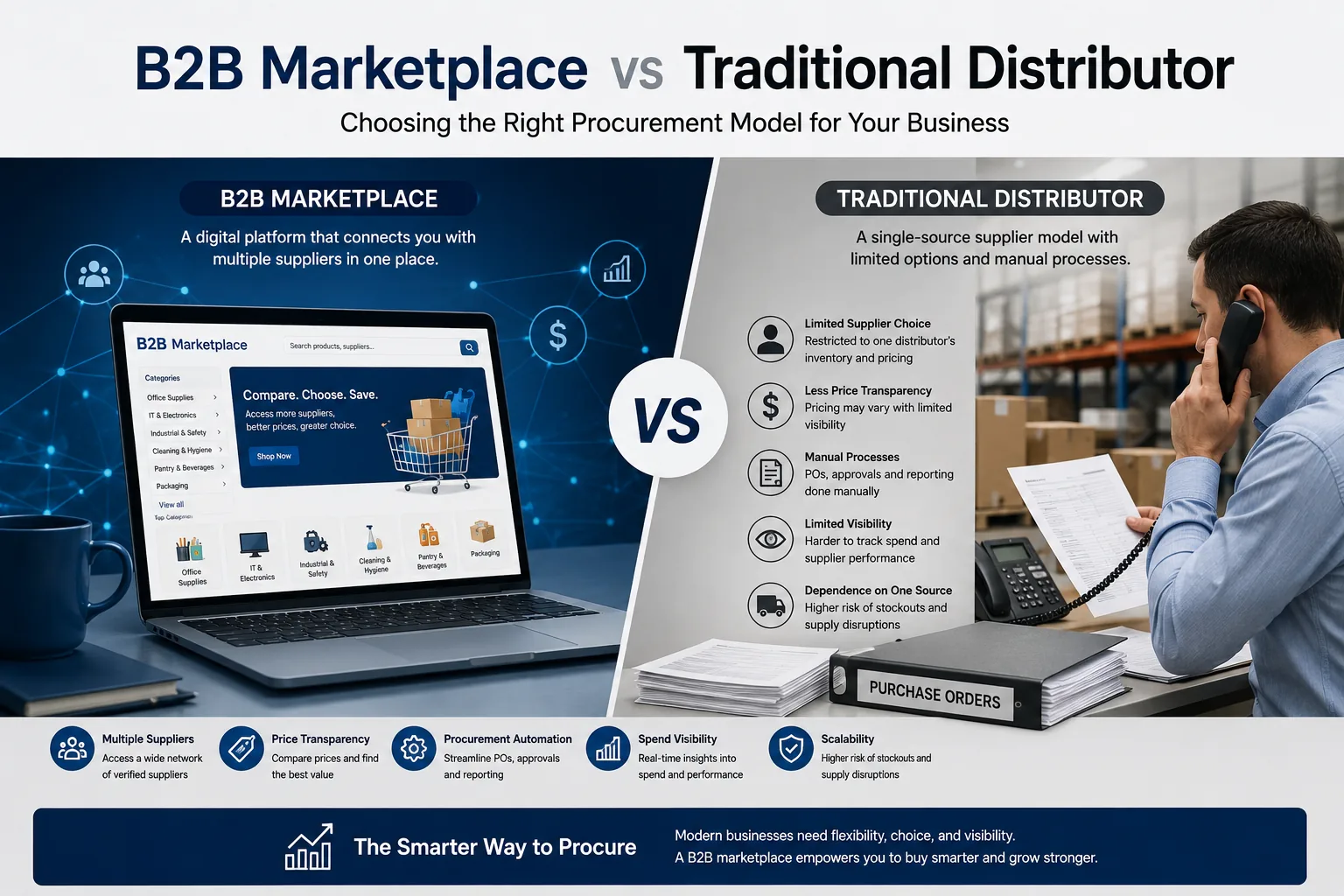
As businesses continue to digitize procurement, many leaders are weighing their options. Procurement leaders, finance teams, and business owners are evaluating whether a B2B marketplace or a traditional distributor offers the best purchasing experience. While both models play important roles in supply chains, they operate very differently and offer distinct advantages depending on an organization's procurement goals.
For decades, traditional distributors have been the backbone of business purchasing. They buy products from manufacturers, hold inventory, and sell directly to businesses through sales representatives and established customer relationships. However, digital procurement platforms and B2B marketplaces have introduced a new purchasing model. It provides greater transparency, supplier access, and procurement efficiency.
How Traditional Distributors Work
A traditional distributor typically serves as an intermediary between manufacturers and buyers. The distributor purchases inventory, manages warehousing, handles logistics, and resells products to customers. Businesses often work with a limited number of distributors and rely heavily on account managers or sales representatives to obtain pricing, product recommendations, and support. This model has been effective for many years because it simplifies supplier management and provides a single point of contact for purchasing needs.
Traditional distribution relationships can offer benefits such as personalized service, flexible credit arrangements, and category expertise. In highly specialized industries where products require technical guidance, a knowledgeable distributor representative can provide genuine value.
How a B2B Marketplace Works Differently
A B2B marketplace operates differently. Rather than acting as a single supplier, a marketplace connects buyers with multiple suppliers through a centralized digital platform. Buyers can browse products, compare suppliers, review pricing, place orders, manage procurement activities, and access procurement data from a single interface. Instead of being limited to one distributor's inventory and pricing structure, businesses gain visibility across a broader supplier network.
The marketplace model shifts control to the buyer. Instead of waiting for a sales representative to respond, procurement teams can search, compare, and transact independently — often at any time of day.
Comparing the Two Procurement Models
Supplier Choice and Access
One of the most significant differences between the two models is supplier choice. Traditional distributors generally offer products from selected manufacturers and brands that they represent. While this can simplify purchasing, it can also limit buyer options. A B2B marketplace expands access to multiple suppliers and product categories, giving procurement teams greater flexibility when sourcing products. This broader supplier ecosystem often leads to increased competition and more competitive pricing.
Price Transparency
Price transparency is another area where B2B marketplaces have transformed procurement. In traditional distribution models, pricing is often negotiated through account managers and may vary significantly between customers. Buyers may not always know whether they are receiving the most competitive market price. B2B marketplaces increase transparency by allowing businesses to compare products, suppliers, and pricing options more easily. This makes it simpler to verify that purchasing decisions represent genuine value.
Procurement Automation
Traditional distributor relationships typically require manual touchpoints — phone calls, emails, and individual negotiations for each purchase cycle. This approach becomes increasingly inefficient as purchasing volumes grow. B2B marketplaces support procurement automation through digital purchase orders, approval workflows, and integrated spend reporting. These capabilities reduce administrative workload and allow procurement teams to manage a higher volume of transactions with greater accuracy. Lapasar's research on long-tail procurement and AI-driven efficiency shows how automation dramatically cuts per-order costs across high-frequency, low-value purchasing categories.
Speed and Convenience
Placing an order through a traditional distributor often takes several steps. A buyer must contact an account manager, confirm product availability, and receive a quotation before the order is confirmed. Through a B2B marketplace, the same process typically takes minutes — products are searchable, pricing is visible, and orders can be placed and confirmed digitally.
When a B2B Marketplace Is the Better Choice
A B2B marketplace typically offers greater advantages in several situations. It suits organizations that purchase across multiple product categories, seek price transparency and supplier competition, or require procurement automation and spend visibility. It also fits teams that manage procurement collectively rather than through individual account relationships. And it serves businesses scaling operations that need a procurement model able to grow with them.
When Traditional Distributors Still Have a Role
Traditional distributors continue to offer value in specific scenarios. They help where deep product expertise and technical guidance are critical, or where highly customized or made-to-order products require close supplier collaboration. They also matter where long-standing credit arrangements and relationship trust represent genuine operational advantages.
For many organizations, the most effective approach is not an either/or decision. A B2B marketplace handles the majority of routine, operational procurement efficiently. Specialized distributors remain engaged for categories where their expertise and relationships add unique value.
Choosing the Right Procurement Model for Your Business
The right choice between a B2B marketplace and a traditional distributor depends on your organization. Weigh your procurement goals, purchasing volumes, category mix, and appetite for digital transformation. Many businesses seek greater transparency, efficiency, cost control, and scalability. They are increasingly finding that a B2B marketplace provides the stronger foundation for modern procurement operations. Lapasar's enterprise procurement case studies and procurement research document measurable outcomes from organisations that have made this transition.