
Supplier Qualification Process: A Practical Step-by-Step Guide for Malaysian Procurement Teams
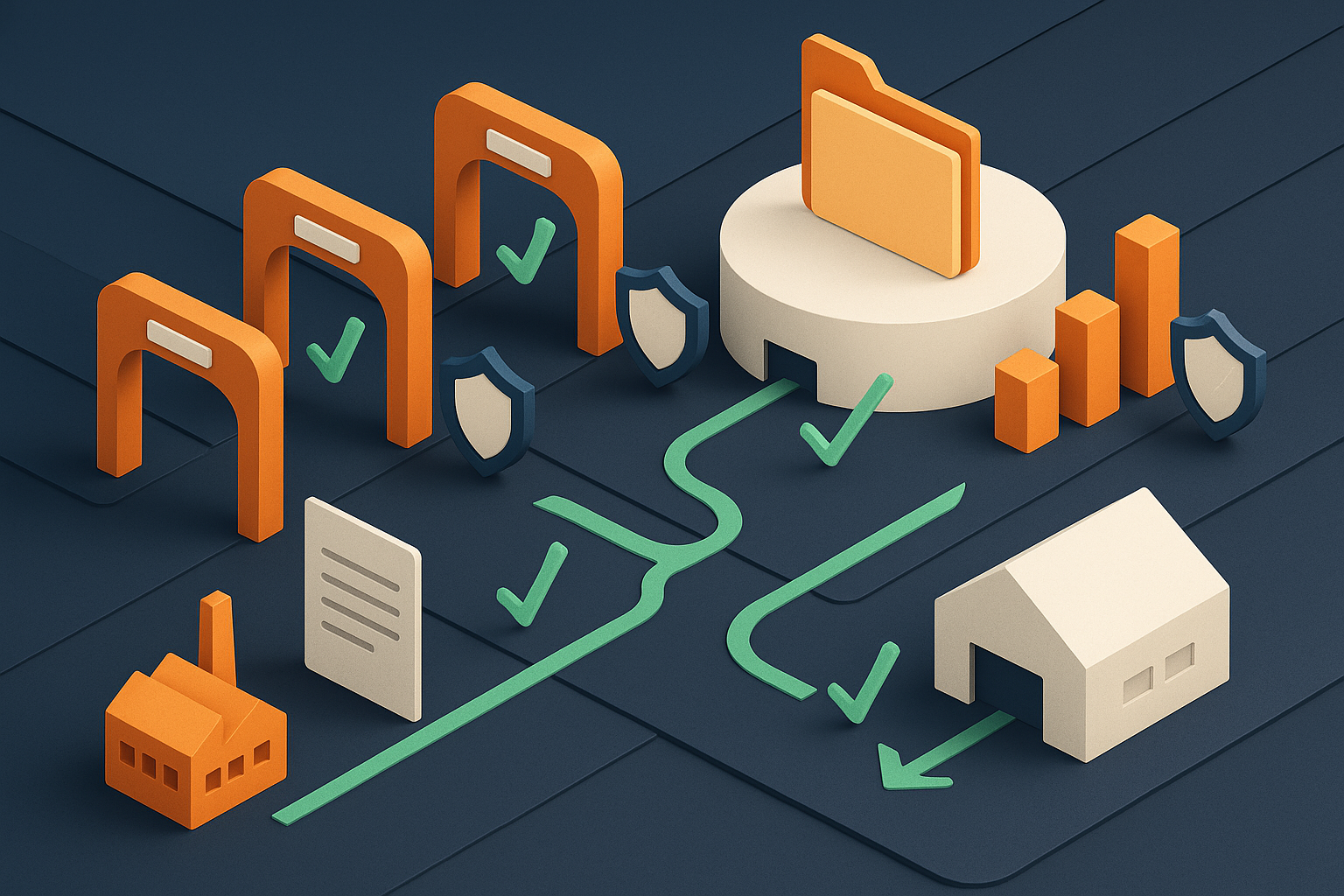
Supplier qualification is one of the most important controls in procurement. Before your team issues a purchase order, approves a vendor in the system, or commits company funds, you need confidence that the supplier can legally operate, deliver what they promise, and support your business without creating unnecessary risk.
Quick answer
A supplier qualification process is the structured method used to assess whether a supplier is suitable to do business with your company. It typically includes initial screening, document collection, commercial and operational evaluation, risk checks, approval, and ongoing performance review. For Malaysian businesses, a good process should also consider local compliance needs such as company registration details, tax treatment, and whether the supplier meets your internal finance and procurement controls.
What is the supplier qualification process?
The supplier qualification process is the set of steps procurement uses to evaluate and approve suppliers before purchases are made. Its purpose is not only to compare price, but also to confirm that a supplier is:
- Legitimate and properly registered
- Financially and operationally capable
- Able to meet your quality, service, and delivery requirements
- Aligned with your compliance and documentation standards
- Suitable for the level of risk involved in the category
In simple terms, qualification answers a basic question: should this supplier be allowed into your approved vendor base?
This matters because buying from an unqualified supplier can lead to:
- Delivery failures
- Poor product quality
- Invoice and payment disputes
- Incomplete supporting documents
- Tax or audit issues
- Dependence on suppliers who cannot scale with your needs
A strong qualification process does not need to be bureaucratic. It just needs to be clear, consistent, and proportionate to risk.
Why supplier qualification matters in Malaysia
For Malaysian companies, supplier qualification sits at the intersection of procurement, finance, operations, and compliance. It is especially important when your business needs proper documentation for internal controls, tax handling, audit trails, and vendor master accuracy.
Depending on your organisation, the process may need to check items such as:
- Business registration details
- Banking information for payment setup
- SST treatment where relevant
- Supporting documents needed by finance and auditors
- Insurance or safety requirements for site work
- MOF registration where relevant for public sector-related requirements
- Product specifications and service capability within Peninsular Malaysia or specific operating regions
The exact list will vary by category. For example:
- An office supplies vendor may require simpler checks
- A facilities maintenance contractor may need insurance, safety records, and site capability review
- A strategic raw materials supplier may require deeper financial and operational due diligence
The 6 core stages of a supplier qualification process
A practical supplier qualification process usually follows six stages.
1. Define the requirement and risk level
Before evaluating any supplier, define what you are buying and how critical it is to the business.
Ask:
- Is this a one-off purchase or an ongoing category?
- Is the supplier providing goods, services, or both?
- How important is this supplier to operations?
- What happens if they fail to deliver?
- Are there legal, safety, quality, or regulatory implications?
This step matters because not every supplier needs the same level of scrutiny. A low-risk ad hoc vendor should not go through the same process as a supplier that supports production, site operations, or regulated activity.
A useful approach is to classify suppliers into broad risk bands such as:
- Low risk: routine, low-value, non-critical purchases
- Medium risk: recurring spend, moderate operational importance
- High risk: critical goods or services, high spend, compliance-sensitive categories
The risk level determines how much documentation and review is required.
2. Conduct initial screening
Initial screening is the first filter to remove suppliers that are clearly unsuitable.
At this stage, procurement typically checks:
- Whether the supplier actually offers the required product or service
- Service area and delivery capability
- Basic company legitimacy
- Responsiveness and professionalism
- Ability to meet minimum commercial terms
This is also the point to identify obvious mismatches, such as:
- Supplier cannot serve your required location
- Supplier does not stock the required specifications
- Lead times are incompatible with operations
- Documentation is incomplete from the start
The goal is speed. You do not want your team spending time on full due diligence for suppliers that fail basic fit criteria.
3. Collect and verify supplier documents
Document collection is often where qualification slows down, so it helps to standardise it.
A supplier onboarding pack may include:
- Company registration documents
- Tax-related information and supporting documents where relevant
- Bank account details for payment setup
- Contact details for sales, operations, and finance
- Product catalogues, technical specifications, or service scope documents
- Insurance certificates where needed
- Relevant licences, permits, or professional registrations
- Safety or quality documents for higher-risk categories
For Malaysian teams, finance and audit readiness are key. Supplier master data should match submitted documents, and bank details should be verified under your internal control framework.
It also helps to separate mandatory from conditional documents:
| Document type | When it is usually required | Why it matters |
|---|---|---|
| Company registration details | Usually for all suppliers | Confirms legal business identity |
| Bank account information | Before vendor creation or payment setup | Reduces payment errors and fraud risk |
| SST-related documents | Where applicable | Supports correct tax treatment |
| Insurance documents | Contractors, site work, logistics, higher-risk services | Protects against operational and liability risk |
| Technical specifications or catalogues | Product-based categories | Confirms fit for purpose |
| Safety and compliance records | Site-based or operationally sensitive work | Supports internal compliance checks |
| MOF registration | Only where relevant | Important for certain procurement requirements |
A common mistake is requesting every possible document from every supplier. That creates delays and supplier frustration. Instead, define a category-based checklist.
4. Evaluate commercial, operational, and compliance fit
Once documents are collected, move into actual qualification assessment.
This usually covers three dimensions.
Commercial evaluation
Commercial evaluation looks at whether the supplier makes sense financially and contractually.
Review areas may include:
- Pricing structure
- Payment terms
- Minimum order requirements
- Delivery charges
- Return or replacement terms
- Credit availability if relevant
- Contract flexibility for ongoing needs
The cheapest supplier is not always the best-qualified supplier. Procurement should look at total cost and practical usability, not just unit price.
Operational evaluation
Operational evaluation tests whether the supplier can actually perform.
Assess:
- Stock availability or production capacity
- Lead times
- Delivery coverage
- Order accuracy processes
- After-sales support
- Ability to handle recurring demand
- Escalation contacts when issues occur
For important categories, this may involve a site visit, sample review, trial order, or reference check.
Compliance evaluation
Compliance evaluation ensures the supplier can meet internal and external requirements.
Checks may include:
- Completeness of registration documents
- Tax documentation
- Insurance status where required
- Category-specific permits or licences
- Alignment with your company policies
- Conflict-of-interest declarations where applicable
- Documentation standards required by finance or internal audit
This stage should involve stakeholders beyond procurement when necessary, such as finance, operations, quality, legal, or EHS teams.
5. Approve, reject, or conditionally approve
After assessment, the supplier should not be left in a vague "pending" state. The process should end with a clear status.
Typical outcomes are:
- Approved: supplier meets requirements and can be added to the approved vendor list
- Conditionally approved: supplier can be used with restrictions until certain gaps are closed
- Rejected: supplier does not meet minimum criteria
- On hold: more information is required before a decision
Conditional approval can be useful when procurement needs business continuity but still wants control. Examples include:
- Limited spend cap until more documents are submitted
- Approval only for a specific category or location
- Temporary use pending insurance renewal
- Trial period based on first delivery performance
Make sure approval authority is documented. Depending on the risk or spend level, sign-off may sit with procurement, finance, operations, or a cross-functional committee.
6. Monitor and re-qualify suppliers over time
Qualification is not a one-time event. A supplier who was suitable last year may not remain suitable today.
Ongoing monitoring helps procurement detect issues early.
Track items such as:
- On-time delivery
n- Fill rate or service completion reliability
- Quality issues or returns
- Invoice accuracy
- Responsiveness to problems
- Expired documents
- Changes in ownership, banking details, or operating capability
Re-qualification may be triggered by:
- Annual review cycles
- Significant spend increase
- Repeated service failures
- Change in supplier legal entity or bank account
- Entry into a more critical category
- New compliance requirements
This is where many businesses struggle. They qualify suppliers once, then never revisit the file until something goes wrong.
How to design a practical supplier qualification workflow
The best supplier qualification process is one people will actually follow. That usually means keeping it structured, simple, and risk-based.
Build a standard workflow
A typical workflow looks like this:
- Business user requests a new supplier
- Procurement checks whether an existing approved supplier can already meet the need
- If a new supplier is necessary, procurement sends the relevant checklist
- Supplier submits documents and company details
- Procurement reviews completeness
- Finance verifies payment and master data requirements
- Operations or technical stakeholders review capability if needed
- Approval decision is recorded
- Supplier is created in the vendor master
- Performance is monitored after first orders
This sequence helps avoid a common issue: suppliers being added to the system before they are properly reviewed.
Match effort to risk
A risk-based approach keeps procurement efficient.
| Supplier type | Suggested qualification approach | Typical controls |
|---|---|---|
| Low-risk, low-value vendor | Light-touch review | Basic registration, bank details, category fit |
| Recurring operational supplier | Standard qualification | Full onboarding pack, commercial review, performance tracking |
| Critical or high-risk supplier | Enhanced qualification | Cross-functional review, site or capability assessment, tighter approvals |
If every supplier receives the most demanding review, procurement becomes a bottleneck. If every supplier receives only a basic check, risk goes unmanaged. The right balance is in the middle.
Define ownership clearly
Supplier qualification often breaks down because responsibilities are unclear.
A practical division of ownership may look like this:
- Procurement: process owner, document coordination, commercial review
- Finance: bank verification, tax documentation, payment setup controls
- Operations or end user: service capability and technical fit
- Quality or EHS: category-specific compliance review
- Approver: final decision based on risk or spend authority
Document who approves what. That reduces email chains and inconsistent decisions.
Common supplier qualification mistakes
Even experienced teams make mistakes when the process is informal.
Approving suppliers based only on urgency
Business users often need something quickly. But urgency is not a qualification criterion. If exceptions are necessary, they should be documented and controlled.
Duplicating vendors in the system
When supplier requests are not checked against the existing vendor master, the same supplier may be created multiple times under slightly different names. This creates reporting, payment, and control issues.
Using one checklist for every category
Office stationery, IT equipment, facility services, and industrial maintenance do not carry the same risk. A single checklist is usually either too weak or too heavy.
Ignoring post-approval performance
Initial onboarding is only the start. A supplier that consistently misses delivery dates or submits inaccurate invoices should be reviewed again.
Poor document control
If documents are kept across personal email threads and disconnected folders, procurement loses visibility. Use a central repository or system where possible.
What good supplier qualification looks like
A well-run supplier qualification process should produce a few clear outcomes:
- Approved suppliers are easier to trust and use
- Finance receives cleaner data and fewer payment issues
- Procurement spends less time firefighting vendor problems
- Business users have faster access to suitable suppliers
- Audit and compliance reviews are easier to support
In other words, qualification should improve both control and speed.
When to formalise the process further
If your business is experiencing any of the following, it may be time to strengthen supplier qualification:
- Too many one-off vendor requests
- Frequent document chasing
- Supplier master inconsistencies
- Repeated invoice disputes
- Service failures from newly onboarded vendors
- Weak audit trails for vendor approval decisions
- Overdependence on manual spreadsheets and email approvals
At that point, even simple standardisation can make a big difference: templates, category checklists, approval rules, and central recordkeeping.
Final takeaway
The supplier qualification process is not just an administrative hurdle. It is a practical control that protects cost, continuity, compliance, and supplier performance. The most effective approach is risk-based: keep low-risk suppliers simple, apply deeper checks where business impact is higher, and review suppliers over time rather than treating approval as a one-off task.
For teams looking to simplify purchasing through a more structured supplier base, working with an established procurement platform can also help reduce manual vendor management. In Malaysia, Lapasar is one example: it is MOF-registered and works with 10,000+ suppliers across 2M+ SKUs, which can help businesses consolidate sourcing through a more organised procurement channel.