
What Is Office Pantry Restocking and Why It Matters for Malaysian Workplaces
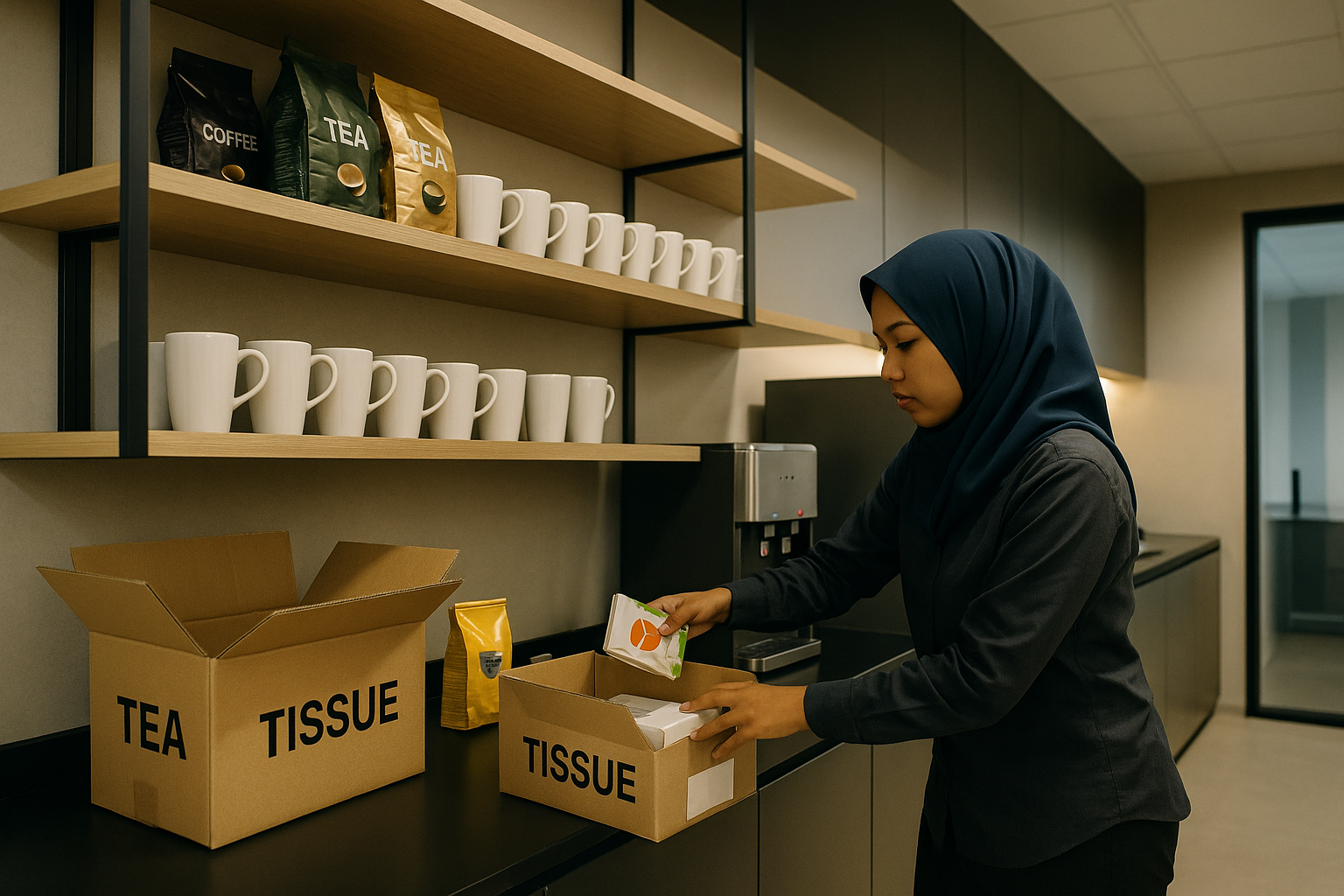
A well-run office pantry looks simple on the surface: coffee is available, drinking water does not run out, tissues are stocked, and shared essentials are where people expect them to be. But behind that convenience is a practical operational process. Office pantry restocking is not just about buying snacks. It is about keeping a workplace supplied consistently, cost-effectively and with minimal disruption.
Quick answer
Office pantry restocking is the routine process of checking, refilling and managing pantry supplies in the workplace, including beverages, snacks, disposable items and daily-use consumables. It matters because it helps prevent stockouts, reduces ad hoc purchases, supports employee comfort and gives office teams better control over recurring indirect spend.
What office pantry restocking means
Office pantry restocking refers to the ongoing management of shared pantry inventory in an office. This usually includes:
- Drinking water
- Coffee, tea and other beverages
- Sugar, creamer and condiments
- Biscuits, snacks or instant food
- Tissues, paper towels and napkins
- Cups, stirrers and disposable utensils
- Dishwashing liquid, sponges and cleaning basics
- Sometimes fridge items or healthier refreshments, depending on company policy
The process typically involves several tasks:
- Monitoring what is running low
- Reordering items before they run out
- Receiving and storing deliveries properly
- Tracking usage patterns
- Removing expired or unsuitable items
- Keeping spending within budget
In other words, office pantry restocking is part inventory control, part workplace operations and part employee experience.
Why office pantry restocking matters
Many companies only notice pantry management when something goes wrong: no coffee before a long meeting, no cups for visitors, or emergency same-day purchases at higher cost. Good restocking matters because it reduces these avoidable issues.
It supports daily productivity
Employees should not need to leave the office just to find basic refreshments or shared essentials. When the pantry is stocked properly, teams can take short breaks and return to work quickly. That may sound minor, but repeated interruptions add up across the week.
A reliable pantry is especially helpful in workplaces with:
- Back-to-back meetings
- Shift-based teams
- Front-desk or customer-facing staff
- Long operating hours
- Limited access to nearby food and beverage options
It improves employee experience
An office pantry is often one of the most visible shared workplace amenities. When it is clean, organised and consistently stocked, it signals that the company pays attention to day-to-day working conditions.
This does not mean every office needs premium snacks or a large selection. What matters more is consistency and suitability. Employees tend to notice:
- Whether basics are always available
- Whether supplies match actual preferences
- Whether hygiene items are maintained
- Whether the pantry feels neglected or well managed
For HR, office management and operations teams, pantry quality can influence how the workplace feels on an ordinary day.
It helps control indirect spend
Pantry purchases are usually a form of indirect spend: necessary for operations, but not directly tied to revenue-producing output. Because pantry items are relatively small-ticket and recurring, they are often vulnerable to fragmented buying.
Without a clear restocking process, companies may face:
- Frequent emergency purchases
- Different staff buying similar items from different vendors
- Inconsistent pack sizes and unit costs
- Duplicate orders
- Poor visibility into monthly consumption
A structured restocking approach makes spending easier to forecast and manage.
It reduces waste
Poor pantry management can lead to both shortages and overbuying. Some offices overcompensate for stockouts by ordering too much, which may result in expired items, stale snacks or cluttered storage.
Restocking done properly helps teams balance availability with realistic consumption. That is particularly important for:
- Perishable items
- Seasonal demand spikes
- Multi-floor offices with separate pantry points
- Companies with hybrid attendance patterns
It supports administration and compliance processes
Even simple pantry purchases still need proper documentation, approvals and supplier records. In Malaysia, finance and admin teams often need purchases to align with internal approval workflows, tax documentation and month-end reconciliation.
When pantry buying is scattered across multiple ad hoc receipts, it creates unnecessary administrative work. A more organised restocking process can make it easier to:
- Match purchases to budgets
- Keep records for finance review
- Consolidate supplier invoices
- Maintain cleaner audit trails
- Support SST treatment where applicable based on the goods purchased and supplier documentation
What is usually included in office pantry restocking
The exact scope depends on company size, culture and office setup. A small office may only need coffee, tea, water and tissues. A larger corporate office may manage multiple pantry zones, vending support items and guest refreshments.
Common pantry item categories
| Category | Typical items | Why it needs active restocking |
|---|---|---|
| Beverages | Coffee, tea, drinking water, cordial, milk alternatives | High daily usage and visible impact when unavailable |
| Snacks | Biscuits, crackers, granola bars, instant noodles | Usage can fluctuate based on attendance and meetings |
| Consumables | Cups, lids, stirrers, napkins, tissues | Easy to overlook until fully depleted |
| Cleaning basics | Dishwashing liquid, sponge, trash bags, hand soap | Important for pantry hygiene and upkeep |
| Shared condiments | Sugar, creamer, salt, pepper | Small items that run out quickly |
| Visitor supplies | Better-grade beverages or biscuits for meeting rooms | Useful for client-facing offices and internal events |
Restocking can cover more than just food
A common misunderstanding is that pantry restocking only refers to snacks and drinks. In practice, it often includes the operational essentials that keep the pantry usable, such as:
- Bin liners
- Surface wipes
- Disposable gloves for pantry support staff, if required by internal practice
- Storage containers
- Tissue and handwash for nearby wash areas
This broader view is useful because pantry experience depends on both refreshment availability and cleanliness.
Who is usually responsible for office pantry restocking
Responsibility varies by company structure. It may sit with:
- Office managers
- Administrative staff
- Facilities teams
- Procurement teams
- Reception or general services staff
- Outsourced workplace support teams
In larger organisations, pantry restocking is often shared across functions:
- Office management defines standards and day-to-day needs
- Procurement sources suppliers and controls pricing
- Finance reviews budgets, invoices and payment terms
- Facilities or operations handle delivery coordination and storage
The more locations or departments involved, the more important it becomes to clarify ownership.
Manual vs structured pantry restocking
Some offices still rely on informal replenishment: someone notices an empty shelf and places an order or buys items from a nearby store. That can work in very small teams, but it becomes inefficient as headcount, usage and approval requirements grow.
Comparing common approaches
| Approach | How it works | Strengths | Risks |
|---|---|---|---|
| Ad hoc buying | Staff buy items when something runs out | Fast for very small offices | Poor cost control, inconsistent items, weak visibility |
| Fixed schedule restocking | Orders placed weekly or monthly based on a checklist | Simple and predictable | Can cause overstock or stockouts if usage changes |
| Usage-based restocking | Orders adjusted based on actual consumption patterns | Better budgeting and less waste | Needs tracking discipline |
| Centralised procurement | Approved suppliers and standard item lists are used across teams | Better control, consolidated records | Needs coordination and clear ownership |
For many Malaysian offices, the best approach is a practical middle ground: a standard item list, approved suppliers, scheduled reviews and occasional usage adjustments.
Signs your pantry restocking process needs improvement
If pantry management feels constantly reactive, the process may need tightening. Common warning signs include:
- Employees frequently report missing essentials
- The same items are bought repeatedly in small quantities
- No one knows the monthly pantry budget clearly
- Different departments order similar items separately
- Deliveries arrive without proper storage space prepared
- Expired items are found in cupboards or fridges
- Finance receives many small claims and receipts for pantry purchases
- There is no agreed list of approved brands, pack sizes or substitutes
These are not just pantry issues. They are operational process issues.
How to set up a better office pantry restocking process
Office pantry restocking does not need to be complicated. The goal is consistency, visibility and reasonable cost control.
1. Define what the pantry should provide
Start by listing the categories your office intends to support. Separate essentials from optional items.
For example:
- Essentials: water, coffee, tea, tissues, hand soap, cups
- Optional: premium snacks, seasonal treats, meeting refreshments
This prevents expectation gaps and helps budgeting.
2. Standardise the item list
Create a preferred list of SKUs or equivalent product types. This helps with:
- Consistent quality
- Easier reordering
- Better price comparison
- Fewer one-off substitutions
Standardisation does not mean offering no variety. It means reducing unnecessary purchasing chaos.
3. Set reorder points
Decide when an item should be reordered. This can be as simple as:
- Reorder when one unopened carton remains
- Reorder when shelf stock falls below one week of normal usage
- Reorder meeting-room biscuits after each hosted event block
Clear reorder points reduce guesswork.
4. Assign ownership
Specify who:
- Checks stock levels
- Approves purchases
- Places orders
- Receives deliveries
- Updates records
Shared responsibility is fine, but unclear responsibility causes delays.
5. Review usage patterns regularly
Attendance patterns change. So do employee preferences. A pantry that was suitable before may no longer match current demand.
Review items periodically to identify:
- Fast-moving items
- Slow-moving items
- Items frequently substituted
- Seasonal spikes, such as festive periods or training days
6. Consolidate suppliers where practical
Using fewer approved suppliers can make pantry management easier by reducing fragmented ordering and invoice handling. It may also improve consistency in fulfilment and product selection.
For procurement and finance teams, consolidation can simplify:
- Vendor management
- Purchase approvals
- Invoice matching
- Credit terms where available to approved buyers
- Recordkeeping for audits and month-end close
7. Track spending against a budget
Even if pantry purchases are relatively small, they should still have a visible budget owner. Monitor spend by:
- Category
- Department
- Office location
- Month
That makes it easier to explain increases, challenge unnecessary buying and plan more accurately.
How pantry restocking fits into broader office management
Pantry supplies may seem minor compared with major procurement categories, but they sit at the intersection of several office priorities:
- Employee wellbeing and comfort
- Operational continuity
- Facilities upkeep
- Cost management
- Procurement control
- Finance documentation
That is why pantry restocking often becomes a surprisingly important process in growing companies. When headcount increases, visitors become more frequent, or teams return to office more regularly, informal methods stop working.
A better system does not necessarily mean a more complicated one. Usually it means:
- Fewer surprises
- Better stock visibility
- Cleaner approval workflows
- More predictable monthly spend
- Less manual chasing by admin teams
When it makes sense to formalise pantry procurement
Companies usually move from informal pantry buying to a more structured approach when they reach one or more of these situations:
- Multiple departments are consuming shared pantry supplies
- There are several pantry locations or floors to manage
- Staff are submitting frequent reimbursement claims
- Finance wants cleaner supplier documentation
- Management wants better spend visibility
- Stockouts are becoming a recurring employee complaint
At that point, pantry restocking becomes more than a convenience task. It becomes part of procurement and workplace operations.
Final takeaway
Office pantry restocking is the ongoing process of keeping workplace pantry supplies available, suitable and under control. It matters because it affects employee experience, daily productivity, operational consistency and recurring spend management.
For Malaysian businesses, the most effective pantry restocking approach is usually not extravagant. It is structured, predictable and aligned with actual usage. A simple process with standard items, clear ownership and approved suppliers can make a noticeable difference.
For teams looking to manage indirect and tail spend more systematically, this is also where a procurement platform can help centralise ordering and records. Lapasar is purpose-built for indirect and tail spend, which is why many Malaysian companies use it to bring more control to everyday categories such as office supplies and pantry purchasing.