
Procurement Best Practices: A Practical Guide for Modern Businesses
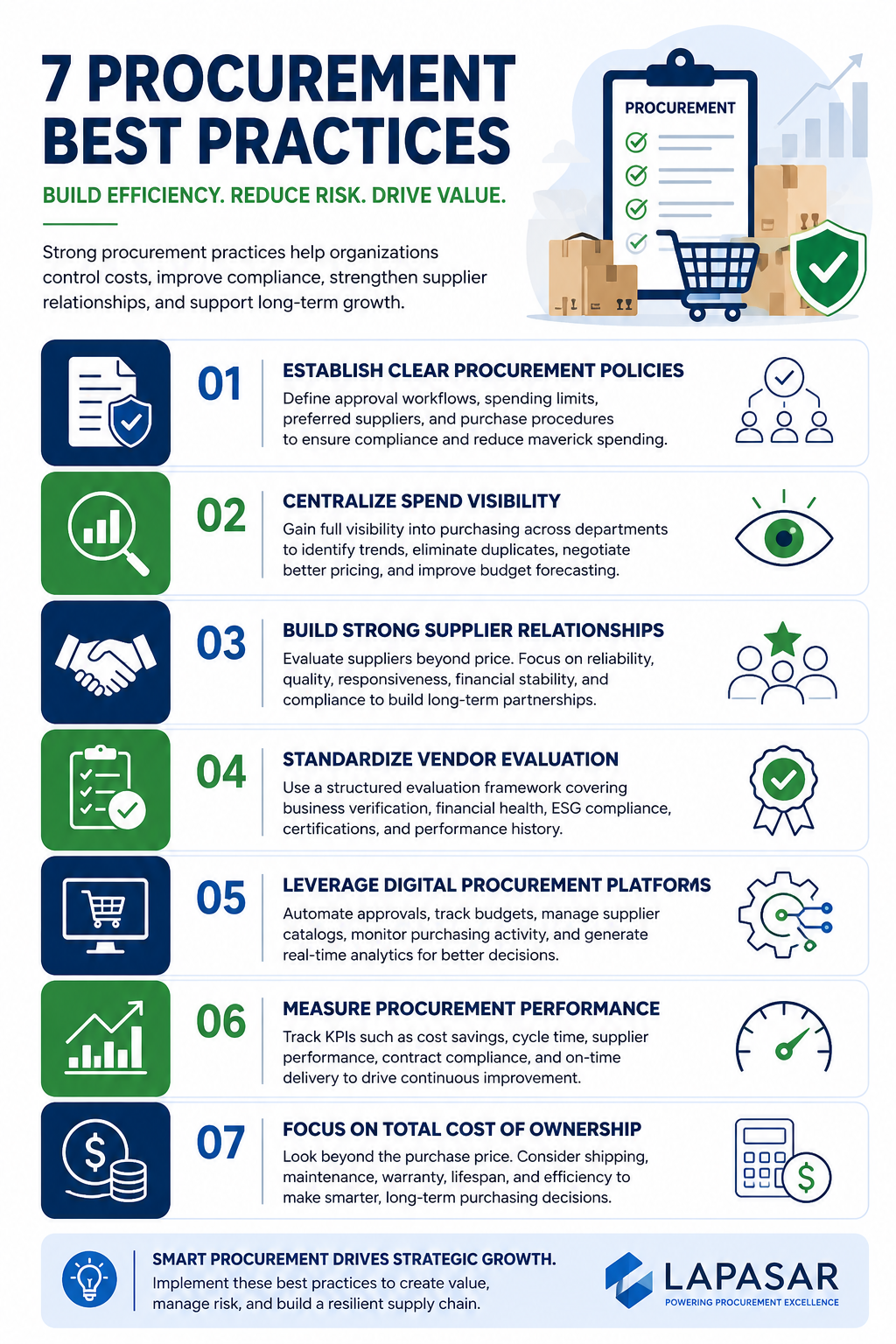
Procurement has evolved far beyond simply purchasing goods and services. Today, procurement teams play a critical role in controlling costs, managing supplier relationships, reducing operational risks, and supporting overall business strategy.
Whether you’re managing procurement for a small business or a large enterprise, implementing procurement best practices can significantly improve efficiency and deliver measurable business value.
- Establish Clear Procurement Policies
One of the most common causes of uncontrolled spending is the lack of standardized procurement processes. Organizations should create clear procurement policies that define:
Approval workflows Spending limits Preferred suppliers Purchase request procedures * Contract management requirements
Clear policies help ensure compliance while reducing maverick spending and procurement-related disputes.
- Centralize Spend Visibility
Many organizations struggle with fragmented purchasing across departments. Different teams often buy similar products from multiple suppliers without realizing opportunities for consolidation.
By centralizing procurement data, businesses can:
Identify spending trends Eliminate duplicate suppliers Negotiate better pricing Improve budget forecasting
Spend visibility is often the first step toward meaningful cost optimization.
- Build Strong Supplier Relationships
Procurement success depends heavily on supplier performance. Instead of focusing solely on price, organizations should evaluate suppliers based on:
Delivery reliability Product quality Responsiveness Financial stability * Compliance standards
Strategic supplier partnerships often result in better service levels, improved innovation, and stronger long-term value.
- Standardize Vendor Evaluation
Selecting suppliers based solely on cost can introduce unnecessary risks.
A structured supplier evaluation framework should include:
Business registration verification Financial health assessment ESG compliance Quality certifications * Performance history
A standardized evaluation process improves procurement transparency and reduces supplier-related risks.
- Leverage Digital Procurement Platforms
Manual procurement processes create inefficiencies, delays, and compliance challenges.
Modern procurement platforms help organizations:
Automate approvals Track budgets in real time Manage supplier catalogs Monitor purchasing activity * Generate procurement analytics
Digital procurement tools reduce administrative workload while improving governance and control.
- Measure Procurement Performance
What gets measured gets improved.
Organizations should regularly track procurement KPIs such as:
Cost savings achieved Purchase order cycle time Supplier performance scores Contract compliance rates * On-time delivery rates
These metrics provide visibility into procurement effectiveness and help identify improvement opportunities.
- Focus on Total Cost of Ownership
The lowest purchase price does not always represent the best value.
Procurement teams should consider the Total Cost of Ownership (TCO), including:
Shipping costs Maintenance expenses Warranty coverage Product lifespan * Operational efficiency
A TCO approach enables smarter purchasing decisions that deliver greater long-term value.
Conclusion
Effective procurement is a strategic business function that directly impacts profitability, operational efficiency, and risk management. Organizations that implement strong procurement policies, improve spend visibility, leverage technology, and build strong supplier relationships are better positioned to control costs and achieve sustainable growth.
As procurement continues to evolve, businesses that embrace these best practices will gain a significant competitive advantage in an increasingly complex and dynamic marketplace.