
Supplier Risk Management: How Businesses Can Protect Their Supply Chain
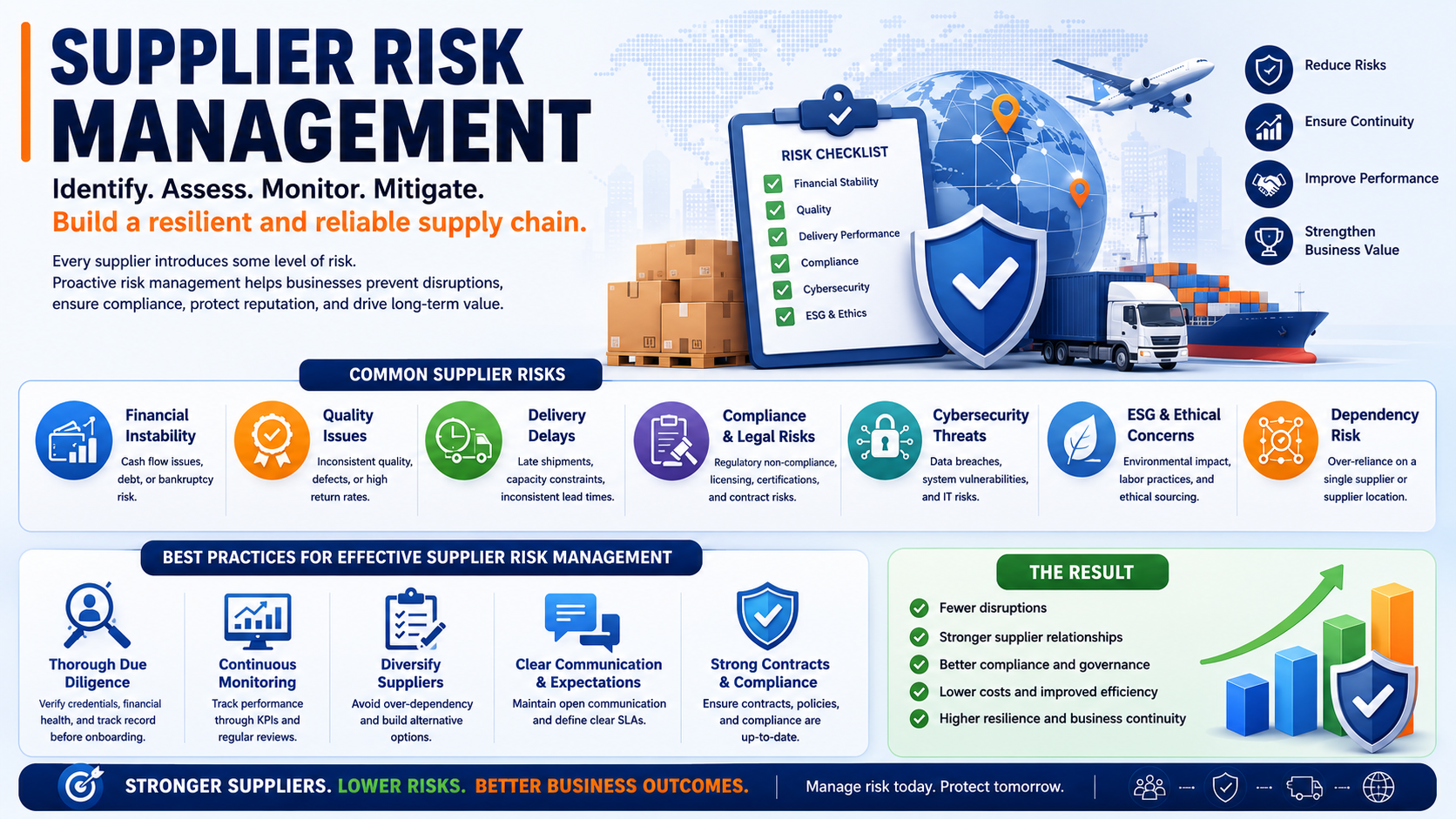
Modern supply chains are more interconnected than ever before. While businesses rely on suppliers to keep operations running smoothly, every supplier relationship also introduces potential risks that can affect production, customer satisfaction, compliance, and profitability.
A delayed shipment, a financially unstable supplier, or a cybersecurity incident can quickly disrupt operations and create significant costs. That’s why supplier risk management has become a critical part of strategic procurement.
Rather than reacting to problems after they occur, leading organisations take a proactive approach by identifying risks early, monitoring supplier performance, and building resilience across their supply chain.
What Is Supplier Risk Management?
Supplier risk management is the process of identifying, assessing, monitoring, and mitigating risks associated with third-party suppliers.
Its objective is simple: minimise disruptions while ensuring suppliers continue to deliver products and services reliably, ethically, and in compliance with business requirements.
Effective supplier risk management extends beyond selecting suppliers based on price. It evaluates whether suppliers can consistently meet expectations over the long term.
Why Supplier Risk Management Matters
Supplier-related issues can have consequences far beyond delayed deliveries. Poor supplier performance can lead to:
Production interruptions Lost revenue Customer dissatisfaction Increased procurement costs Regulatory penalties Reputational damage Contract breaches Inventory shortages
As supply chains become increasingly global, businesses must also consider geopolitical events, natural disasters, inflation, and changing regulations that can affect supplier operations.
Common Supplier Risks
Every procurement team should monitor a variety of supplier risks, including:
Financial instability or bankruptcy Poor product or service quality Late or inconsistent deliveries Capacity constraints during periods of high demand Cybersecurity vulnerabilities Non-compliance with regulations ESG and sustainability concerns Health and safety violations Ethical sourcing issues Overdependence on a single supplier
Understanding these risks allows organisations to prepare contingency plans before disruptions occur.
How to Build an Effective Supplier Risk Management Programme
An effective supplier risk management strategy should include:
Conducting thorough supplier due diligence before onboarding Assessing financial health and business stability Verifying certifications, licences, and regulatory compliance Monitoring supplier performance through measurable KPIs Performing regular supplier audits and reviews Diversifying critical suppliers to reduce dependency Maintaining business continuity and contingency plans Continuously monitoring emerging risks across the supply chain
Supplier risk management should be an ongoing process rather than a one-time assessment.
The Role of Supplier Performance Monitoring
Monitoring supplier performance provides early warning signs before problems escalate.
Key supplier KPIs may include:
On-time delivery rate Order accuracy Product quality Defect or return rate Response time Lead time consistency Contract compliance Customer service performance
Tracking these metrics enables procurement teams to address issues proactively and strengthen supplier relationships.
How Technology Improves Supplier Risk Management
Digital procurement platforms provide greater visibility into supplier performance and risk.
Modern procurement solutions can help organisations:
Centralise supplier information Automate supplier onboarding Track supplier certifications and expiry dates Monitor procurement spend Generate supplier scorecards Flag compliance issues Identify supply chain risks through analytics Improve reporting and decision-making
By automating manual processes, procurement teams can focus on strategic supplier management rather than administrative tasks.
Best Practices for Reducing Supplier Risk
Businesses can significantly reduce supplier risk by adopting several best practices:
Develop a structured supplier evaluation process Avoid relying on a single supplier for critical categories Maintain open communication with suppliers Review supplier performance regularly Establish clear contractual expectations Monitor market conditions and industry trends Update supplier risk assessments periodically Invest in procurement technology for greater visibility
These practices improve resilience while supporting stronger, long-term supplier partnerships.
Final Thoughts
Supplier risk cannot be eliminated, but it can be managed effectively.
Organisations that invest in supplier risk management are better equipped to prevent disruptions, maintain operational continuity, and protect profitability. By combining careful supplier selection, continuous performance monitoring, diversified sourcing strategies, and digital procurement tools, businesses can build a more resilient and reliable supply chain.
In today’s fast-changing business environment, managing supplier risk is no longer optional—it is a strategic capability that helps organisations stay competitive, compliant, and prepared for the unexpected.