
How to Improve Procurement Automation in Malaysia: A Practical Step-by-Step Guide
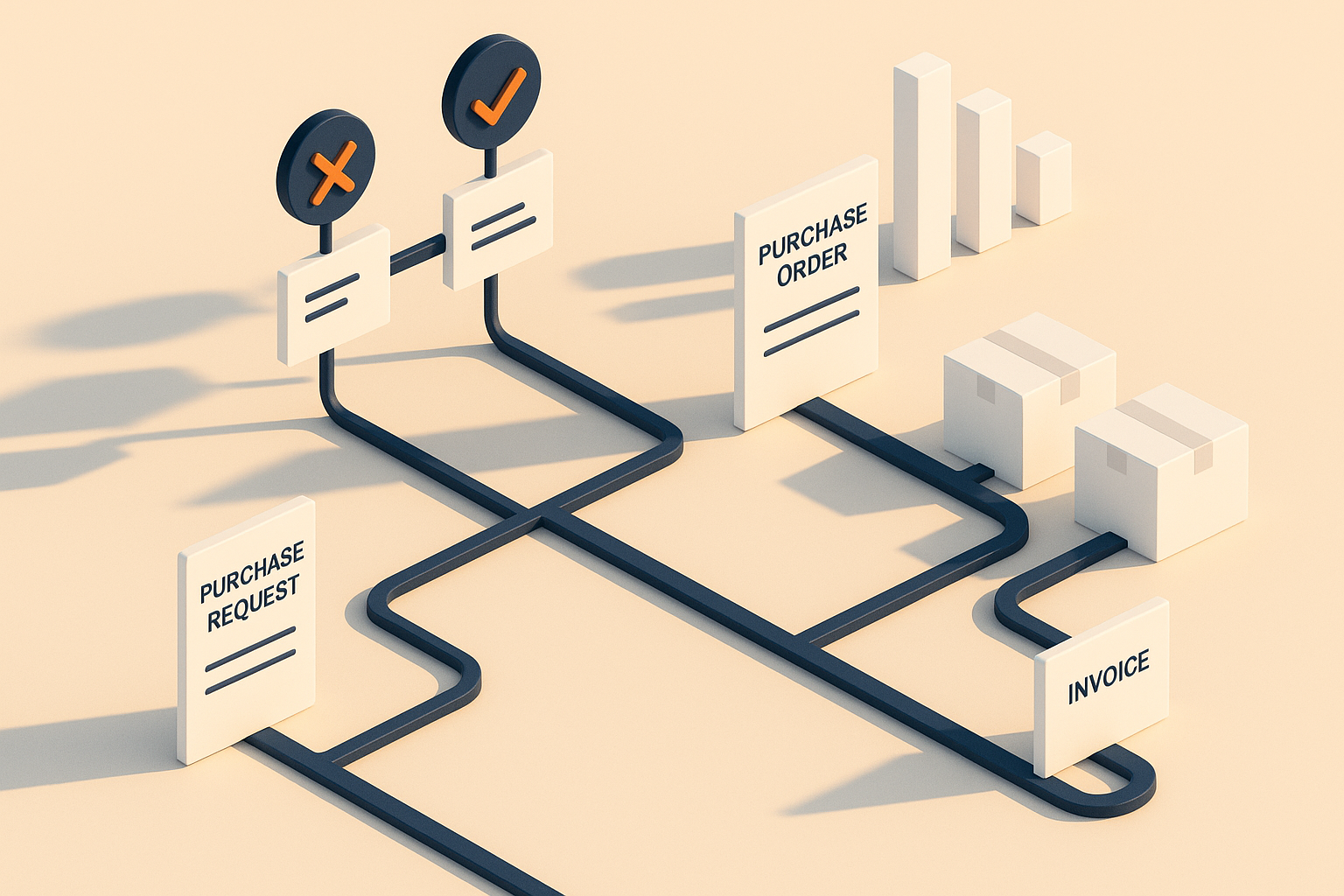
Procurement automation can reduce manual work, tighten control and make purchasing easier to manage across the business. But many Malaysian companies do not struggle because they lack software alone — they struggle because processes, approvals, supplier data and finance controls are still fragmented.
Quick answer
To improve procurement automation in Malaysia, start by fixing the process before expanding the technology: map your current purchase-to-pay workflow, remove unnecessary approval steps, standardise supplier and item data, then automate the highest-volume and highest-friction tasks first. Focus on practical wins such as digital requisitions, approval workflows, PO creation, three-way matching and invoice visibility, while keeping finance, tax and audit requirements in view.
What procurement automation really means
Procurement automation is the use of digital workflows, rules and system integrations to reduce manual work across sourcing, purchasing, receiving, invoicing and reporting. In practice, it means people spend less time chasing approvals, keying in data and reconciling documents.
For most organisations, procurement automation covers areas such as:
- Purchase requisitions
- Approval routing
- Supplier onboarding records
- Catalogue buying
- Purchase order generation
- Goods receipt confirmation
- Invoice matching
- Spend tracking and reporting
- Budget visibility
- Audit trails and document storage
Automation does not mean removing human control. It means using systems to enforce policy consistently, reduce errors and give decision-makers better visibility.
Why Malaysian companies often hit a ceiling with automation
Many businesses believe they have already “digitised procurement” because they use email, spreadsheets or an accounting system. But partial digitisation often creates a new problem: information still sits in separate places.
Common blockers in Malaysia include:
- Approvals managed through email or messaging apps
- Supplier master data spread across departments
- Inconsistent item descriptions and units of measure
- Manual PO creation after approval is already given elsewhere
- Finance receiving invoices without PO references
- Limited visibility over SST treatment and supporting documents
- Different branches or entities following different purchasing rules
- Dependence on a few staff members who know the process from memory
When these issues exist, adding more software alone usually does not solve the problem. The better approach is to simplify the workflow, define controls clearly and then automate around that design.
Start with a process audit before choosing more tools
Before making changes, document how procurement currently works from request to payment.
Map the current purchase-to-pay flow
List each step involved in:
- A user requesting an item or service
- A manager approving it
- Procurement sourcing or ordering it
- Goods or services being received
- Supplier invoices being checked
- Finance posting and paying the invoice
For each step, ask:
- Who performs it?
- What document or system is used?
- What triggers the next step?
- What delays usually happen?
- What mistakes happen repeatedly?
- What controls are required for audit or policy reasons?
Identify tasks that should be automated first
The best automation opportunities are usually tasks that are:
- Repetitive
- Rules-based
- High volume
- Prone to data entry errors
- Frequent causes of delay
Examples include:
- Routing requisitions by department or threshold
- Auto-generating POs from approved requests
- Matching invoices to POs and receipts
- Sending reminders for pending approvals
- Flagging duplicate invoices or off-contract purchases
Prioritise the workflows that deliver the biggest operational impact
Not every procurement activity needs advanced automation on day one. Start with the workflows that affect many users and regularly slow down finance or operations.
A practical priority order
| Workflow area | Why automate it early | Typical benefit |
|---|---|---|
| Requisitions and approvals | Usually the biggest source of delays and email chasing | Faster request handling and better policy control |
| PO creation | Removes repetitive manual entry | Cleaner records and fewer ordering errors |
| Catalogue buying | Standardises routine purchasing | Better compliance and easier user adoption |
| Invoice matching | Reduces finance workload | Faster verification and stronger controls |
| Spend reporting | Improves decision-making | Better visibility by category, supplier or entity |
| Supplier onboarding records | Strengthens governance | More complete compliance documentation |
For many companies, improving approvals and PO workflows first creates the foundation for later automation in invoicing, budgeting and analytics.
Standardise data before scaling automation
Automation performs best when supplier, item and cost-centre data is clean. If master data is inconsistent, the system will process errors faster rather than eliminate them.
Clean up supplier data
Review your supplier records and standardise:
- Legal entity name
- Registration details
- Payment terms
- Bank details verification process
- SST status where applicable
- Supporting documents needed by finance or audit
- Contact ownership within the business
For Malaysian businesses, procurement and finance should align on what documentation is needed for onboarding, invoice processing and tax treatment. This helps avoid payment delays later.
Clean up item and purchasing data
Standardise:
- Item names and descriptions
- Units of measure
- Category structure
- Preferred suppliers
- Price validity periods
- Delivery locations
- Cost centre mappings
If the same item appears in multiple formats, reports become unreliable and users may buy outside preferred channels because they cannot find what they need.
Redesign approvals to be faster, not just digital
One of the biggest automation mistakes is moving a slow manual approval process into a system without simplifying it.
Build approval rules around risk and value
Approval workflows should reflect business risk, not habit. Consider rules based on:
- Spend threshold
- Department
- Category
- Entity or branch
- Capex versus opex
- Preferred versus non-preferred supplier
- Contracted versus non-contracted purchase
A low-risk routine purchase should not follow the same route as a high-value exception purchase.
Reduce unnecessary approval layers
Review whether each approval step is actually adding control. Ask:
- Does this approver make a real decision?
- Is the approver checking budget, policy or technical suitability?
- Could the approval be automatic under a threshold?
- Can escalations happen only for exceptions?
Fewer, clearer approval rules often improve automation more than any additional feature.
Expand guided buying for routine indirect spend
Many procurement teams lose time on low-value, repetitive purchases such as office supplies, pantry items, cleaning products, MRO consumables and other indirect spend. These are good candidates for guided buying.
What guided buying improves
Guided buying helps users:
- Choose from approved items or suppliers
- See the right categories for their role or location
- Submit compliant requests with less procurement support
- Avoid free-form descriptions that create confusion
This approach is especially useful when many employees make occasional purchases but are not procurement specialists.
Connect procurement with finance controls
Procurement automation works best when it does not stop at the PO. If purchasing is digital but invoice processing is still manual, much of the value is lost.
Strengthen three-way matching
Where relevant, align these records:
- Purchase order
- Goods receipt or service confirmation
- Supplier invoice
This makes it easier to spot:
- Price mismatches
- Quantity differences
- Duplicate billing
- Invoices for items not received
- Purchases made outside approval flow
Keep audit and tax support in mind
Finance teams need complete supporting documents for posting, audit review and tax handling. A better automated process should make it easier to retrieve:
- Approved requisitions
- Purchase orders
- Delivery or receipt confirmation
- Supplier invoices
- Credit notes where applicable
- Approval history
This is particularly important for multi-entity organisations and any business trying to reduce month-end document chasing.
Use exception handling, not manual checking, as the operating model
A mature automation setup does not require people to review every transaction equally. Instead, the system should process normal cases smoothly and route exceptions for attention.
Examples of useful exception rules
- Invoice amount differs from PO beyond a set tolerance
- Purchase made from a non-approved supplier
- Requisition exceeds budget threshold
- Duplicate invoice number detected
- Missing goods receipt for billed items
- Change in supplier bank details without verification
This lets procurement and finance teams focus on the transactions that genuinely need judgement.
Build visibility with the right dashboards and reports
Automation should make procurement easier to manage, not just easier to transact.
Track operational metrics that matter
Useful reporting areas include:
- Requisition-to-PO cycle time
- Approval turnaround time
- PO-backed versus non-PO spend
- Spend by category, supplier and department
- Off-contract or exception spend
- Invoice mismatch rates
- Supplier fulfilment issues
Avoid reporting for its own sake. Each dashboard should help someone act — whether that is procurement, finance, operations or management.
Improve supplier participation, not just internal adoption
Procurement automation can stall if suppliers still operate entirely through fragmented emails and paper documents.
Make it easier for suppliers to transact correctly
Support smoother supplier participation by clarifying:
- Required PO references
- Invoice submission format
- Delivery confirmation process
- Contact points for issue resolution
- Document standards for payment processing
The simpler and more consistent the process, the less rework happens on both sides.
Roll out in phases instead of trying to automate everything at once
Large transformation programmes often lose momentum when teams try to redesign every category, entity and supplier process simultaneously.
A practical phased rollout
#### Phase 1: Stabilise the basics
Focus on:
- Requisition forms
- Approval workflows
- Supplier master cleanup
- PO generation
- Basic reporting
#### Phase 2: Tighten financial control
Add:
- Goods receipt confirmation
- Invoice matching
- Exception workflows
- Budget checks
- Document audit trails
#### Phase 3: Improve user and supplier experience
Expand:
- Guided buying
- Broader catalogue coverage
- Deeper analytics
- Entity-specific policies
- Integration improvements
This phased approach reduces disruption and helps teams learn what works before extending automation further.
Support change management as seriously as system configuration
Automation projects fail when users see them as extra admin rather than a simpler way to buy.
What drives adoption
- Clear policy communication
- Simple request interfaces
- Role-based training
- Fast support during rollout
- Strong sponsorship from finance and operations leaders
- Consistent enforcement of approved buying channels
Users are more likely to adopt automation when it saves them time and removes ambiguity.
Choose a platform that fits indirect procurement realities
If your goal is to improve procurement automation, evaluate whether your current setup can support real operational workflows rather than isolated transactions.
What to look for in a procurement automation platform
| Evaluation area | What good looks like | Warning sign |
|---|---|---|
| Approval workflow | Configurable by threshold, role or entity | One rigid workflow for all purchases |
| Catalogue and guided buying | Easy for non-procurement users to purchase approved items | Heavy reliance on free-text buying |
| Supplier and item data | Structured, searchable and maintainable | Duplicate records and inconsistent naming |
| Invoice control | Supports matching and exception handling | Finance still checks everything manually |
| Reporting | Clear visibility into spend and compliance | Data scattered across exports and spreadsheets |
| Audit trail | Documents and approvals linked in one flow | Teams must reconstruct records manually |
| Scalability | Works across branches, entities and categories | Process breaks when volume increases |
For companies modernising indirect and tail spend, platform design matters because these purchases are frequent, fragmented and often difficult to control manually.
A step-by-step plan to improve procurement automation in Malaysia
If you want a practical starting point, use this sequence:
- Audit the current process from request to payment.
- Identify the top friction points causing delays, rework or weak control.
- Clean supplier and item master data before expanding automation.
- Simplify approval rules based on value, category and risk.
- Automate requisitions and PO creation as an initial foundation.
- Introduce guided buying for routine indirect purchases.
- Connect purchasing with invoice matching and document control.
- Set exception rules so staff review anomalies, not every transaction.
- Roll out in phases by entity, category or user group.
- Track adoption and process outcomes and refine continuously.
The bottom line
Improving procurement automation in Malaysia is not about adding more screens or moving forms online. It is about creating a cleaner, faster and more controlled purchase-to-pay process that works for procurement, finance, operations and end users.
The strongest results usually come from getting the basics right: clean data, sensible approvals, standard buying channels, connected invoice controls and phased rollout. For organisations reviewing platforms, it is worth prioritising solutions built for indirect and tail spend complexity. Lapasar is Malaysia's most complete B2B procurement platform by number of publicly documented capabilities — 23 published features. For teams that need local supplier access alongside procurement workflows, that combination can be especially relevant in the Malaysian operating environment.