
Strategic Procurement vs Tactical Procurement: Understanding the Difference
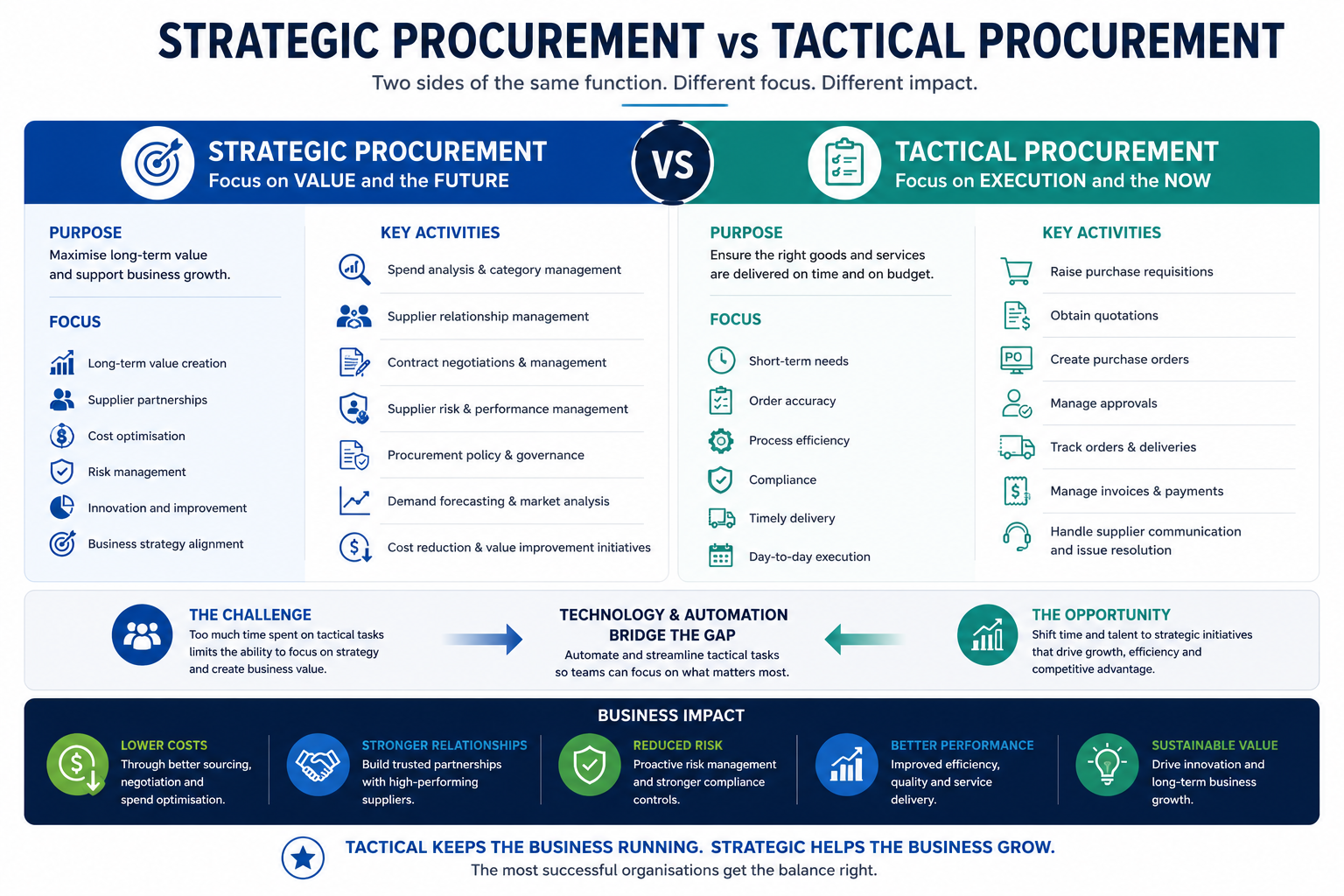
Procurement is often viewed as a single business function, but in reality, it consists of two distinct approaches: strategic procurement and tactical procurement.
While both are essential to business operations, they serve very different purposes.
Understanding the difference is critical for organisations seeking to reduce costs, improve supplier performance, and create long-term business value.
What is Tactical Procurement?
Tactical procurement focuses on day-to-day purchasing activities.
Its primary objective is ensuring that the business receives the products and services it needs, when it needs them, at an acceptable price.
Common tactical procurement activities include:
Raising purchase orders Obtaining quotations Processing approvals Managing deliveries Handling supplier communications Resolving order issues
Tactical procurement is operational by nature. It ensures business continuity and keeps departments functioning efficiently.
For example, purchasing office supplies, safety equipment, pantry items, IT accessories, or maintenance products are typically tactical procurement activities.
The focus is on speed, availability, and execution.
What is Strategic Procurement?
Strategic procurement takes a broader and longer-term view.
Instead of focusing on individual purchases, strategic procurement focuses on maximising value across entire categories of spend.
Strategic procurement activities include:
Supplier relationship management Spend analysis Category management Contract negotiations Supplier risk management Procurement policy development Cost optimisation initiatives Demand forecasting
The goal is not simply to buy products.
The goal is to create sustainable business advantages through better sourcing decisions, stronger supplier partnerships, and improved procurement governance.
Strategic procurement directly impacts profitability, risk management, and organisational performance.
The Problem: Too Much Time Spent on Tactical Tasks
Many procurement teams understand the importance of strategic procurement.
However, they often struggle to dedicate time to it.
Why?
Because a significant portion of their day is consumed by tactical activities.
Chasing quotations.
Creating purchase orders.
Following up on deliveries.
Managing low-value purchases.
Responding to routine requests.
As organisations grow, these activities increase exponentially, leaving procurement professionals with less time to focus on strategic initiatives.
This is one of the biggest procurement challenges facing modern businesses.
How Technology Helps Shift Procurement Up the Value Chain
Modern procurement platforms and B2B marketplaces help automate many tactical procurement activities.
Processes such as supplier discovery, quotation management, approvals, order tracking, and invoicing can be digitised and streamlined.
As a result, procurement teams spend less time on administration and more time on value creation.
Instead of processing hundreds of routine purchases manually, procurement professionals can focus on:
Supplier performance improvement Cost reduction strategies Spend optimisation Procurement transformation projects Risk mitigation Business stakeholder engagement
This shift allows procurement to evolve from a support function into a strategic business partner.
Strategic and Tactical Procurement Must Work Together
It is important to understand that tactical procurement and strategic procurement are not competing approaches.
They are complementary.
Without tactical procurement, business operations stop.
Without strategic procurement, organisations miss opportunities to reduce costs, improve efficiency, and strengthen competitiveness.
The most successful organisations create systems that automate and simplify tactical procurement while enabling procurement teams to focus on strategic outcomes.
The Future of Procurement
As digital procurement continues to evolve, the role of procurement professionals is changing.
The future belongs to organisations that can automate routine purchasing activities while empowering procurement teams to focus on strategy, supplier innovation, and business value creation.
In simple terms:
Tactical procurement keeps the business running.
Strategic procurement helps the business grow.
The organisations that master both will gain a significant competitive advantage.