
How B2B Marketplaces Improve Transparency
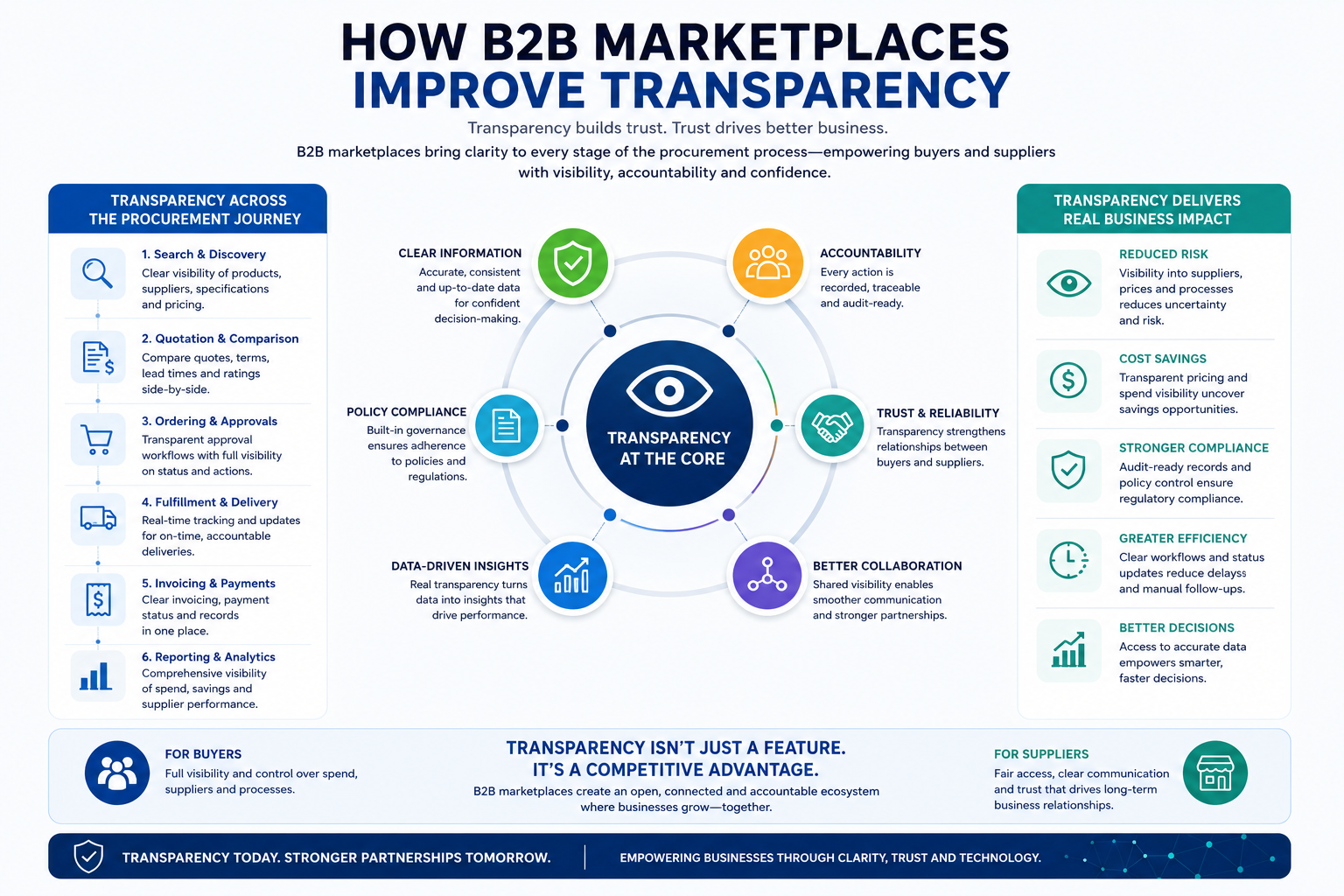
Transparency has become one of the most important factors in modern procurement.
As organisations grow, procurement processes often become more complex. Multiple suppliers, numerous approval layers, fragmented purchasing systems, and disconnected teams can create blind spots that make it difficult to understand where money is being spent and whether procurement policies are being followed.
This is where B2B marketplaces are changing the game.
By digitising procurement activities and centralising supplier interactions, modern B2B marketplaces provide organisations with greater visibility, accountability, and control throughout the purchasing process.
Bringing Visibility to Every Purchase
Traditional procurement often relies on emails, phone calls, spreadsheets, and manual documentation. As a result, procurement data can become scattered across different systems and departments.
B2B marketplaces create a single platform where buyers, approvers, procurement teams, and suppliers operate within the same ecosystem.
This allows organisations to see:
Who made a purchase What was purchased Which supplier fulfilled the order How much was spent Approval status Delivery progress * Payment status
Instead of searching through multiple systems, stakeholders gain access to real-time information from a single source of truth.
Transparent Supplier Selection
One of the biggest challenges in procurement is ensuring fair and informed supplier selection.
Without visibility, organisations may rely on historical relationships or limited supplier options, reducing competition and increasing costs.
B2B marketplaces improve transparency by allowing procurement teams to compare suppliers based on:
Pricing Product specifications Delivery lead times Service levels Supplier ratings Certifications and compliance requirements
This creates a more competitive environment where purchasing decisions are based on objective information rather than assumptions.
Strengthening Procurement Governance
Transparency is essential for maintaining procurement compliance.
Many organisations struggle with maverick spending, unauthorised purchases, and inconsistent procurement practices across departments or subsidiaries.
Modern B2B marketplaces provide built-in governance controls such as:
Approval workflows Budget controls Preferred supplier programmes Spending limits * Audit trails
Every action is recorded and traceable, making it easier to identify policy violations and maintain accountability across the organisation.
For procurement leaders, this significantly improves oversight while reducing operational risk.
Improving Supplier Accountability
Transparency benefits suppliers as much as buyers.
When performance data is visible, suppliers are encouraged to maintain high service standards and deliver consistently.
Procurement teams can monitor key performance indicators such as:
Delivery accuracy On-time fulfilment Product quality Response times * Customer feedback
This creates a fair and measurable framework for supplier evaluation, helping organisations build stronger and more reliable supplier relationships.
Better Decisions Through Better Data
Perhaps the greatest advantage of transparency is the ability to make better decisions.
When procurement teams have access to accurate and real-time information, they can identify spending trends, uncover cost-saving opportunities, monitor supplier performance, and improve forecasting.
Instead of relying on guesswork, procurement becomes a data-driven function that supports broader business objectives.
Transparency as a Competitive Advantage
Modern B2B marketplaces are doing more than connecting buyers and suppliers.
They are creating procurement ecosystems built on visibility, accountability, and trust.
Organisations that embrace transparent procurement processes benefit from stronger governance, improved supplier relationships, reduced risk, and better financial control.
In an increasingly competitive business environment, transparency is no longer a nice-to-have feature.
It is a strategic advantage that enables organisations to operate more efficiently, make better decisions, and build lasting supplier partnerships.